Follow Us on Google
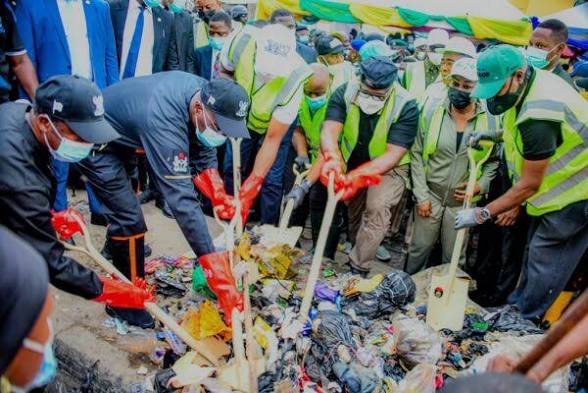
The 2023 Labour Party governorship candidate in Lagos, Gbadebo Rhodes-Vivour, and Commissioner for Environment and Water Resources, Tokunbo Wahab on Friday exchanged words over the reintroduction of the monthly environmental exercise by the Babajide Sanwo-Olu administration.
In an X post on Friday, Wahab said the exercise would hold between 6:30 am and 8:30 am on Saturday.
He disclosed that the state government had planned its reintroduction for a year, adding that no court pronouncement has halted its implementation.
“We cannot keep complaining about dirty surroundings and blaming government while shirking our own responsibilities.
“The care of our environment is a collaborative project between government and citizens,” he added.
Reacting, Rhodes-Vivour said Nigeria’s commercial nerve centre should not be shut down for hours simply to clean the environment, accusing the state government of lacking imagination about waste management logistics.
The architect-cum-politician said, “Shutting down a city of 20 million people to clean their immediate environment is parochial and lacks imagination.
“For emphasis: the issue is not so much about cleaning your environment (which is great) but the logistics of waste management – starting from the collection, to disposal and recycling.
“Anything short of rethinking this system is cosmetic and unimaginative.”
Responding, the commissioner said the 2027 gubernatorial aspirant missed the point of the exercise.
Other News
Wahab said, “@GRVlagos some have argued, just like you did, that monthly environmental sanitation is not meaning. Let me respectfully disagree.
“Shutting down a city of over 20 million people is not what we are doing.
“We are asking residents to dedicate one-hundred-and-twenty-minutes, once every thirty days, to clean their immediate surroundings. That is not a shutdown. That is called taking responsibility!”
The commissioner explained that the sanitation exercise matters because it reminds every household and business that environmental responsibility begins at the source, helps keep frontage drains, setbacks, markets, streets, and neighbourhood spaces clear before waste becomes a larger nuisance, and provides a predictable window for inspection, advocacy, and enforcement.
He added that it strengthens community ownership and supports the wider waste-management chain by encouraging proper bagging, containerisation, PSP patronage, payment compliance, and a reduction in indiscriminate dumping.
Wahab disclosed that the state government had spent the last year strengthening waste management logistics systems.
He said, “I agree completely that waste management logistics, from collection to disposal to recycling, are critical.
“That is why we have spent the past year strengthening those very systems.
“We have banned single use plastics, we are converting Olusosun landfill to energy, we are deploying biogas facilities in our markets, we are partnering with Lafarge to turn waste into valuable resources, and we are empowering young innovators with technology to improve sanitation access.
“These are not cosmetic actions. They are structural changes to how Lagos manages waste.”