Follow Us on Google
• How to stop unregulated sale in public places
• Medical experts, stakeholders offer tips, say liver, kidney of consumers could be in danger
• We’re not aware of ban on sachet alcohol – Retailers, consumers
By Kehinde Aderemi
For the National Agency for Food and Drug Administration and Control (NAFDAC), there is no going back on the ban on sale and consumption of sachet alcoholic drinks; and for the producers and consumers, there is no surrender in the pushback in the near future.
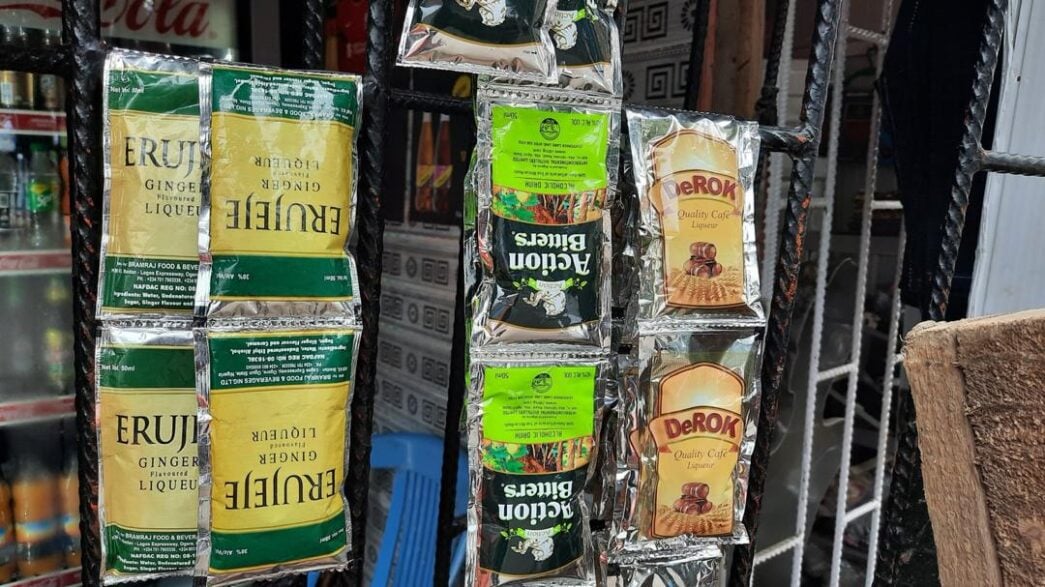
Last year, the regulatory agency launched a campaign to ban the sale of alcoholic drinks in sachets that are below 200 ml.
Mojisola Adeyeye, Director General of the agency stated that the ban was part of efforts to address rising alcohol abuse. NAFDAC also linked the high rate of consumption to underage drinking, abuse, violence and addiction. The ban, which was also supported by the health ministry, aimed at curbing the misuse of alcoholic drinks among youths and commercial vehicle drivers.

Initially, the ban led to protests among workers, producers and stakeholders who cited job losses and economic impact as reasons for their actions. There was temporary pressure to suspend the ban, but NAFDAC insisted on the ban for public health concerns. While the protests lasted, NAFDAC could not enforce the ban.

For instance, on the streets of Lagos, sachet alcoholic products were easy to buy, just as they flooded the markets, kiosks and stalls. This has continued to generate more concerns over public safety.
Charles Umeh, an Associate Professor and Clinical Psychologist at the University of Lagos Teaching Hospital (LUTH), said there are various health issues associated with unregulated sale and consumption of sachet alcohol in Nigeria. Umeh also questioned the focus of NAFDAC even as he explained that perhaps, the agency’s latest ban on alcoholic drinks in sachets was targeted at people that are at risk. He stated that one of the reasons for the ban could be because the product is cheap and readily available, thus encouraging frequent usage.


“Psychologically, this might create habit formation because sachet alcohol is cheap and every driver, artisans, bricklayer can easily dispense a N100 to buy it as against when it is N5, 000 or above.
“Before you can dispense with N5, 000, you will have to consider other competing needs. But with N100 naira, you can afford it and start to take it now. Once you take it, the effects begin to play out. So, invariably, a small package like that creates the brain into thinking that consumption is not much. And when that happens, you don’t care about the implications.”

Dr. Umeh explained further that addiction is common when there is over dependence on alcohol intake. He also noted that alcohol usage is not the same thing as alcohol dependence. A lot of people, he said, might be using alcohol without being dependent on it and it does not have any major effect on them.
According to him, when alcohol is used continuously, it develops because the body requires a certain level of alcohol to work and function and the body derives it from the food, fruits and other supplements taken for healthy living.
“We usually calculate the alcohol level in the blood. It should not exceed a certain percentage for either a man or a woman. So, for someone who is dependent on alcohol based on frequency of use, then there are potential dangers, which usually come because alcohol consumption can affect almost every other system in the body.
“When used frequently or in large amounts, the health implications can range from the shut- down of the body chemistry, which is largely due to intoxication. There are also results from long-term usage, excessive usage which can also affect the brain. It can affect the liver, the heart and also mental health. The common one you can see is liver damage. And why do we have liver damage? It is because the active ingredient in alcohol is ethanol.
“So when you take it in, the body begins to break them down. This takes place in the liver. So, the more you have, the more work you are creating for the liver. And excess of that work can lead to liver damage. The common disease you can see associated with alcohol is fatty liver disease. And this is when fat builds up in the liver cells. A lot of people who abuse alcohol have it. Another one is alcoholic hepatitis. That means injury or inflammation of the liver. Then we have another common one that we call liver cirrhosis,” he explained.
The clinical psychologist pointed out that excessive use of alcohol can lead to some mental health disorder while reduction in the usage has the potential to minimise incidence of mental health disorder associated with substance use. According to him, alcohol usage can easily affect the development of the brain, especially the memory, which he said, takes care of decision-making and impulse control.
“Impulse control is one of the problems of young people. So, when they are addicted to alcohol intake, they make decisions without thinking, and that’s why they become risky to themselves and to others around them.
“Invariably, when they stop taking alcohol, they might be able to think well again and be able to regulate their emotions. And, we must be conscious of the fact that depression and emotional trauma are common with people who use alcohol.
“Once they stop taking alcohol, they become saner, productive and more useful to society. Some people cannot talk to you if they don’t drink alcohol because they are so timid. But once they drink alcohol, their tongue loosens. They will be able to tell you everything. They become aggressive. So, when they get to that level of intoxication, obviously, there’s going to be reduced self-control and increase in negative behaviour.
“So, studies in mental health space have been able to link every act of alcohol use with impaired judgment, violent and accident, risky sexual behaviour, suicide, and in some extreme cases, psychosis or psychotic illnesses.
“So, if there is a drop in usage, we’re going to have less aggression and conflict. For instance, when you drive through Lagos State, you see the way those drivers behave – they are always very aggressive.
Other News
“Do you think that aggression is coming from the moon? No. These are some of the things that are feeding those aggressive behaviours. And they take it home, for those of them that are married. Check some of them, when you see their wives, they always have one broken tooth. Invariably, they’re not only aggressive within the motor parks, they take it home to their children, their wives, and even their neighbours,” he observed.
Umeh also explained that the ban might create negative psychological effects initially for those that take the 200ml sachets of alcohol, citing the case of those that are dependent on alcohol, and use it as an eye-opener.
“When they wake up in the morning, you see them rushing for it, even without taking any food. They have to take it to open their eyes. Why do you think they say it makes them shine their eyes? It is because the body craves for it first thing in the morning because the body has exhausted the one it took while the person was sleeping. Those are the dependent cases. People who depend on alcohol must use it as an eye-opener. They spend most of their time around the motor parks. If you challenge them, they get angry, and they are not really interested in changing their lifestyles.
“In some cases, there are people that are dependent on it, but feel frustrated or stressed out because they have reduced their access to this substance. Some of them will tell you that is what they use to cope with economic hardship or personal problems,” he stated.
Alexander Ijeomah, an Abuja- based project management professional, emphasised the need to regulate the use of sachet alcohol in the society. He applauded NAFDAC for taking the step at clamping down on products.
Ijeomah added that the agency must look inwards and even look beyond the streets. He explained that the use of sachet alcohol was a transition that came from the use of popular local spirit also known as paraga and other local products. He stated that the product has more negative effects for many people at the grassroots.
“The ban was a step in the right direction, I feel good about it because for NAFDAC to take that decision, the agency probably might have looked at the dangers of the unregulated space of sachet alcohol.
“In those days, the transition that led to the introduction of pure water is synonymous to what we see today with the unregulated space of sachet alcohol in our society.
“Interestingly, the transition of pure water started in those days with some people carrying buckets of water with an iced block. They go to construction sites, markets and other public places looking for people that will buy a cup of iced water for just N5 or N10 then.
“That was how it started before somebody came up with the idea of sachet water which has made a lot of differences till date.
“It was a wonderful transition that came with a lot of discovery as people began to wonder that we can actually package water in a sachet and make it accessible for people to drink. It was a complete boom for the markets.
“People were happy because if you look at the health implications of drinking iced water using the same cup with more than a hundred customers, then you can always understand the health risks, including the poor level of hygiene involved when you share the same drinking cup with more than 100 people in a sweep. For the sachet alcoholic drinks, it’s all about the same thing. In those days, you see people carrying buckets on their heads selling paraga, Opa Eyin or Jedi as they call them.
“They would put a small cup on the bucket, which they will use to pour the liquid content for their customers. There was this focus on medicinal and therapeutic components of the alcoholic drink. And the idea then was that once you take a shot or more, it heals the pain, including back or abdominal pains.
“So, there was also a transition and what we have today is that people’s thinking is about the fact that those contents have that same medicinal value. That’s what they had in mind forgetting that there is ethanol in the alcoholic component that they all strive for. They don’t look at the dangers of this content.
“Unfortunately, the majority of those that take this sachet alcohol still focus on medicinal, therapeutic components of the alcohol. And because it’s cheap and always available, they can buy as many as they want. But these days, it is unfortunate that the alcoholic content in those products is much, therefore, the focus has moved from the medicinal component to the alcohol component here.
“For instance, those who cannot buy the big Stout for as much as N2, 000 will want to buy the sachet alcohol for N100 and feel the quality. So, the danger is all about the health risks. A few of those that take these poisonous contents ever look at the health risk.
“Many of those that are addicted to these alcoholic contents end up having severe health complications, like liver problems, kidney problems and even blindness because when people take alcoholic drinks, it goes into the liver, the detoxification of the head, and control of the liver. What about the kidney? The kidneys are shut down. And a lot of people abuse it because there’s easy access to the alcohol. …
“For instance in Lagos, Abuja and other parts of the country, every single retailer sells sachet alcoholic drinks. And then there’s also a list of underage drinking. Also, you know, they’re not within the age that is approved. A lot of people that are addicted are also in high level positions. Addiction doesn’t look dangerous at first, but it slowly takes over the health and anybody involved becomes a slave to it,” he stated.
Ijeomah, however, urged NAFDAC to ensure that the ban is effective, noting that the agency needed to put more stringent measures in place for it to achieve results.
“Strict measures must be put in place to stop this unregulated space. NAFDAC is a professional agency that understands the need for proper sensitisation programmes and stricter measures. Banning without penalty is just a regulatory measure; there should be penalties for offenders.
“Nigerians should know that the banning of sachet alcohol is in our interest and there should be a law against abuse and indiscriminate use of sachet alcohol,” he advised.
Tosin Kayode, a retailer of sachet alcoholic drinks in a bus stop in the Adamo, Ikorodu part of Lagos told Saturday Sun that there has been a drop in the sale the products not because of the move by NAFDAC to ban the products but because of the just concluded Ramadan and Lenten seasons. She explained, however, that sales usually picks up in the morning and at night because there are customers that use the drinks as energisers.
The mother of three said she was not aware that there was a move to ban the products. She expressed anger with the federal government for making life difficult for people at the grassroots.
“What is my business with NAFDAC? This is what I do to take care of my family. I come here at 5:00AM daily and I close shop by 10:30PM. And whatever I get is to the glory of God to take care of my children. So, banning Fenuja is nothing but a harsh decision that will affect us,” she lamented.
Similarly, Alase Ademola, a bricklayer said he was unaware of the ban, adding that such a ban cannot be effective. He told Saturday Sun that the alcohol drinks in sachets give him energy and inspiration and that whenever he is down, he usually takes some to be on his feet.
Like the local Jedi Oloyin, which is a mixture of traditional herbs, other brands including Action Bitters, Squadron, Black Wood, he said, are also medicinal and therapeutic because they have contents of herbs in them.
“It’s not everybody that can understand that this product gives inspiration and energy. I don’t subscribe to excessive drinking but one thing I know for sure is that whoever drinks it one at a time is sure of being inspired,” he claimed.