Follow Us on Google
Ebuka Obi is a popular evangelist in Nigeria. Every week, particularly Wednesdays and Sundays, tens of thousands of people troop to his Zion Ministry in Lagos in search of solutions to their problems.
Penultimate week, a luxury bus belonging to the Young Shall Grow Motors, broke down on Onitire Road, a major route to this Zion ministry. This road is off Ago Palace Way, and it is a link to Amuwo Bridge in Lagos. Apparently, the bus hit a bad spot on the road and spilled the entire engine oil on the ground. This is what residents of the area go through on a daily basis.
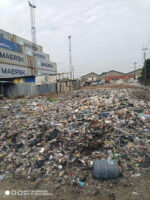
Many of them spend a lot to fix their cars, which frequently break down on that road. They have resigned to fate, as some claimed that Evangelist Obi had requested to fix the road, but the state government did not approve his request. Occasionally, one of the estates in the area, Peace Estate, does some emergency palliative work on the road, but it often collapses, especially during the rainy season, due to heavy movement of vehicles on the road. This is a road that could have decongested traffic on Ago Palace Way where trucks usually cause some gridlocks from time to time.
Elsewhere in Lagos, some roads are in similar bad shape. The Baale of Tediland in Ojo Local Government Area of Lagos State, Chief Muka Bajulaiye Abuje, has one major wish: total rehabilitation of the Tedi-Muwo Road. This road links Abule Oshun to Tedi, Mile 10, and Alaba International Market, among others. I shuddered when I moved round the area last week with a resident, Chief Sunny Eddyson Okeke.
Along that road, which is off Badagry Expressway, Ojo, Lagos, is the dilapidated edifice housing the old Peugeot Automobile Nigeria (PAN) Warehouse, later taken over by Dansa Foods Limited. Overlooking the road are some bonded terminals with mountains of containers. Unfortunately, the road is completely abandoned.
The agitation to fix Tedi-Muwo Road did not start today. In January 2023, Abuje had expressed worry over the poor state of the road. He noted that citizens of Tedi community were law-abiding and paid their taxes and Land Use charges. Unfortunately, “the only time you see government representatives here in Tedi is during election periods. They come here to solicit votes and support, making all sorts of promises, which they never fulfill,” he reportedly lamented.
Besides, most FESTAC roads have also broken down, with deep potholes dotting various sections. Gladly, some of the bad spots are currently being fixed.
No doubt, Lagos State Governor, Babajide Sanwo-Olu, has tried in infrastructure development in the state. But some of these bad roads appear to obliterate the good work he has done. What many residents do now is to fix their streets with interlocking stones to make life easier for themselves. Of course, the state government cannot fix all the roads in the state. But for Lagos to be a true mega city, infrastructure, especially major roads, must be given priority attention.
This brings me to the road crisis in other parts of the country. This year’s rainy season has exposed the underbelly of most federal roads across the country. Reports are rife about how commuters are stranded for days on account of the gridlocks occasioned by bad roads.
On Benin-Agbor-Asaba Highway, commuters spent up to four days recently because of the terrible nature of the road. The video of a car that got submerged in a pool of water on the road drew concern across social media. Pregnant women, babies, the old and the sick, among others were stuck on this road these number of days. How these vulnerable people survived this ordeal leaves much to imagination. At some point, some transporters suspended operations along the route.
The Minister of Works, David Umahi, visited for an on-the-spot assessment of the situation. He blamed the concessionaire, the Benin-Asaba Expressway Concession Company (BAECC), for the problem. According to Umahi, the company lacked the technical knowledge to handle the project. He said it manipulated the process to get the concession to reconstruct the highway in 2025.
This is scandalous! Does it mean the minister did not know anything about the processes that led to the award of the contract? Was due diligence not carried out on the company? I’m not surprised because in a country where fake government agencies sprout like stubborn grass that cannot be subdued by fire, anything is possible.
Other News
The Lagos-Calabar Coastal Highway was similarly alleged to have been awarded without following due process. Ironically, this coastal highway got the highest allocation of N2.23 trillion out of the N6.47 trillion the Federal Government spent on infrastructure between June 2023 and December 2025.
While work is ongoing at a good speed on this coastal highway, many existing highways and expressways beg for attention. Like the Benin-Agbor-Asaba Expressway, the Bida-Lapai Road in Niger State has become a sleeping ground for commuters and truck drivers due to heavy gridlock. Routinely, vehicles break down; trucks carrying foodstuffs and some other goods often overturn and empty their contents on the road. Accidents, loss of life and property, and environmental hazards occasioned by spilled chemicals from fallen trucks are common on the road.
The tragedy of the Nigerian transport situation is that there is no cheaper alternative to road transportation. Many people are scared of travelling on the road these days, but what will they do if there is urgent need to travel? The railway system is not fully developed. Flights are not affordable for the majority of the people.
The economy is what suffers in this type of situation. Factories are shut down. Manufacturers, entrepreneurs and transporters count their losses in billions of naira. Sometimes, they suspend operations. This is outside the wear and tear on vehicles that are constantly on the road.
Daily Trust newspaper reported recently that concerned truck drivers plying Bida-Lapai Road had to make contributions amounting to about N20 million to do some emergency repairs on some sections of the road. It is understandable if residents contribute to fix their streets. But for poor drivers to contribute to fix a highway depicts the height of government negligence. It’s unbelievable.
The major problem is that we lack maintenance culture in Nigeria. There is a Federal Road Maintenance Agency (FERMA) whose duty is to maintain federal roads. But it is not certain why this agency allows craters to form on the roads before repairs are done. Ideally, once there is a small crack on the road, it should be marked and worked on to avoid it getting worse. But we allow such cracks to develop into potholes and then progress to craters and gullies that will eventually require total reconstruction.
The permanent solution to the road crisis in Nigeria is to develop the rail system. It will bring relief to the overburdened roads. If there is a functional rail system from Lagos to Calabar or from Lagos to Onitsha, for instance, many people will have no business on the road. Movement of goods will largely be through the railways. To an extent, this will minimize the movement of heavy trucks on the roads.
Advanced nations do not joke with the rail system. Whether it is Europe or the United States, the railway is a major means of travel for long distances. Why can’t we have such in Nigeria if we have serious leaders?
FERMA must have a strong presence in every state of the federation. Government must adequately mobilize and empower the agency to be alive to its responsibilities. It must intervene on time when there is a noticeable sign of crack on any federal road.
Lagos, being the former Nigerian capital and current commercial capital of the country, should look like Abuja in terms of road infrastructure. Sanwo-Olu is on his last lap as a governor. He has done his best for the state, but needs to do more by leaving a lasting legacy. My emphasis on Lagos, perhaps, is because of my enlightened self interest as a resident.
Other state governments should do the same thing. State road maintenance agencies should not wait for roads to dilapidate beyond repair before they take action. Governors must empower them to fix existing important roads before embarking on building new roads which tends to give some of them the leeway to siphon money.
The National Integrated Infrastructure Master Plan estimated that it would take about $3 trillion over a 30-year period for Nigeria to bridge the overall infrastructure gap. Shall we ever get there? Only a President like Bola Tinubu, governors like Sanwo-Olu, and ministers like Umahi can answer that.