Follow Us on Google
By Fred Itua, Abuja
On Wednesday, President Bola Ahmed Tinubu signed the Electoral Bill, 2026, into law, repealing the Electoral Act of 2022 and establishing the legal framework for the country’s 2027 general election. The assent is considered by pundits as one of the fastest in the current administration, coming less than 48 hours after the National Assembly harmonized and passed the bill.
During a brief ceremony at the Presidential Villa, President Tinubu noted that “results are finalized by humans and not computers.” This stance gave credence to lawmakers who argued that Nigeria’s telecommunications deficiencies remain a significant hurdle.
However, it also reinforced concerns from civil society organizations (CSOs) and opposition figures who believe that manual fallbacks risk compromising the integrity of future polls.
The most contentious provision of the new act centres on Clause 60, which governs the transmission of results. While the act makes the electronic transmission of results to the INEC Result Viewing Portal (IReV) mandatory, it stops short of requiring “real-time” uploads.
Opposition lawmakers, including Senators Enyinnaya Abaribe and Natasha Akpoti-Uduaghan, pushed for strict real-time mandates to prevent result substitution between polling units and collation centres.
However, the Senate’s preference for “flexibility” prevailed in a 55-to-15 division vote, a position later adopted by the House of Representatives.
The 2026 Act introduces several structural changes that INEC and political parties must now navigate.
Statutory Backing for BVAS: The Bimodal Voter Accreditation System (BVAS) is now expressly entrenched in law as the sole mandatory method for voter accreditation, retiring older technologies.
Tightened Timelines: Political parties must now submit candidate lists at least 120 days before the election (reduced from 180). This compresses the timeline for intra-party disputes and pre-election litigation.
Timetable Flexibility: To avoid a clash with the 2027 Ramadan period, the Act grants INEC the latitude to schedule elections as early as November 2026 or January 2027 to ensure maximum voter inclusivity.
Stiffer Penalties: INEC officials who issue unstamped or unverified ballot papers now face a mandatory one-year imprisonment, a N1 million fine, or both. False declarations at collation centres carry a minimum of ten years without the option of a fine.
“At the end, Nigerians will benefit a lot from future elections. Every vote will now count,” the Senate President said.
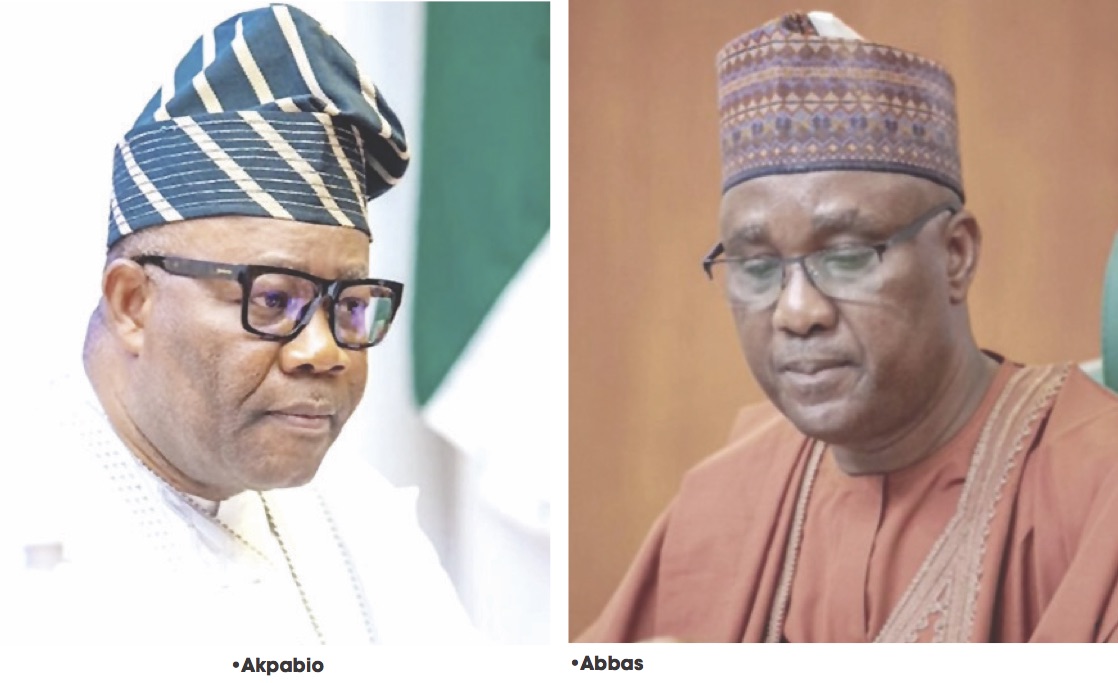
President of the Senate, Godswill Akpabio, after President Tinubu assented to the new law, spoken extensively on key issues. He noted: “At the end, Nigerians will benefit a lot from future elections. Every vote will now count. We took cognisance of areas where there may not be any network, where there may not be communication capacities and availability.
“We said, since the polling unit result comes in from EC8A, which is signed by the presiding officer, signed by the agents, and signed in the presence of security agents, copies are given to all.
“Then we can use that as the primary source of collation at that unit. And then, of course, we transmit it. Even if there is no network at that time, once we step out of there, maybe towards the ward centre or the local government centre, it will drop into the iREV and people will still be able to view.
Other News
“The implication of that is that if what is eventually collated at the next centre is different from what is in the iREV, Nigerians will be able to compare whether the election result had been tampered with.
“And for us, that had always been the problem in the country, that once election results leave a polling unit, they will be tampered with or mutilated. That has been eliminated today.
“Participative democracy, more inclusiveness. Members of different political parties are now allowed to do direct primaries.
“That means you can choose the person you want. Delegate selection, of course, one person can write the list and then just submit, but this time around, the members who are in the political party will stand up and vote for their candidates and the candidates of their choice.
“We don’t want a situation where, in an election, you have five people contesting, one person scores out of 300,000 votes, one person scores 290,000, and then, for one reason or the other, he’s disqualified by the court, and then the person who scored 1,000, who is not popularly elected, will now be declared a winner.
“All those things are eliminated. We have now recommended that, where such a case happens, they should call for another election,” he said.
Speaker of the House of Representatives, Abbas Tajudeen, also remarked: “This will inadvertently translate to holding the presidential and National Assembly elections in January 2027, and that will technically avoid conducting elections during the month of Ramadan of 2027. I think this is another piece of ingenuity that the National Assembly has introduced to avoid voter apathy in the next general election,” the Speaker said.
The Peoples Democratic Party (PDP), in a statement issued on Wednesday by its National Publicity Secretary, Ini Ememobong, accused the National Assembly of undermining the collective will of Nigerians by weakening provisions that ensure the compulsory electronic transmission of election results from polling units.
Ememobong wrote: “The anti-democratic stance of the Senate and the sudden somersault by the House of Representatives on the amendment of the Electoral Act 2022, specifically on the mandatory electronic transmission of election results from the polling units, is an act of treachery against the Nigerian electorate.
“This betrayal is most painful because it strikes at the core of democracy and electoral sanctity.
“The shocking aspect of the whole drama is the brazen manner in which the legislators acted they clearly showed disdain for the Nigerian people who voted them into office by openly challenging the supremacy of the voters. The excuses advanced for inserting this obnoxious proviso are weak, illogical, and insulting to the intelligence of Nigerians.
“When lawmakers begin to dilute transparency mechanisms ahead of elections, only one conclusion is rational: there is a calculated attempt to create room for electoral manipulation.
“By this act, the National Assembly has violated the foundation of legislative representation, which is anchored on mirroring the wishes of the majority of their constituents. This is a painful betrayal, which the people will certainly repay in equal, if not heavier, measures.”
Political analysts argue that these legal nuances will define the 2027 landscape. Socrates Ehigiator, a legal analyst, suggests that the “optional real-time” provision may favour the incumbent party, which often possesses superior resources to navigate manual collation disputes and post-election legal battles.
“The challenge for the opposition goes beyond the text of the law,” Ehigiator noted. “Unless fragmented parties form strategic alliances, they may lack the ground-level resources to monitor all 176,846 polling units where manual fallbacks might occur.”
Whether the Electoral Act 2026 strengthens or weakens Nigerian democracy will depend less on its text and more on the character of its implementers. As the nation prepares for 2027, the focus shifts from the legislative halls of Abuja to the technical readiness of INEC and the vigilance of the Nigerian electorate.