Follow Us on Google
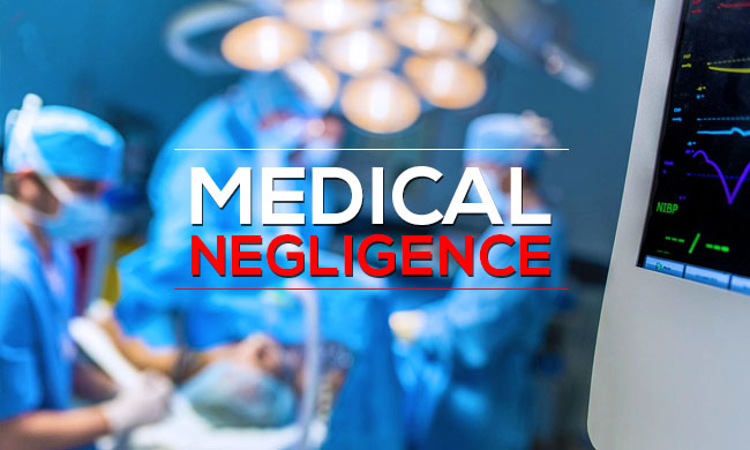
The recent death of Nkanu Nnamdi Esege, one of the twin sons of renowned writer and Nigerian novelist, Chimamanda Ngozi Adichie, and her husband, Dr. Ivara Esege, has highlighted the rising cases of medical negligence in the country. The 21-month-old toddler died in a high-brow Lagos hospital, Euracare, on January 7 over alleged medical negligence. While Chimamanda maintained that medical negligence at Euracare led to the death of her son, the hospital stridently denied it. Nevertheless, it has also set up a panel to investigate the regrettable incident.
The Adichies were in Lagos for Christmas celebration when Nkanu took ill and was admitted to Atlantis Hospital. This hospital later referred Nkanu to Euracare Hospital for some medical procedure before Nkanu could fly to Baltimore, US, for treatment at Johns Hopkins. Unfortunately, Nkanu did not survive the medical procedure at the Euracare due to excessive propofol administered to him by the anesthesiologist, which allegedly led to his cardiac arrest and eventual death. Adichie had accused the hospital of being “criminally negligent” and “fatally casual,” in handling the case.
The Lagos State government has ordered full investigation into the alleged medical negligence in the death of Nkanu. According to the Special Adviser to the Governor on Health, Dr. (Mrs.) Kemi Ogunyemi, Governor Babajide Sanwo-Olu, has directed the Health Facility Monitoring and Accreditation Agency (HEFAMAA) to immediately commence a thorough, independent and transparent investigation into the circumstances surrounding the death of Nkanu. The adviser further said that the agency will work with the Medical and Dental Council of Nigeria (MDCN) and other relevant regulatory bodies to ensure a credible and professional investigation. We urge HEFAMAA to make the outcome of the investigation public.
Apart from Nkanu’s incident, other cases of medical negligence have been reported recently in the country. The death of twin boys in Ajangbadi, Ojo Local Government area of Lagos State following routine vaccination in December last year is being investigated by the HEFAMAA. According to the account by the father of the children identified on X (formerly Twitter) as @ChuksEricE, he and his wife took their twin boys for immunization at Ajangbadi Primary Health Centre on December 24.
The twins later developed high temperatures and became extremely weak after receiving the injections. They later died on December 25. Also, Aishatu Umar, reportedly died on January 11, this year during a corrective surgery to remove a pair of scissors allegedly left in her abdomen in an early surgery at the Abubakar Urology Centre, Kano.
Other News
These cases are not isolated. There may be many unreported cases of medical negligence in the country. Medical negligence is a global health challenge. However, Nigeria’s case appears to be rising and worsening. At times, such cases are seen as acts of God in this part of the world where the doctors cover their mistakes with other cause of death which the victims’ relatives accept out of ignorance or not wanting to seek legal redress.
According to the World Health Organization (WHO), about 1 in 10 patients or approximately 138 million annually are harmed while receiving hospital care, with over 3 million deaths occurring yearly due to unsafe care. Over 50 per cent of this harm is preventable. And in low-to-middle income countries, up to 4 in 100 people die from unsafe care. The global health agency also says that medication errors alone cost global healthcare systems roughly $42billion annually. Studies indicate that medical error prevalence rates in Nigeria range from 42.8% to 89.8% among practitioners.
According to medical experts, key areas of medical negligence include medication errors (50% of harm), diagnosis errors and surgical mistakes. Medical negligence is fueled by system weakness, lack of clear communication, medication errors and underreporting. In most cases, the healthcare systems often fail to address report, or learn from errors, and sometimes hide mistakes. It has been established that a lack of clear hierarchy and poor communication among medical staff contribute to high error rates.
Also, the fear of lawsuits and a blame-centric culture often prevent the reporting of errors. The WHO says that most of these deaths are avoidable. To ensure patient safety, the WHO launched a campaign in solidarity with patients on the very first World Patient Safety Day on September 17, 2019. On that day, the Director-General of WHO, Dr. Tedros Adhanom Ghebreyesus said, “no one should be harmed while receiving care. And yet globally, at least five patients die every minute because of unsafe care.” He also stated: “we need a patient safety culture that promotes partnership with patients, encourages reporting and learning from errors, and creates a blame-free environment where health workers are empowered and trained to reduce errors.
We urge the federal government to overhaul the nation’s healthcare delivery system with emphasis on quality medication and patient care. Instead of hiding errors through underreporting of medical negligence, let us adopt the patient safety culture and report and learn from our mistakes. Let the government evolve measures to reverse the brain drain in the health sector by enhancing the welfare of doctors and other health workers. The government should intentionally and significantly increase annual health budget to at least 15 per cent.