Follow Us on Google
Nigerian women demand delivery as IWD 2026 meets CSW70
By Juliana Taiwo-Obalonye
As Nigeria joins the 70th Session of the UN Commission on the Status of Women (CSW70), Minister of Women Affairs and Social Development, Imaan Sulaiman-Ibrahim, framed this year’s International Women’s Day (IWD) as “a reckoning with the distance we have travelled” — and a call to act with purpose.


Flanked by the Ministry of Foreign Affairs and Nigeria’s UN Mission, she positioned the delegation as a strong voice for Africa on gender equality and poverty reduction. Under the global theme “Rights. Justice. Action. For All Women and Girls,” and the campaign slogan “Give to Gain,” the minister spoke with urgency.
“The global evidence is clear: every dollar invested in women’s economic empowerment generates between seven and twelve dollars in economic returns,” she declared. “For Nigeria, the International Finance Corporation estimates that closing the gender financing gap for women-owned SMEs would unlock $14.8 billion in annual economic value. Bridging the gender gap is, therefore, an economic necessity and critical to achieving Mr. President’s ambition of a $1 trillion economy.”
From the CSW70 lens, Nigeria, she said, is ready to advance enforceable justice and measurable progress, setting an example for Africa in global policy reform.
The Call from the Top: “When Women Rise, Nigeria Rises.”
On March 8, Nigeria joined the world in celebrating International Women’s Day. But beyond ceremonies, this year’s message echoed one unifying conviction: the time for rhetoric is over; action must follow.
From the First Lady to grassroots organisers, the tone was transformative. “When women rise, Nigeria rises!” declared First Lady Oluremi Tinubu in her national message. “Empowering women is not an act of charity; it is an investment in our collective future.”
Her statement mirrored the resilience of millions of Nigerian women navigating political, economic, and cultural barriers while keeping their families and workplaces afloat.
At the Women Affairs Ministry’s press briefing in Abuja, the event turned into a rally for reform. Sulaiman-Ibrahim opened with conviction: “Nations rise when vision meets action. We gather not merely to mark a date on the calendar, but to account for our stewardship and to recommit, with renewed urgency, to the transformative work that this moment demands of Nigeria.”
The Minister hailed President Tinubu’s declaration of 2026 as “The Year of Families and Social Development,” placing women, children and the vulnerable at the centre of policy priorities.
She unveiled some of the most ambitious empowerment programmes yet: EmpowerHer774, reaching women in every local government area with financial inclusion and social protection; the Nigeria for Women Programme – Scale-Up (NFWP‑SU) to empower 4.5 million women through 300,000 collective networks; and WAVE and Farm‑to‑Feed, focusing on women farmers in the agriculture value chain.
Even the energy sector is being feminised, through PowerHer774 and Women in Gas (WINGS), training women as clean‑energy entrepreneurs.
“For Nigerian women,” she said, “this means less time spent on exhausting and harmful energy tasks and more opportunity for education, business, and leadership in the clean energy economy.”
The Minister also spotlighted the Family First Project, Happy Woman App, and Women‑on‑Wheels Initiative, expanding women’s digital and physical mobility. “When we give women opportunities, we gain national resilience; when we support families, we strengthen society; and when we invest in leadership, we secure sustainable governance.”
Outside government chambers, advocacy groups reminded policymakers that promises require political will.
The Civil Society Legislative Advocacy Centre (CISLAC), led by Auwal Musa Rafsanjani, sounded a pointed alert: “Transformative changes in governance, legal frameworks, and institutional practices are necessary to accelerate the development of women and girls. Without deliberate gender transformation, the progress we have made risks being eroded.”
CISLAC lamented lingering backsliding in women’s rights—particularly political exclusion, gender‑based violence, and economic marginalisation.
“Economic empowerment remains one of the most critical pathways for liberating women from poverty,” Rafsanjani said. “Ensuring women’s access to credit facilities, productive resources, and economic opportunities is essential to achieving inclusive growth and sustainable development.”
He called on political parties to institutionalise affirmative measures: “The absence of strong affirmative action measures continues to restrict women’s access to decision-making spaces. This must change.”
For Adejoke Orelope‑Adefulire, Senior Special Assistant to the President on the Sustainable Development Goals, gender equality is fundamental to achieving Nigeria’s development ambitions.
“Empowering women and girls is not just a moral obligation but a development imperative,” she said. “The theme ‘Give to Gain’ reinforces that every investment in women and girls yields significant benefits for families, communities, and nations.”
She stressed that SDG 5—gender equality—is the gateway to all other goals. “Gender equality is a cross‑cutting driver. No country can achieve sustainable development without the full participation of women—from education and health to leadership.”
Orelope‑Adefulire applauded the administration for centring women in its empowerment and social‑protection plans and urged collaboration across all sectors: “Achieving the SDGs requires a whole‑of‑society approach. Governments, private sectors, civil groups, and citizens must all play their part.”
At the grassroots, activism took a creative turn. The FAME Foundation’s Annual Women’s Football Tournament blended sport and advocacy with high spirit.
Other News
Executive Director Aderonke Atoyebi described sports as a mirror of equality. “International Women’s Day reminds us that gender equality is not a favor—it is a fundamental human right. When women’s rights are ignored, justice becomes selective. And when justice is selective, society as a whole suffers.”
Thirteen teams—from teachers to internally displaced women—competed under the IWD theme.
“Football has a unique way of breaking barriers. On the pitch, titles disappear. What remains is teamwork, confidence, leadership, and solidarity—the same values women need to claim their space in society,” Atoyebi said.
She ended with a challenge: “Rights, justice, and action must not end with a single day. They must guide how we design policies, build communities, and treat women and girls every single day.”
If policymakers debate laws, women journalists shape the public mood that drives them. At the Women in Media Development Initiative (WIMDI) dialogue in Abuja, the theme “Give to Gain” inspired a day of raw, determined conversation.
Team Lead Dr. Lilian Anele opened passionately: “Today, we are not just marking a date on the calendar. We acknowledge the women who shape narratives, challenge power, inform democracies, and influence culture in the media space.”
She continued, “‘Women in Media’ do more than report stories—we define them. We do more than anchor bulletins; we anchor truth.”
Anele described harsh realities: harassment, pay gaps, digital abuse. Yet, she said, “While women are highly visible in media spaces, structural realities remain uneven. Pay gaps persist, and online harassment targets female journalists at alarming rates. Yet we rise.”
Her rallying cry—“When women shape the narrative, the narrative changes. And when the narrative changes, societies move forward”—brought the hall to its feet.
Participants discussed mentorship and institutional reform. “‘Give to Gain’ focuses on gender equity not as a favour to women, but as an investment in institutions with guaranteed benefits for the future,” she said.
From government’s side, Abiodun Essiet, Senior Special Assistant to the President on Community Engagement (North Central), urged women journalists to lead with example: “You must own the space and change the narrative. Promote stories that reflect the economic and social value women contribute. Give the younger generation our wrapper—our protection, our mentorship, our strength.”
Inimfon Etuk of SheForum Africa added, “Justice is not just punishment for offenders. It is about building systems that ensure girls have access to education and equal opportunity.”
From ActionAid Nigeria, Suwaiba Dankabo echoed: “We must expand women’s participation in governance and development and extend voices beyond mere representation.”
Dr. Susan Obi of the National Broadcasting Commission, represented by Precious Orji, appealed to sisterhood: “When we support and uplift each other, we create a ripple effect of empowerment and growth.”
And Grace Ike, Chairperson of the NUJ FCT, rounded off with a challenge: “Let’s match our words with action. Let’s not just talk the talk—let’s walk it.”
At the same forum, Catherine Edeh, Executive Director of the Voice of Disability Initiative (VDI), drew attention to voices often unheard—women and girls with disabilities. Speaking as a deaf woman, her story was both personal and political.
“As we mark International Women’s Day with the theme ‘Rights. Justice. Action. For ALL Women and Girls,’ I speak not only as an advocate, but as a deaf woman whose life journey reflects the struggles that many women and girls with disabilities experience every day,” Edeh began.
She recalled, “Growing up and navigating society as a deaf woman, I encountered many barriers—misunderstanding, stigma, exclusion, and moments when people doubted my abilities simply because I could not hear. Yet those experiences did not silence me; they strengthened my resolve to challenge injustice and advocate for change.”
Her message extended beyond inclusion to systemic reform. “When women and girls with disabilities are given the opportunity and respect they deserve, they do not just survive: they lead, transform communities, and inspire others.”
Edeh was unequivocal: “Rights must be recognized and protected. Justice must be accessible and fair. And there must be action—deliberate, inclusive, and sustained—to ensure no woman or girl is left behind.”
Her demands were practical: “Action means accessible schools, inclusive policies, protection from violence, and meaningful participation in leadership spaces. Barriers can be broken, but it should not take extraordinary struggle for women and girls to claim their rights.”
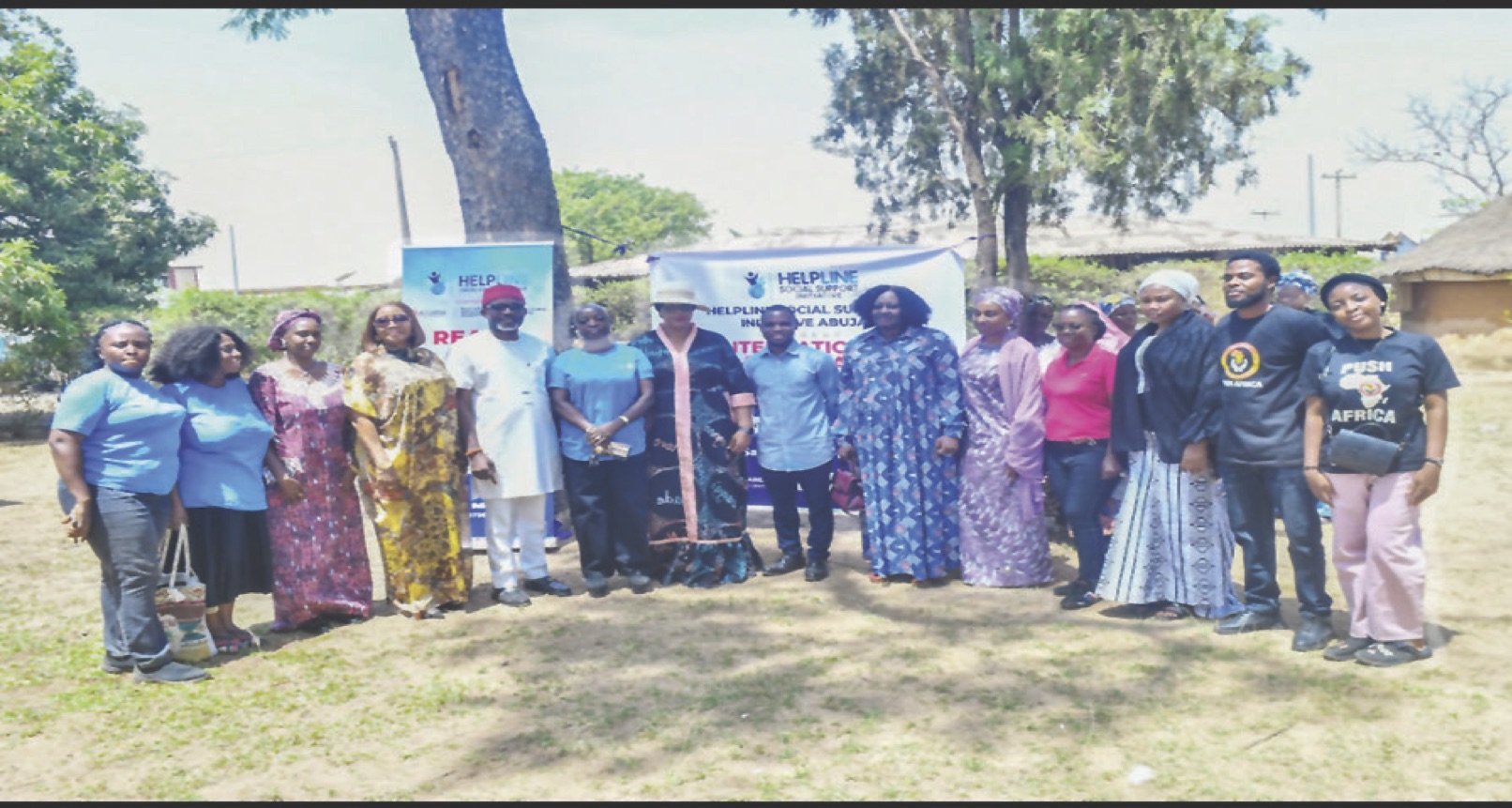
If many spoke of policy, Helpline Social Support Initiative in Abuja demonstrated action. Its founder, Jumai Ahmadu, showcased a model that moves women from “vulnerability to visibility, from dependency to dignity, and from survival to sustainability.”
Through business start‑ups and skill‑building, Helpline turns widows into entrepreneurs and girls into tech‑savvy professionals. “And what have we gained?” Ahmadu asked. “We have gained resilient entrepreneurs. We have gained confident young leaders. We have gained transformed families and stronger communities. Because every time we give intentionally, we multiply impact.”
Marking IWD 2026, Helpline launched a 30‑Day Mentorship Circle, ensuring follow‑up beyond publicity. “This Mentorship Circle will not end after photographs are taken. It will continue in homes, in offices, in markets, in classrooms, and in digital spaces,” Ahmadu affirmed.
Her challenge to participants was simple yet profound: “Every woman here must ask herself: What am I willing to give? Is it my time? My knowledge? My network? My encouragement?”
And she redefined wealth: “The true wealth of a nation is not in oil or infrastructure; it is in empowered women who empower others. When a widow regains her dignity, a family stabilizes. When a girl learns digital skills, a generation advances. When a professional mentors another woman, leadership multiplies.”
Across ministries, civil society, classrooms, and football fields, IWD 2026 echoed one truth: Nigerian women have proven their strength; what remains is the system’s response.
The theme, “Rights. Justice. Action. For ALL Women and Girls,” tied together global advocacy and local urgency. The slogan “Give to Gain” became a rallying cry—urging every institution, from government to the grassroots, to back commitments with measurable change.
Giving women visibility, voice, and value, this year’s celebration affirmed, yields returns far beyond economics—it builds the moral, social, and developmental fabric of a just Nigeria.