Follow Us on Google

From Noah Ebije, Kaduna
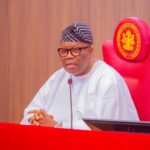
The Arewa Think Tank (ATT) has praised chairman of the Revenue Mobilisation Allocation and Fiscal Commission (RMAFC), Dr. Mohammed Bello Shehu, over ongoing exercise to review the current revenue allocation formula among the three tiers of government.
It described RMAFC’s boss as proactive and pragmatic as well as a round peg in a round hole, who obeys and follows constitutional mandate to review, from time to time, the revenue allocation formulae and principles in operation to ensure conformity with changing realities.
In a statement by the Convener, Muhammad Alhaji Yakubu, ATT noted that by the ongoing review of the revenue sharing formula, the Commission was operating in line with President Bola Tinubu’s Renewed Hope Agenda.
“We are delighted at the actions of the Chairman of Revenue Mobilisation Allocation and Fiscal Commission (RMAFC), Dr. Mohammed Bello Shehu over the ongoing exercise to review the current Revenue Allocation Formula (RAF) for sharing revenue among the three tiers of government in Nigeria.
“This singular display of constitutional responsibility shows that Dr. Shehu is in tune with Paragraph 32 (b), Part I of the Third Schedule of the 1999 Constitution of the Federal Republic of Nigeria (as amended), which mandates the RMAFC to review, from time to time, the revenue allocation formulae and principles in operation to ensure conformity with changing realities.
“The resolve of the Commission to initiate the process of reviewing the revenue allocation formula in line with this constitutional responsibility and in response to the evolving socio-economic, political and fiscal realities of our nation, is highly commendable by ATT.
“We will not shy away from reaffirming that President Tinubu’s government is alive to the socioeconomic needs of the people of Nigeria because we gathered that the last review of the Revenue Allocation Formula was carried out in 1992; and today, we are in 2025, which is 33 years ago without executive orders to modify the formula to reflect emerging socio-economic realities.
“The review will no doubt lessen some financial burdens on state governments because the recent constitutional amendments by the 9th National Assembly, which devolved certain responsibilities from the Exclusive to the Concurrent Legislative List, such as generation, transmission and distribution of electricity, railways, and prisons (correctional centres), have seriously placed financial and administrative burdens on them.
“We want to agree that this situation has made it essential to re-evaluate the structure of fiscal federalism in order to foster economic growth in individual states, enabling them to become independent from the central government and ensuring equity and sustainability.
Other News
“It further gladdens our hearts that the aim of this review is to produce a fair, just and equitable revenue-sharing formula that reflects the current responsibilities, needs and capacities of the three tiers of government – federal, state, and local governments, in line with the constitutional roles.
“We, therefore, urge the Commission to carefully assess the needs, service delivery obligations, fiscal performance and developmental disparities across the country.
“We want to believe that the review will involve broad-based consultations with critical stakeholders, including the presidency, national assembly, state governors, ALGON, the judiciary, MDAs, civil society organisations, traditional rulers and the organised private sector, as well as development partners, to ensuring accountability and keeping the public informed from time to time.
“We believe that the Commission’s commitment to discharging its responsibility with utmost integrity, objectivity and national interest is indeed with the Renewed Hope Agenda of Mr. President. This is a historic opportunity to shape a more resilient and equitable fiscal system for Nigeria, and the people shall not be disappointed by this government,” the statement said.
“Boosting domestic production and building support for exports are not separate agenda. They are two sides of the same coin.
“We have the land, the labour and the markets, but we lack the system of financing, value addition and infrastructure that convert potential into prosperity.
“The fundamentals compel that we pilot from dependence on oil rigs to resilience in food and export earnings from rural commodity exports to value added agribusiness.
“From fragmented farmer credit to structured financial systems that attract significant capital and from stereotyped perceptions to improved participation of youth in the agricultural sector.”
Kyari also stressed the need for improved mechanisms and critical thinking to boost food security.
“Nigeria can do better if we begin to think critically and improve mechanisms, such as revenue sharing, finance, agricultural goals with performance triggers, factoring forward contracts Pay-as-Harvest and the rest. These are not abstract theories. They are working in real economies,” he said.