Follow Us on Google

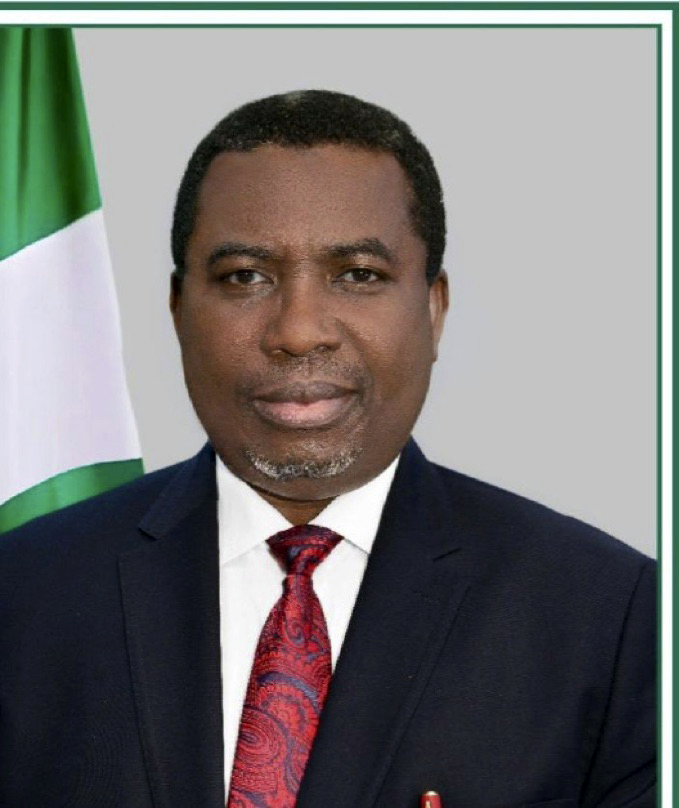
The Minister of Finance, Budget and National Planning, Zainab Ahmed, while responding to questions at the presentation of the 6th edition of President Muhammadu Buhari administration’s scorecard, stated that Nigeria “is neither broke nor seeking for debt relief or restructuring.” She also explained that even though the Federal Government may not have all the revenues it requires to meet the country’s expenditure needs, it has not defaulted in distributing the monthly revenues from the Federation Account Allocation Committee (FAAC) to the three tiers of government.
While some of the claims made by the Finance Minister may be valid, the flip side is that Nigeria’s economy is currently sick and needs robust fiscal and monetary policy measures to revamp it. According to the Central Bank of Nigeria( CBN), the monthly average exchange rate of the naira to the US dollar in the last seven and a half years of the present administration, fell from N196.92 in June 2015 to N445.83/$ for inter-bank Foreign Exchange market as of November 2022.
This represents 53 per cent depreciation against the U.S. dollar. This has increased our foreign debt burden by N9trillion, the worst in seven years. This amounts to an increase of 288 per cent of debt in seven years, from $10.32 billion as of June 30, 2015, to $40.06billion for the same period, 2022, according to figures from the Debt Management Office (DMO). The debts include loans obtained by states and federal governments from the World Bank, International Monetary Fund (IMF), African Development Bank (AfDB), Euro Bonds, Diaspora Bonds, as well as loans from China, Germany, Japan, France and India.
At 33 per cent to the GDP, Nigeria’s debt stock is still within acceptable international threshold. However, it will cost Nigeria close to N9trillion if the country decides to pay back the $40.06billion external debt soon. This will impose a huge external debt service on the economy. Still, the Federal Government is borrowing more from the external market. The risk is that frequent debt increase without a corresponding increase in foreign currency earnings could put the country in harm’s way.
In a bid to enhance the value of the naira, the CBN had earlier banned 41 items from accessing foreign exchange at the official market. It also offered N5 for every $1 remitted to Nigeria through International Money Transfer Organisations, just as it also banned the supply of Forex to Bureau de Change, among others. However, these policies have not yielded the intended objectives of stabilising the value of the naira. A good fiscal and monetary policy plan can stabilise the ailing economy. While the depreciation of the naira is driven by demand and supply, the devaluation of our currency is the result of the failure of some CBN’s policy measures to achieve certain economic outcomes. Undoubtedly, there have been many policy flip-flops that have not augured well for the economy.
We agree with the World Bank and IMF that the effort by the apex bank to achieve price stabilisation of the naira has not materialised yet because the local currency has not been allowed to respond to real domestic and external pressures. Global financial institutions have predicted that the value of the naira will depreciate further next year as its current exchange rate to the US dollar is well above its fair value. At present, the naira is considered overvalued. That is why the government should, as a matter of priority, invest more in production rather than in consumption.
Therefore, there is urgent need for a comprehensive review of our economic policies. The options encompass both fiscal and monetary policies. The fiscal options must include strengthening government’s financial management, investing in poverty alleviation programmes, education, health and security. At the monetary policy level, there is need to create a unified, stable, market-based exchange rate, reduce inflation and interest rate. If well implemented, these will stimulate the economy.
This is the right time to intensify the diversification of the economy through huge investment in the non-oil sector. It is laudable that the non-oil sector contributed 73 per cent of revenue for the 2022 budget. More investment should be deployed to the non-oil sector, especially the agricultural and agro-processing industries. That is why good and creative leadership is required to navigate Nigeria through the present turbulent economic waters, to growth and development. A stable, political and economic environment will make the rescue plan for the economy less burdensome.