Follow Us on Google

In its latest report, the United Nations Development Programme (UNDP) noted that though the outbreak of COVID-19 pandemic in 2020 adversely affected Nigeria’s economy, the red flags began well before the pandemic. The situation has been worsened by a decline in revenue, excessive borrowings and debt service payments, which have gulped the bulk of government revenues. According to the report, beyond the short-term challenges of the oil sector, long-term concerns include scarcity of foreign exchange, unemployment and poverty. These, it says, pose serious threats to the economy.
Besides, the manufacturing sector is challenged by erratic power supply, multiple taxation, and inadequate infrastructure, among others. On its part, the World Bank urged the government to optimise its tax systems and focus on key areas that will boost revenue generation, which has dropped drastically. To the World Bank, Nigeria faces “existential threat.” The global bank is worried that despite higher oil prices in the international market, Nigeria has not benefited from it because of the huge amount spent annually on fuel subsidy.
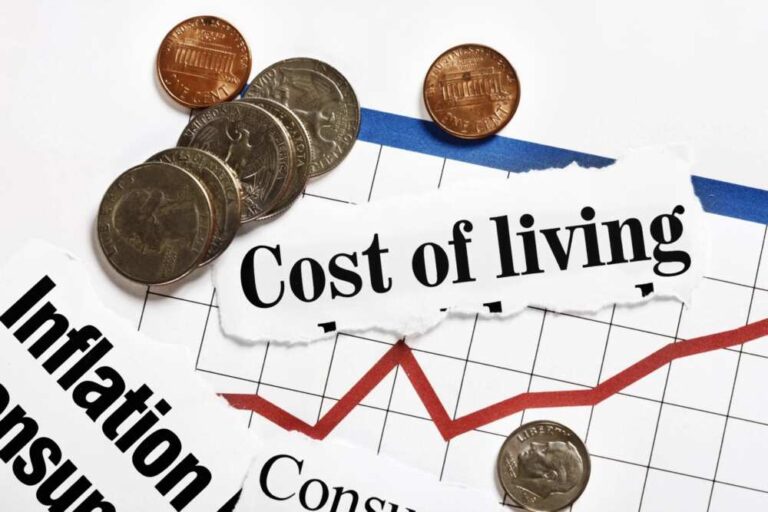
The World Bank’s position on the economy is supported by verifiable data. Nigeria’s debt stock increased to N41.6trillion in the Q1 of 2022, with a projection that it could peak at N45trillion by the end of this year. Even more disturbing is the latest report that Nigeria is fifth on the list of the World Bank’s global debtors as of June 30, 2021. Similarly, the International Monetary Fund(IMF) had, in March this year, estimated that Nigeria might spend a hefty 93 per cent of its revenue on debt servicing in 2022, and more than that percentage by next year.
Last month, the Minister of Finance Budget and National Planning, Mrs. Zainab Ahmed, admitted that the country had serious financial issues, with about 119 per cent of the country’s revenue spent on debt servicing. The situation implies that government will borrow more to meet its financial obligations, including debt servicing to China, France, Germany and multilateral institutions, such as the World Bank, IMF and African Development Bank(AfDB). This is in addition to the N2.45trillion the government reportedly borrowed from the Central Bank of Nigeria (CBN).
There is no doubt that the country is facing, perhaps, its worst financial challenges in recent times. Between 2015 and 2019, Nigeria’s non-oil revenues were among the lowest in the world, and the second lowest in terms of spending. A new World Bank report shows that it is at the bottom rung, ranked 115th out of 115 countries surveyed in terms of average revenue to GDP ratio. This is in spite of higher oil prices. It has been projected that federation collectible revenue will get even lower by the year’s end.
It is very clear that Nigeria’s economy is in a bad shape. Therefore, government must put a moratorium on borrowing except when it is absolutely necessary. Any borrowed money should be tied to specific projects that will stimulate the economy to growth. The time has come for the government to peg its borrowing at five per cent of previous year’s earnings as some Nigerians have advised. Borrowing above previous year’s earnings doesn’t make good economic sense. Let borrowing be for productive purposes instead of consumption.
Beyond that, government should expand its tax base rather than increasing the burden on existing taxpayers. This should ensure the inclusion of more people in the informal sector and make the tax system more progressive in such a way that the rich will pay more than the poor. For instance, in 2017, only 214 rich persons in the country paid N20 million and above as tax. The most active taxpayers were those, whose Pay As You Earn (PAYE) were deducted from source. In the same year under review, Nigeria’s tax-to-GDP ratio was as low as six per cent, the lowest in the world. This is below the 18 per cent average on the continent. The payment of Value Added Tax(VAT) was also very low. This means that our tax administration and collection system need to be reviewed for more efficiency and transparency.
The government should focus on agriculture and solid minerals. Nigeria’s future prosperity will depend so much on agriculture and solid minerals. With large deposits of solid minerals, Nigeria will earn about $50billion annually from the sector. This can only be realised if the necessary policy framework is put in place to harness the abundant solid minerals. But government must ensure security and ease of doing business in the country by removing all the impediments to farming and investment inflows into the country. The economy must be properly managed because Nigeria cannot afford another recession.