Follow Us on Google

“Your legacy is not what you leave for people but what you leave in people.”
—Anonymous
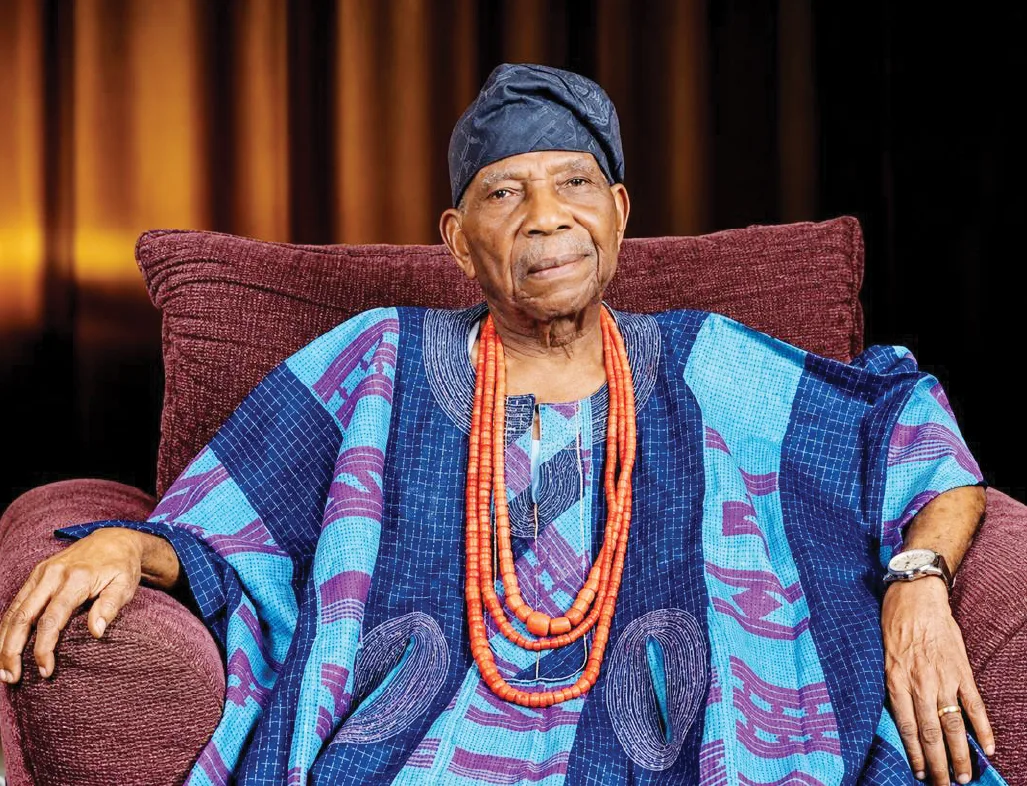
The passing of Pa Reuben Famuyide Fasoranti at the landmark age of 100 marks the definitive conclusion of a monumental chapter in the political history of the Yoruba people and the Nigerian nation. As the last surviving patriarch of Afenifere’s founding generation, his death leaves the premier pan-Yoruba socio-political organisation mourning not merely the departure of its leader, but the loss of a living symbol of its founding ideals, moral fortitude, and historic struggle for self-determination and equity.
A rare statesman, visionary patriot, and unwavering champion of progressive ideology, Fasoranti served as an indispensable bridge connecting the movement’s formative years — rooted in the philosophical foundations laid by Chief Obafemi Awolowo — with its continuing quest for Yoruba political relevance, socio-economic development, and national structural reform. Until his final days, he remained resolutely committed to the Yoruba cause, demonstrating that the pursuit of a people’s collective aspirations need not diminish with advancing age. Even in the twilight of his life, he continued to devote his remaining strength to the principles he cherished, proving that genuine leadership is an enduring life covenant.
What truly distinguished Pa Fasoranti as a leading light for Afenifere was a rare constellation of leadership qualities defined by intellectual depth, moral integrity, quiet strength, and selfless service. Long before he stepped into the presidency of Afenifere following the transition of Pa Abraham Adesanya, Fasoranti had established himself as a distinguished educator, community builder, and administrator. An alumnus of the University College, Ibadan, who pursued postgraduate studies in the United Kingdom and Australia, he viewed education as the ultimate catalyst for human emancipation and societal progress. As a devoted disciple of Awolowo, he translated the progressive doctrine of education for freedom and welfare into tangible reality by founding institutions such as Akure High School and Omolere Nursery and Primary School. This rich background as an educator infused his political leadership with patience, systematic thinking, and an exceptional capacity to mentor younger generations, ensuring that his advocacy was always grounded in enlightenment rather than mere partisan passion.
Integrity, transparency, and financial discipline were equally central to his public legacy. Serving as the Commissioner for Finance in the old Ondo State under the administration of Governor Adekunle Ajasin during the Second Republic from 1979 to 1983, Fasoranti managed public resources with legendary prudence. Under his custodianship, state funds were deployed with meticulous care to implement free education and healthcare programmes, setting a gold standard for fiscal responsibility. At a time when public office was increasingly corrupted by material greed, his immaculate record provided Afenifere with an unassailable moral authority when demanding good governance, accountability, and ethical leadership from Nigeria’s ruling class.
Fasoranti’s leadership was further defined by extraordinary courage and resilience in the face of political tyranny and deep personal tragedy. During the dark years of military dictatorship, particularly under the brutal regime of General Sani Abacha, he stood at the forefront of the National Democratic Coalition and Afenifere pro-democracy movements, enduring persecution and surviving a politically motivated assassination attempt. Decades later, his fortitude was put to the ultimate test by personal grief — most painfully the tragic murder of his daughter, Funke Olakunrin, in 2019. Rather than succumbing to bitterness or calls for ethnic reprisal, Fasoranti responded with statesmanlike composure, channelling his grief into a dignified crusade for national security, justice, and state policing reforms.
Furthermore, his commitment to true federalism and constitutional restructuring remained unshakeable throughout his century-long journey. Fasoranti understood that Yoruba prosperity and Nigeria’s long-term stability were inextricably linked to an equitable constitutional framework that allowed federating units to develop at their own pace. As Afenifere leader, he navigated complex internal political divisions, ideological debates, and external pressures with calm wisdom, consistently seeking consensus while refusing to compromise on fundamental values. His Akure home served as a political sanctuary where leaders across party lines sought his wise counsel, acknowledging his stature as an elder statesman who transcended narrow political divides.
The departure of this colossus, however, leaves a profound and daunting vacuum at the heart of Afenifere and Yoruba leadership. Filling the void left by Pa Fasoranti is not merely a matter of electing a new leader; it represents a formidable task of institutional survival, moral preservation, and ideological renewal. For decades, the moral authority of founding fathers like Awolowo, Ajasin, Adesanya, and Fasoranti provided an unshakeable anchor that held the organisation together, even during turbulent political storms. With the passing of the final member of that pioneer generation, Afenifere stands at a critical historical crossroads where it must confront both internal fragmentation and external political challenges.
First among the critical tasks facing the post-Fasoranti era is the urgent imperative of internal reconciliation and organisational cohesion. In recent years, Afenifere has suffered from factional friction and conflicting political endorsements that threatened to dilute its unified voice. The new leadership must honour Fasoranti’s memory by bridging these divides, healing historical rifts, and re-establishing a unified political consensus among the Yoruba people. Without a cohesive front, the organisation risks losing its standing as the definitive voice of Yoruba socio-cultural and political aspirations.
Second, the organisation faces the vital task of attracting, nurturing, and integrating a new generation of leaders. For Afenifere to remain relevant in the twenty-first century, it must bridge the generational gap between its traditional elders and the dynamic Yoruba youth. This requires modernising its communication strategies, engaging with contemporary economic realities, and translating classic progressive principles — such as free education, social welfare, and regional economic integration — into innovative policies fit for the modern digital age.
Finally, the new leadership must inherit Pa Fasoranti’s unwavering commitment to the restructuring of the Nigerian federation. As Nigeria continues to grapple with economic instability, security vulnerabilities, and governance bottlenecks, Afenifere must remain an unyielding advocate for true federalism, regional autonomy, and constitutional reform. It must articulate this vision with intellectual rigour and diplomatic diplomacy, persuading other geopolitical zones of the mutual benefits of a restructured nation.
To navigate this transition without crisis, Afenifere needs a deliberate and seamless succession architecture that preserves moral authority while ensuring renewal.
Most crucially, Fasoranti’s greatest legacy as an educator must be honoured through the creation of a structured leadership pipeline. Pa Reuben Fasoranti’s century of life was a testament to the enduring power of principled leadership, integrity and selfless devotion to a noble cause. He did not merely lead Afenifere; he embodied its conscience. His passing closes the chapter of the founders, but it must not close the book of the ideals they fought for. The task of filling his immense vacuum is monumental, but it is not insurmountable if Afenifere embraces institutionalisation over personality, renewal over nostalgia, and unity over ego. By implementing a seamless succession plan anchored on collegiate stability, constitutional legitimacy and deliberate youth infusion, Afenifere can ensure that the light he carried for a century does not flicker, but continues to illuminate the path forward for the Yoruba nation and Nigeria as a whole.