Follow Us on Google
• Dons, teachers, parents hail FG
By Kehinde Aderemi
Sixteen years after it was removed from the school curriculum, the Federal Government has announced the reintroduction of Nigerian History into the school curriculum, making it a compulsory subject from primary to senior secondary school.


Before it was finally removed from the school curriculum, the Federal Government had, in 2007, launched a new curriculum known as the New Basic Education Curriculum for primary and Junior Secondary Schools. The new curriculum was implemented in the 2009/2010 academic session.
According to the Federal Government then, the reasons for the removal were, among others, that students usually shun the subject. It was also gathered that only a few jobs were available for History graduates, and that there was a dearth of History teachers.
But like a volcano erupting from the surface of the earth, the removal of history from the school curriculum came with lots of criticism from Nigerians. Many believed it was a disservice to national unity and progress.
For instance, it was gathered that Nigerian historian and eminent professor, the late Prof. J. F. Ade Ajayi, strongly opposed the removal of history from the Nigerian school curriculum. The late Prof. Ade Ajayi believed that history was crucial for nation-building, fostering national identity, and imparting societal wisdom and values.
He championed an Africa-focused historical perspective, working to reform curricula and promote the use of oral sources to decolonise the past and inform policy, advocating for history’s role in making society better.
And before his death in 2014, he approached former President Olusegun Obasanjo on the need for the reintroduction of history to primary and secondary schools.
Three years after his death, in 2017, the Nigeria Education Research and Development Council announced that it was set to reintroduce History as a subject in primary and junior secondary school curriculum, beginning from the 2018/2019 academic session.
With the new move, Nigerians were excited that the new development would help in covering the lost grounds.
In 2022, the Federal Government initiated the first stage of a teacher training initiative to reintroduce History as a stand-alone subject in basic education curriculum. It was considered to be another great milestone in the education sector.
So, when the news broke out on Wednesday, September 17, that the Federal Ministry of Education on its official X account had re-introduced Nigerian History into the school curriculum, stakeholders in the education sector, including teachers in primary and secondary schools, university dons, and parents across the country saw the move as a welcome development.
According to the statement released by the Federal Ministry of Education on its official X account, the ministry stated: “For the first time in decades, Nigerian pupils would study History continuously from Primary 1 to JSS3, while SSS 1-3 students would take the new Civic and Heritage Studies, integrating History with Civic Education.
“Primary 1–6 pupils would learn about Nigeria’s origins, heroes, rulers, culture, politics, economy, religions, colonial rule, and post-independence governance.
“JSS1–3 students would study civilisations, empires, trade, European contacts, amalgamation, independence, democracy, and civic values.
“This reform is a priceless gift to the nation, reconnecting children with their roots while inspiring pride, unity, and commitment to national development. The civic education in the curriculum would equip learners with the values needed to respect diversity, uphold institutions, and contribute positively to society,” the statement said.
In the same vein, the education ministry also released the revised curriculum for Primary and Junior Secondary levels and said it would partner with stakeholders to provide resources, retrain teachers, and monitor implementation.
The federal government urged parents, educators, and all the stakeholders in the various communities to support the initiative, which it described as a shared responsibility in raising disciplined and patriotic citizens.
Speaking on the new development, retired professor and former deputy vice chancellor of the University of Lagos, Professor Duro Oni, said it was a welcome development. Prof. Oni explained that history was a way of life, maintaining that people, irrespective of their cultures and backgrounds must know about their histories.
“Well, I believe the reintroduction of History in the school curriculum is a right step in the right direction. No one quite remembers when it was taken off from the curriculum. But I recall that at the point, and this was quite some time ago, that Professor J. F. Ade Ajayi, an eminent Nigerian historian had raised an objection, asking why should history be taken off from the school curriculum?
“And the truth is: Who is afraid of history? What is it that made it impossible for people not to remember history, or is it something that is antithetical to some people’s thinking or what? Some people have this belief that everything that should happen should be in the sciences. Humanity does not live only by science. Humanity lives by science and humanity.
“If you don’t know your history, how do you know which direction you should be going to? What are those things that we did right? What are those things that we didn’t do right? That’s the way that the world is. And if you don’t remember the historical antecedents to those issues, how do you now move forward?” he queried.
Professor Raheem Kolawole is a Professor of Environmental Education. He described the reintroduction of History in the school curriculum as great news.
According to him, bringing History back to the school curriculum would provide jobs for history teachers from primary and secondary schools and also help the youth to navigate the complex journey of life.
Prof Kolawole urged the Federal Government to sustain the noble initiative, insisting that efforts should be made to encourage history teachers.
Other News
“It is very important for us to learn and know about our history as a people. This is one thing I have been agitating for, for the past ten years now. If you don’t have history studied right from the primary school, you won’t belong anywhere. You won’t know your history.
“For example, if you talk to the young ones now, even those that are in the secondary schools and even some who are now in the university, and you ask them to tell you the history of Nigeria’s independence, many of them would not be able to say anything.
“Many don’t even know who Awolowo was, who Azikwe was, who Sadauna was. When you don’t know that, it is very dangerous, because then you don’t know how you have been built with this age where you are.
“Then again, you know, this is a country that we have different ethnic nationalities. We must know our histories, including that of other tribes, and their regions. People must strive to know their history so that we would not be found wanting as we are doing now.
“We need to tell stories to the young ones. The history is there, even the older ones, we should be able to know them, we should be able to give those histories to our children, so that they can also transfer it later to our grandchildren and so on and so forth.”
The environmentalist stated also that history is part of human dignity, values, development and growth.
“Up to now, the Europeans still tell their stories. They study the history of Europe. Europeans don’t joke with history.
“Another thing is that we don’t need to start teaching history the normal way. History can start with fairy tales. Fairy tales are stories that are somehow not very real. It happens. So, the myth will be there.
“So it gives people, especially the young ones the ability to think and analyse. The ability to ask questions, which could also help by linking it to some kind of history. Why was it like that? What happened when, how and why? There are questions to be asked when we begin to tell our stories.
“So, history is very important. If you don’t have history, then you don’t know where you are coming from. If you say you don’t know the history of your own house, your own compound, your own town, then you don’t know the history of your grandparents, know where they lived, how they lived. That is very dangerous. And it means we are nothing.
Prof Kolawole explained further that at the basic primary school level, the history to be taught should be based on their community.
“I think the basic level, the most important is to start with the history of their area, their environment. From there to that of Nigeria’s history. They must know about their own environment, Nigeria, as well as the regions,” he noted.
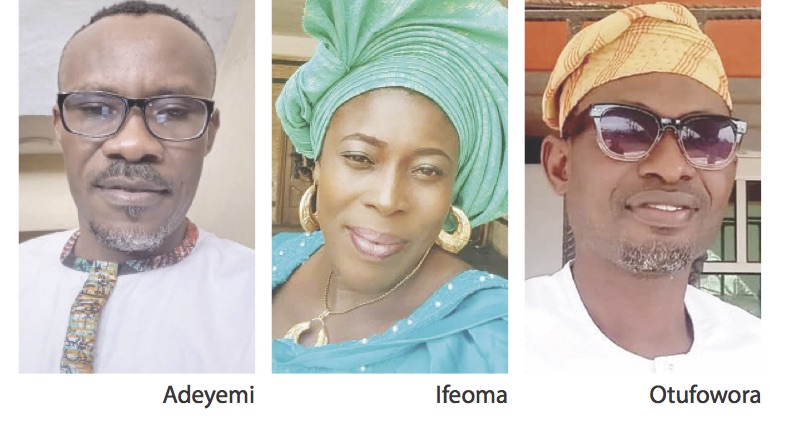
Mr Odubanjo Adeyemi, a secondary school teacher, spoke about the importance of having History as a subject. Adeyemi, who teaches at Angus Memorial Senior High School Somolu, stated that History has been one of the important subjects that help in shaping the minds of future generations.
He admitted also that immediately History was removed from the curriculum, it was obvious then that Nigerian students were disconnected from their cultural and historical background and it has been like that till date.
“But now that the subject has been reintroduced, we believe it would be the beginning of another success story that would enhance national unity, patriotism and encourage responsible citizenship among young Nigerians.
“By learning about Nigeria’s origins, notable leaders, cultural heritage, and colonial experience, students will gain a deeper understanding of the nation’s past and its relevance to contemporary issues. History as a subject also promotes critical thinking, research, analytical skills and qualities that are useful and essential for informed citizenship,” he explained.
According to Mrs Ezemba Francisca Ifeoma, a primary school teacher from St Saviour’s Anglican Primary School Igbaga, Adamo, Ikorodu, the reintroduction of History in school curriculum was a step in the right direction.
“It is a welcome development that would help the students to know about the past even as it would also help them to prepare for the future.
“History is fundamental to human growth and development and in this time and age, it is very important for our children to know more about the history of Nigeria and other countries of the world,” she stated.
Alhaji Hammed Otufowora, a businessman and a parent, expressed his satisfaction at the new move. He said he was excited that the Federal Government has retraced its step by reintroducing History in school curriculum.
He said:”Now that History is back in our school, I am happy that some of the teachers affected by the removal about 16 years ago would regain their jobs and they would be able to teach the subject better than it was during our days.
“I want to also appeal to the Federal Government to fulfil the promises made by making sure that those teachers were retrained and taken good care of. Government should also support them with everything that is needed for them to do well in the subject.”
Mr Adedeyin OA, from Arch. Deacon Adelaja Senior Secondary School, Bariga, said the re-introduction of History in the school curriculum offers great opportunities for both the teachers and the students to have a national identity and foster unity among the various ethnic nationalities.
“History helps young Nigerians to learn about the past – history, heritage, culture and identity. It enhances nation-building, personal growth, and societal progress as a whole.
“As much as I appreciate the re-introduction of History in the school curriculum, the Federal Government must sustain the tempo by encouraging and supporting the teachers to help them deliver while teaching the subject,” he noted.