Follow Us on Google
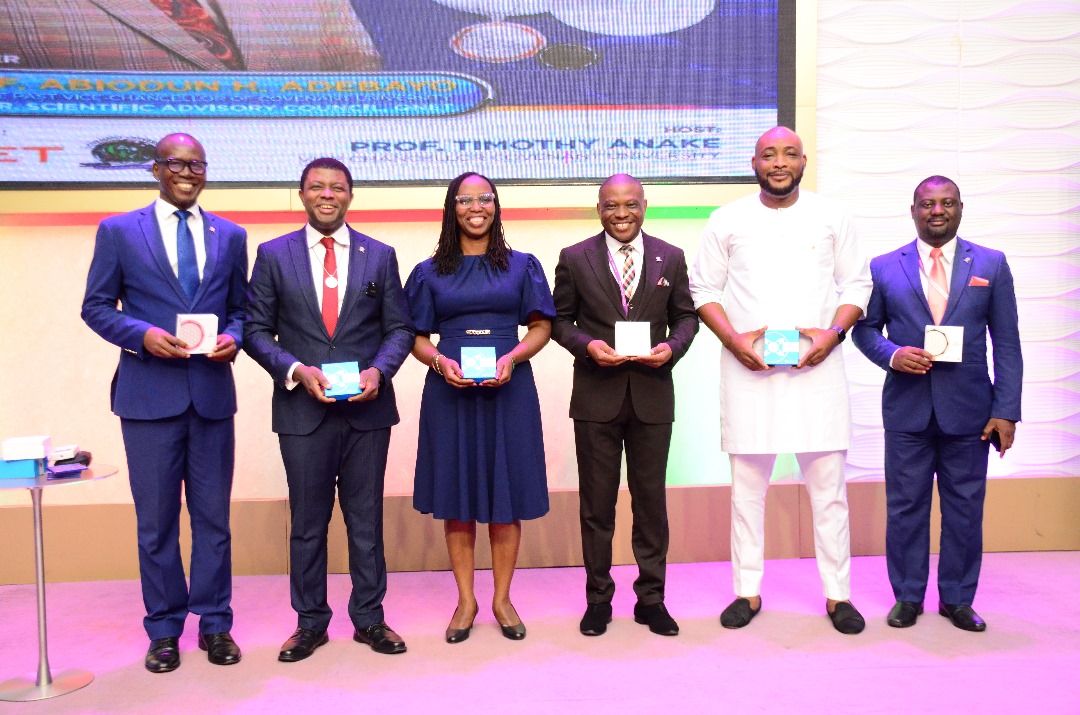
By Chinenye Anuforo
Recent groundbreaking studies, coordinated by Professor Abiodun Humphrey Adebayo, a member of the QNET Scientific Advisory Board and former Vice-Chancellor of Covenant University, have revealed the significant potential of QNET’s Amezcua Bio Disc 3.
Conducted by Covenant University students, this wellness product showed promise in enhancing beverage quality and accelerating growth in aquaculture (fishes).
The research findings were presented through compelling student presentations, highlighting the Amezcua Bio Disc 3’s diverse applications. Professor Adebayo emphasized the collaborative nature of the research, stating, “I am not the only one doing the job here. I am just coordinating. I have so many of my team from here. My students, our staff, and faculty here.”
Professor Adebayo addressed the critical global health issue of declining life expectancy, noting, “You may be wondering, why is it that we are currently having the life expectancy rate depleting?” He pointed out that Nigeria has one of the lowest life expectancy rates at 54, significantly less than nations like China, the U.S., Japan, and other Asian countries, which boast rates of 83. He contrasted this with past generations, who lived longer despite fewer scientific advancements.
He explained how Amezcua products harness natural forces like water and light to promote well-being, introducing three key products: the Bio Disc 3, the Bio Light, and the Biofom.
Regarding the Bio Disc 3, he described it as “a proprietary blend from the Amezcua product. It came out after years of discovery.” He elaborated on its function: “It contains glass but packed with some natural wavelength that has the capacity to boost the energy field of the body, of any environment it comes in contact with.”
He highlighted its application of quantum physics in energizing water, explaining, “The body is naturally made up of 70% of water, this actually helps in energizing the water content of the body.” He demonstrated how it transforms ordinary tap water (H2O) into structured, hexagonal H3O2, which is then more readily absorbed and utilized by the body. This energized water leads to improved energy, cell growth, hydration, immune system boosts, and detoxification.
Moving to the Bio Light, Professor Adebayo stated, “It engages the light therapy to help power the disc here, this all is the energy here.” He emphasized its use of light frequencies for wellness, noting that different colored lights offer specific benefits. For example, “the red light, helps in facilitating any strain that we may have been experiencing, maybe joint pains and all of that.” However, he cautioned, “It’s a wellness product and not an alternative for any cure or any medications that we are using. It’s just to support our wellness.”
He also addressed the pervasive issue of electromagnetic radiation from modern devices, introducing the Biofom. He warned, “Virtually every one of us here have one device on the other. Each time we use this device, particularly phone, it emits radiations.” He conducted a live demonstration with an electro smog meter, showing high radiation levels from a router and stressing, “this call router, should be installed far away from where people are. It is not meant to be very close to us in our personal space.” He extended this warning to mobile phones, particularly iPhones, and faster network technologies like 5G, explaining that higher speeds generate more transmission and radiation.
The student research focused on the impact of Amezcua Bio Disc 3 on the physicochemical and microbial properties of selected local and branded drinks.
Afolayan Toluwanimi initiated the discussion by acknowledging the cultural significance and physiological benefits of various beverages while also raising concerns about their physicochemical stability and microbial safety, especially for locally produced drinks. The research aimed to determine if QNET’s Bio Disc 3 could improve the quality of both local and branded, structured and unstructured drinks.
Their methodology involved dividing beverage samples into six groups: one control and five treated with the Amezcua Bio Disc 3 for varying durations (12 to 24 hours of “supercharging”).
For local drinks like Kunu and Zobo, significant increases in electrical conductivity (EC) were observed, particularly after 12 and 24 hours of structuring. Branded drinks also showed promising EC results after structuring. While pH, salinity, temperature, acidity, and alkalinity generally showed no significant difference, the consistent increase in electrical conductivity across various structured drinks suggests a positive alteration in their energetic properties.
The research also indicated a significant decrease in total dissolved solids for some structured local drinks, especially those treated for “decimating, one hour and supercharging.” This suggests the Bio Disc 3 may influence the aggregation or state of dissolved particles within the beverages.
Edetia Maka and Lois Chiamaka Eze independently confirmed a significant reduction in microbial load across all tested beverages – including local drinks like palm wine, Zobo, Tiger Nuts, and Kunu, as well as branded drinks.
Edetia Maka stated, “Sample A has a higher microbial load,” but “on structuring, we can see that 24 hours, 48 hours and 72 hours had a decrease in microbial growth.” Similar trends were observed in palm wine, Sample D, Tiger Nuts, and Kunu, where the control group showed higher microbial loads compared to samples treated for 24, 48, and 72 hours. This led to “low growth of microbial use in the other samples.”
Other News
Eze reiterated these findings, noting that for Tiger Nuts, Kunu, Zobo, and a branded drink, “the control has the most microbial using, but when it was structured, we can see that there was a decrease in microbial growth.”
The student researchers highlighted that the Amezcua Bio Disc 3 “serves as a novel energy-based solution for enhancing the physicochemical and microbial properties of these drinks.” They also noted its ability to “boosts the taste, improves nutrient bioavailability, and also reduces the risk to better shelf life of the drink,” positioning it as a “future direction in natural beverage preservation.”
In an entirely different yet equally compelling study, Omonofa Adebayo, specializing in biotechnology and bioinformatics, presented research on the “growth pattern of cat fishes using the Amezcua QNET Bio Disc 3.” The study aimed to examine the Bio Disc 3’s impact on the growth of Clarias species catfish.
Ninety fingerlings were divided into three groups: a control group (unstructured water) and two experimental groups (SC1 and SC2), both using structured water, with SC2 having the Bio Disc 3 directly inside the fish compartment.
Omonofa Adebayo presented a detailed week-by-week analysis of catfish growth over 60 days, consistently showing a significant increase in weight for fish raised in structured water compared to the control group. He highlighted the statistical significance, stating, “At day zero, there was no significant difference. But at day 60, there was a significant difference,” with the structured groups showing substantially higher mean weights.
This research strongly suggested that the Amezcua Bio Disc 3, through water structuring, can significantly enhance the growth rates of catfish, potentially offering a novel approach to improving aquaculture practices.
Earlier, in his welcome address, Professor Timothy Anake, Vice-Chancellor of Covenant University, underscored the significance of the gathering, stating, “It’s a gathering that validates what happens in a university setting and how it affects the products that we consume.”
Professor Anake highlighted the university’s remarkable growth: “Covenant University, as we know, has grown over 23 years to become a world-class university that is to be reckoned with. This is validated by the numerous rankings, the very latest one being that Covenant University, among 395 universities in Africa, private university status, is the best university.”
The Vice-Chancellor emphasized the university’s dedication to producing impactful leaders: “The university has, over these 23 years, shown quality, demonstrated commitment to solving local problems and shown without doubt by the students of Covenant University who have become industry leaders and solution creators across Africa and the world, that it was indeed an institution set up to raise a new generation of leaders.”
A key focus of the dialogue was the collaborative research efforts surrounding QNET products, particularly the work of Professor Abiodun Adebayo. Professor Anake remarked, “Today we are here today because there is a researcher at Covenant University who is a beacon and who has also made an impact as far as the QNET organization is concerned.”
He added, “We are always excited to identify with these kinds of accomplishments as a university because it speaks to the quality of research that is conducted in the university.”
He further expressed enthusiasm for the practical application of research: “Our students are exposed to the realities of the resource of research. While speaking with Professor Abiodun Adebayo, I got to understand that his students have been doing several kinds of research around the QNET product. So there is a direct transfer of knowledge, there is the potential to create new products, and there is impact for our community, and that’s exactly what the university is set up for.”
Theodocia Nana Quartey, Head of Compliance for QNET, expressed her delight at the collaboration: “It’s an honour to be here, just to let the world through Professor Abiodun Adebayo know what our company stands for. I must say that the collaboration with Professor Adebayo has been a blessing.”
She also shared her impressions of the university’s leadership: “Yesterday I met, I was privileged to meet with the Chancellor and it was a blessing, Listening to him, he believes strongly in local solutions, finding local solutions and even if we are bringing any product from outside Africa, it has to be relevant for us in Africa.”
Quartet reiterated QNET’s unwavering commitment to offering science-backed wellness solutions that empower individuals to lead healthier, more balanced lives.
“By bridging the gap between innovation, research, and everyday well-being, we continue to demonstrate that quality and credibility are at the heart of everything we do. Collaborations with esteemed researchers like Professor Adebayo allow us to deepen trust in our products and reaffirm our purpose to improve lives through holistic, evidence-based wellness.”