Follow Us on Google
From Ndubuisi Orji, Abuja
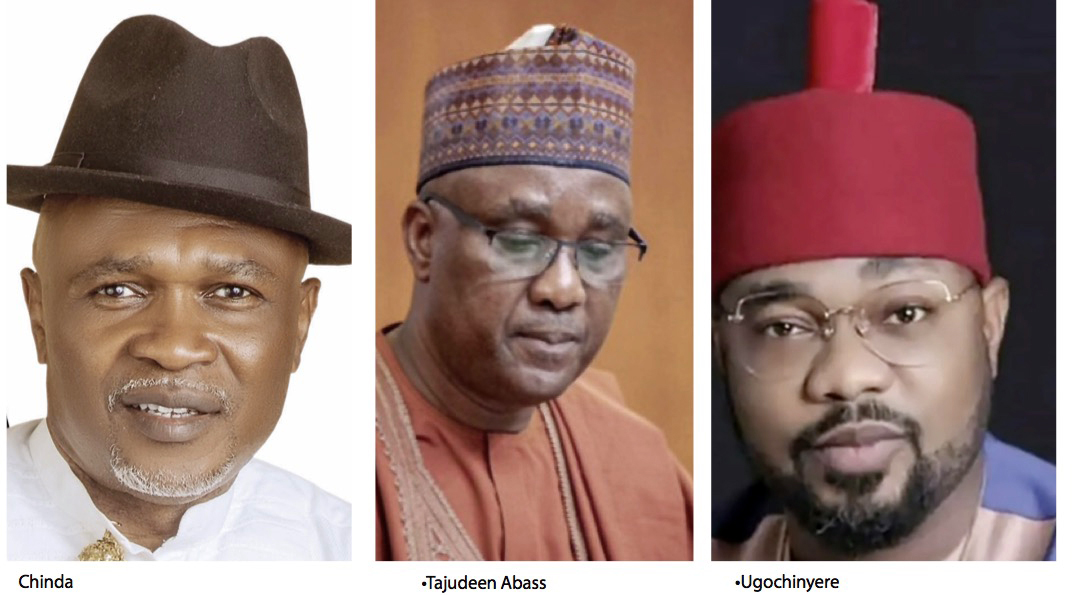
Since last week, there have been intrigues and serious horse-trading as tension mounts in the House of Representatives. The bone of contention is who replaces the member representing Obio/Akpor Federal Constituency of Rivers State, Kingsley Chinda, as Minority Leader.
Chinda, who is currently the All Progressives Congress gubernatorial candidate in Rivers State, last Tuesday announced his resignation from the position, which he has occupied since 2023.
Twenty hours after his resignation, 61 out of the 81 members of the minority caucus, in a letter addressed to the Speaker and dated 3 June 2026, nominated the member representing Ideato North and Ideato South Federal Constituency of Imo State, Ikeagwuonu Ugochinyere, as their preferred choice for the Minority Leader position. Ironically, the Speaker, Tajudeen Abbas, had announced a meeting with the opposition lawmakers over the minority position for 4 June.
However, in a twist, whilst the opposition lawmakers were expecting the Speaker to read their communication on the Minority Leader position, the Deputy Chairman of the House Committee on Media and Public Affairs, Philip Agbese, who was listed amongst the signatories, raised an alarm at plenary, alleging that his signature had been forged.
Agbese, a member of the Labour Party who represents Ado/Ogbadibo/Okpokwu Federal Constituency of Benue State, whilst speaking under matters of privilege, said that whilst he had visited many members including Ugochinyere, “our discussion was basically centred on the welfare of members of the minority and the issue of the executive not adhering to certain issues on our constituency projects. So I am at a loss, and I feel that my legislative privilege has been breached because this amounts to forgery for my signature to be used for purposes that were not intended.”
Nonetheless, Ugochinyere, who insisted that Agbese signed his nomination, accused the Benue lawmaker of an attempt to blackmail him, noting that there were other lawmakers present when he signed.
According to him: “I understand that at the moment, the overwhelming majority of 61 members out of 81 opposition members elected me. It may not go down well with some people, but I never expected that their desperation would get to this level. And also, important Mr. Speaker, those who are now more interested are those who are not even members of the minority.”
After the uproar in the chamber last Thursday, the political temperature in the Green Chamber has risen considerably as interest groups in the minority contest perfect their strategies. A Closed Circuit Television clip showing Agbese signing a document in Ugochinyere’s office has since emerged. There are also concerns that the ruling All Progressives Congress, through the House leadership, may want to interfere in the choice of the next Minority Leader so that a more malleable lawmaker who would not pose much of a problem to the executive might emerge.
This fear is understandable. In the last seven years, the House leadership has had more than a passing interest in the choice of minority leaders. For instance, in the ninth House, the choice of minority leadership was the cause of a long-drawn battle between the then Speaker, Femi Gbajabiamila, and key members of the opposition.
Shortly after the inauguration of the ninth assembly, the Peoples Democratic Party as the dominant opposition party had nominated Chinda as Minority Leader alongside others and forwarded their names to the House leadership. However, on 3 July 2019, Gbajabiamila announced that he had received a communication from members of minority parties informing him of their choice of minority leaders.
Amid protest by Chinda and his supporters, Gbajabiamila announced Ndudi Elumelu, who represented Anaocha/Oshimili, as the Minority Leader, leading to a free-for-all on the floor of the House.
Other News
At the inception of the 10th assembly, Chinda, who was the co-chairman of the Joint Task Team which midwifed the emergence of Abbas as Speaker, was named Minority Leader, forcing other minority lawmakers interested in the position to back off. Similarly, an attempt by opposition lawmakers to remove the minority leadership led by Chinda last October, for allegedly hobnobbing with the APC to the detriment of the minority caucus, was allegedly stalled by Abbas, who appealed to minority members to allow him to intervene.
It is against this backdrop that the meeting between the Speaker and the opposition lawmakers last Thursday is viewed with suspicion, owing to the fact that the nomination of caucus leaders in the House is the exclusive preserve of members of the affected caucus. Specifically, Order 7 Rule 9 of the House Standing Orders states that members of the minority parties in the House shall nominate from amongst themselves the Minority Leader, Minority Whip, Deputy Minority Leader and Deputy Minority Whip.
The G-60 minority lawmakers insist that there is no going back on their support for Ugochinyere as the next Minority Leader, stating that it is within the right of caucuses to choose their leadership in line with the rules of the House. However, critics cite the Imo lawmaker’s status as a first-time member and reference Order 7 Rule 15 of the House Standing Orders, which states that members must have cognate experience to be eligible to serve as principal officers of the House. Nevertheless, pundits ask what constitutes “cognate experience” and whether a lawmaker who has spent three years in the House can still be considered as lacking in experience.
The majority of opposition lawmakers, the Daily Sun gathered, see the choice of the next Minority Leader as an opportunity to redeem the minority caucus. A source within the minority caucus said the majority of the lawmakers are queuing behind Ugochinyere because they believe the Action Peoples Party member is better placed to lead the opposition in the bid to hold the government’s feet to the fire in the remaining one year of the present administration.
In the last three years, the opposition has been more or less a lame duck. Whilst the public, including opposition political parties, has consistently kicked against the large appetite of the President Bola Tinubu administration for endless borrowing, there are no records of the minority caucus disagreeing with loan requests, which are often approved within hours without the required scrutiny.
Therefore, with one year to the end of the life span of the current assembly, the selection of a new minority leadership offers the minority caucus a rare opportunity to redeem itself by choosing a leadership that will play the opposition role effectively in the Green Chamber.
The Chairman of the House Committee on Media and Public Affairs, Akin Rotimi, agrees that the choice of minority leadership is an affair of the opposition, noting there was nothing wrong with the Speaker meeting with members of the minority caucus.
“The choice of Minority Leader is a matter for the opposition parties and their members in the House to determine, in line with the House Rules and parliamentary tradition. The House Leadership has no role in determining who emerges to fill any of the three vacancies in the Minority Leadership, and suggestions to the contrary are simply inaccurate.
“I am not aware of any pressure from the Presidency regarding any individual or aspirant for Minority Leadership. The process remains one for the opposition caucus to manage in accordance with established parliamentary practice. The Speaker’s engagement with members across party lines is neither unusual nor extraordinary. It is part of his responsibility as Presiding Officer to maintain open channels of communication and ensure the smooth functioning of the House,” Rotimi stated.
Apart from Ugochinyere, the Deputy Minority Whip, George Ozodinobi, is believed to be eyeing the Minority Leader position. However, Ozodinobi, who is the lone minority principal officer at the moment following the defection of the other principal officers to the APC, is yet to declare formally. Nonetheless, the odds appear seemingly against him, as a school of thought believes there should be a clean sweep in the minority leadership so as to give the caucus a fresh start.
There is no doubt that the choice of the next Minority Leader will shape opposition politics in the House in the remaining one year of the present administration. Presently, the G-60 minority lawmakers hold the ace. But the question is whether they will remain steadfast to the end.