Follow Us on Google
By Damiete Braide
In every literary culture, the making of a canon unfolds quietly yet decisively beneath the surface of classrooms, publishing houses, prize ceremonies, and critical discourse. A canon is not merely a catalogue of celebrated works; it is a cultural memory system —one that determines which voices endure and which recede into obscurity. In Nigeria, this canon has historically been shaped by colonial inheritance and post-independence nation-building imperatives. Today, however, it stands at a crossroads. While new generations of writers are expanding the horizons of Nigerian storytelling, longstanding patterns of exclusion remain deeply embedded in the structures that decide literary value and remembrance.
The central question is no longer whether Nigeria possesses a literary canon. It unquestionably does. The more urgent questions are who controls this canon, who benefits from it, and who continues to be marginalised or erased within it.
For decades, Nigerian literature has been associated with a cluster of foundational figures whose works defined both national and international perceptions of Nigerian writing. Authors, such as Chinua Achebe, Wole Soyinka, Christopher Okigbo, Cyprian Ekwensi, Flora Nwapa, and Buchi Emecheta, formed the backbone of what might be termed the national literary imagination. Their works dominated school syllabi, university curricula, publishing catalogues, and global literary discourse. They addressed themes that resonated with the early post-independence era, colonial encounter, cultural identity, tradition versus modernity, and the forging of national consciousness—and their prominence was reinforced by institutional endorsement.
Yet the formation of this canon was never neutral. It privileged certain regions, languages, and aesthetic traditions while sidelining others. Northern Nigerian writers working in Hausa or Arabic, women exploring domestic or romantic narratives, and authors experimenting with crime, fantasy, or speculative fiction often remained peripheral to mainstream literary recognition. Even today, the long shadow of this earlier canon continues to shape what counts as “serious” Nigerian literature.
If canons are built anywhere, they are built first in classrooms. In Nigeria, secondary school and university syllabi function as powerful gatekeepers of literary memory. For many students, prescribed texts for WAEC, NECO, and JAMB examinations constitute their primary, and sometimes only, encounter with literature. Once a work gains curricular approval, it can remain entrenched for decades, producing a cycle of repetition in which a small group of writers is endlessly taught while newer voices struggle for entry.
Practical factors partly explain this conservatism: the availability of texts, teacher familiarity, and examination logistics. Yet the cultural consequence is stagnation. Students learn to revere a narrow slice of Nigerian literary history without interrogating why those works are included or what voices are missing. Women writers beyond the canonical pioneers, as well as authors from minority ethnic groups or those writing in indigenous languages, remain underrepresented. The implicit lesson is that legitimate Nigerian literature speaks in a particular register and style —a notion that reinforces historical hierarchies of taste and authority.
In the contemporary era, literary prizes have become among the most influential canon-making institutions. Awards such as the Nigeria Prize for Literature and the NLNG Prize confer visibility, sales, translations, and prestige. International honours amplify this effect further. Yet prizes are not immune to bias. Judges frequently favour literary realism, political gravitas, and stylistic restraint, while genre fiction and experimental forms struggle for recognition, regardless of readership or cultural impact.
Speculative fiction illustrates this tension. Nigerian writers have contributed significantly to the global renaissance of science fiction and fantasy, yet within domestic literary discourse these genres often remain marginal. Romance fiction, widely read across the country and frequently authored by women, is similarly dismissed as commercial or trivial. Such exclusions reveal not merely aesthetic preferences but gendered assumptions about which stories merit cultural esteem. Prizes do more than reward excellence; they signal legitimacy, and once legitimacy is conferred, it tends to perpetuate itself.
Publishers, situated at the intersection of art and commerce, play an equally decisive role in shaping the canon. Nigeria’s publishing ecosystem remains fragmented and underfunded, encouraging risk-averse decision-making. Established names and familiar narrative forms are more likely to secure contracts, while experimental works, regional narratives, or genre fiction are perceived as financial gambles. Writers operating outside mainstream expectations often resort to self-publishing or small presses, which rarely achieve broad distribution or critical recognition.
This creates a hierarchy of visibility. A novel issued by a major international publisher is far more likely to be reviewed, taught, and archived than a comparable work released through informal or digital channels. Language barriers further complicate inclusion. Authors writing in indigenous languages confront limited readerships, scarce translation support, and minimal institutional backing. Their relative absence from the canon reinforces the perception that Nigerian literature is synonymous with English-language writing, thereby narrowing the nation’s literary self-representation.
The rise of digital platforms has been heralded as a democratising force capable of bypassing traditional gatekeepers. Blogs, online magazines, and social media have enabled emerging writers, queer voices, and experimental forms to reach audiences previously inaccessible. Communities now coalesce around shared interests rather than institutional validation, expanding the terrain of literary participation.
Yet digital visibility does not automatically translate into canonical recognition. Online writing is frequently dismissed as ephemeral or lacking rigor, and viral essays rarely enter academic curricula or critical anthologies. Moreover, digital spaces possess their own hierarchies shaped by algorithms, popularity, and social capital. Access and amplification remain uneven. While the digital revolution has broadened participation, it has not dismantled the structures that determine which works are preserved and remembered.
Gender and regional inequalities persist as some of the most enduring patterns of exclusion. Women writers are celebrated rhetorically but often relegated to thematic niches framed as “women’s issues” rather than national concerns. Regional voices, particularly from northern Nigeria and minority ethnic communities, encounter compounded barriers arising from linguistic marginalisation, infrastructural deficits, and political instability. When literature from these regions gains attention, it is frequently filtered through expectations of authenticity or trauma, pressuring writers to perform narratives legible to external audiences.
Genre fiction faces similar marginalisation under entrenched hierarchies of taste. Literary fiction remains associated with intellectual prestige, while crime, romance, fantasy, and thrillers are relegated to the margins despite their engagement with social realities. Crime narratives interrogate corruption and justice; romance examines gender relations and emotional labour; speculative fiction reimagines power and possibility. Excluding such forms risks divorcing the canon from the lived experiences and imaginative landscapes of readers.
Other News
The Nigerian canon, therefore, is neither fixed nor monolithic. It is a living, contested space shaped by institutions, markets, and collective choices. Expanding it does not require rejecting established masters but rather interrogating the assumptions governing inclusion. Who determines curricular content? Who sits on prize panels? Which works are reviewed, archived, and translated? These questions expose the power structures underlying cultural memory.
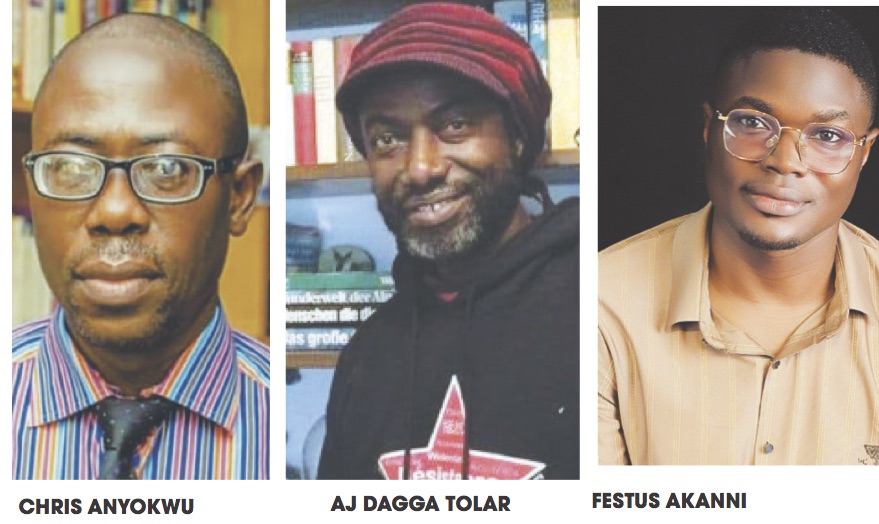
Literary scholar and critic Professor, Chris Anyokwu, situates the debate within a broader theoretical framework, drawing on Achebe’s distinction between beneficent and malignant fiction. Beneficent fiction, Achebe suggested, perpetuates superstition and intellectual stagnation, whereas malignant fiction, paradoxically the more desirable, ennobles and humanises, inspiring readers toward moral and imaginative transcendence. The difficulty of distinguishing between the two underscores the necessity of a canon that identifies works of enduring significance. Yet canon formation itself remains contentious and fluid.
Drawing on the literary theorist, M. H. Abrams, Anyokwu notes that canonisation typically requires a convergence of critical consensus, persistent influence on other writers, frequent cultural reference, and sustained curricular presence. Such criteria, however, may not fully account for Nigeria’s cultural specificity. Questions arise about the purpose of literature in a society grounded in communal values, diversity, and historical continuity. Should Nigerian literature privilege utilitarian social function over aesthetic autonomy? How should tradition and modernity interact in shaping canonical standards? These debates reflect ongoing tensions between local authenticity and global literary paradigms.
Further complicating canon formation is the relationship between literature and social conditions. Nigeria’s infrastructural challenges, educational decline, unreliable electricity, limited publishing resources, affect both production and readership. Without robust institutions that nurture reading cultures and support writers, the emergence of enduring literary icons becomes difficult. The vitality of a canon depends not only on artistic excellence but on the societal ecosystems that sustain creativity and literacy.
Writer and critic, AJ Daga Tolar, emphasises that literary icons do not arise solely from prizes but from sustained creative output and societal engagement. The enduring stature of Soyinka and Achebe, he argues, stems from the foundational strength of their works rather than institutional accolades. Contemporary prize winners who fail to produce subsequent influential works illustrate the limits of awards as measures of lasting value. Moreover, Tolar highlights the global success of diasporic writers drawing on African mythologies and folklore, authors who achieve international recognition and commercial success yet remain marginal within Nigerian literary discourse. Their achievements suggest that the future of Nigerian literary influence may lie partly beyond national boundaries, shaped by transnational identities and markets.
Tolar also underscores structural factors shaping reading culture: the collapse of public schools, inadequate electricity, and limited access to books. Without environments conducive to sustained reading, the social foundation necessary for literary canon formation weakens. A canon ultimately depends on readers —communities willing and able to engage deeply with literature. Where reading cultures erode, the canon risks stagnation or contraction.
Author and physician, Dr. Festus Akanni, offers a complementary perspective, focusing on the individual writer’s struggle to remain true to artistic purpose amid external pressures. Universities, publishers, prizes, and global markets each exert influence on what is perceived as serious literature. Today, he observes, prizes and global markets wield particularly strong power, conferring validation and media visibility that elevate certain works into canonical consideration. Publishers, influenced by market trends and prize cultures, further shape which manuscripts reach readers. Meanwhile, the once-dominant authority of universities over canonisation has diminished alongside declining interest in literary criticism and reduced institutional visibility.
Akanni acknowledges the tension between originality and influence, arguing that pure art does not emerge ex nihilo but through authentic expression unwarped by external expectations. Writers must balance pressures while allowing stories to emerge organically. As global and generational shifts reshape literary production, he anticipates significant transformations in how Nigerian literature is valued and remembered.
Across these perspectives, a common theme emerges: the Nigerian literary canon is the product of dynamic interactions among creative excellence, institutional power, market forces, and societal conditions. Its boundaries remain porous and contested. Expanding it requires more than celebrating new voices; it demands reimagining the structures that determine recognition and preservation.
A more inclusive canon would accommodate multiplicity, multiple languages, genres, regions, and readerships. It would acknowledge that literary value is not singular but plural, reflecting diverse modes of storytelling and cultural experience. Such a canon would also recognize the contributions of digital platforms and diasporic writers without dismissing local literary ecosystems. Ultimately, it would align memory with the full complexity of Nigerian life rather than a narrow selection of representative narratives.
The stakes of canon formation extend beyond literature. Cultural memory shapes national identity and collective imagination. What Nigeria chooses to remember, or forget, reveals its present anxieties as much as its past achievements. An honest canon would neither discard foundational figures nor fossilise them. Instead, it would situate them within an evolving constellation of voices continually redefining Nigerian storytelling.
The task before writers, critics, educators, publishers, and readers is, therefore, not merely to preserve heritage but to question the mechanisms of remembrance. Inclusion must become an active process, responsive to changing cultural landscapes and attentive to marginalized narratives. Only then can the Nigerian canon reflect the nation’s multiplicity rather than its historical exclusions.
In the end, literature functions as a mirror and a map. It reflects society while guiding its self-understanding. A canon that embraces diversity of form, language, and perspective can illuminate the many paths through which Nigerian experience is imagined and articulated. Conversely, a canon constrained by tradition or bias risks distorting that reflection, presenting a partial image as the whole.
The future of the Nigerian literary canon, thus, lies not in fixed lists but in ongoing dialogue, between past and present, local and global, elite and popular, center and margin. Its vitality will depend on sustained engagement across institutions and communities committed to nurturing reading cultures and supporting creative expression. Such engagement can transform canonisation from an instrument of exclusion into a framework of shared cultural memory.
LFor the most dangerous form of erasure is not silence itself but the quiet consensus that some stories were never worth remembering. Reimagining the canon is therefore not merely a literary exercise; it is an ethical imperative, one that affirms the plurality of Nigerian voices and ensures that the nation’s cultural memory remains expansive, contested, and alive.