Follow Us on Google
…sector pulls $2.6bn FDI in two years
From Charity Nwakaudu, Abuja
Minister of Solid Minerals Development, Dele Alake, has urged the United States and African nations to establish regional energy hubs to fast-track mining industrialisation and boost supply of critical minerals for the global energy transition.
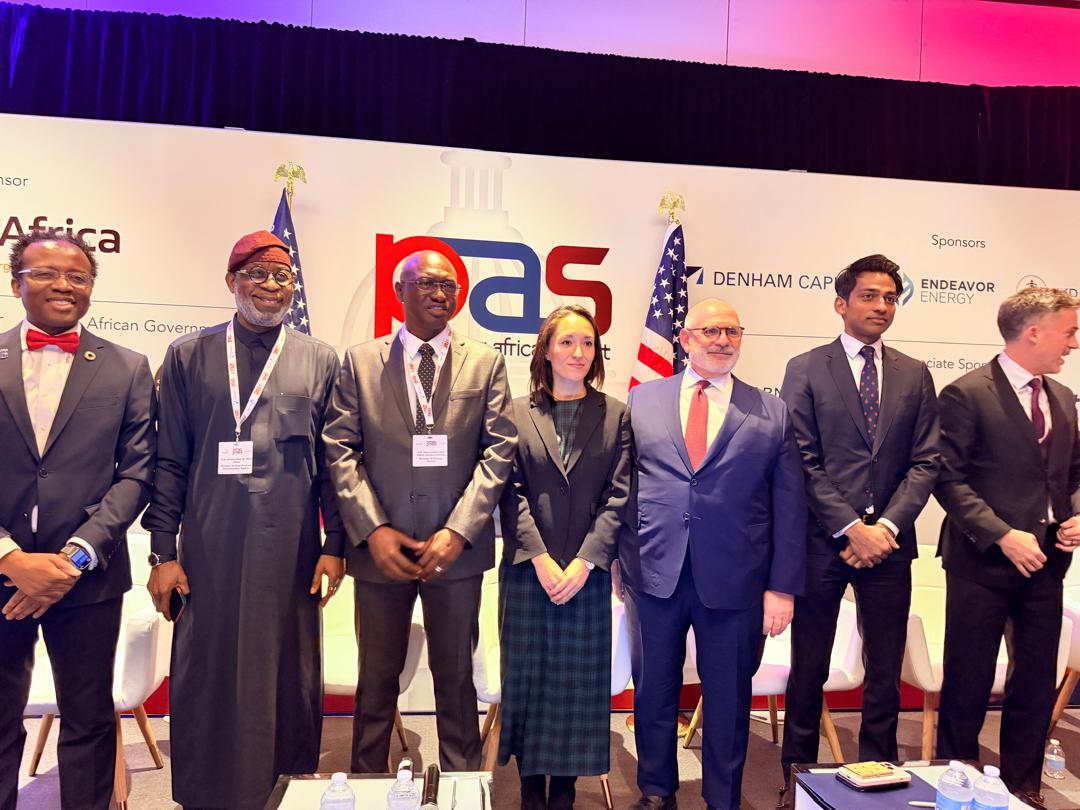
Alake made the call at a high-level panel, “Critical Minerals in Africa: Meeting Global Demand,” at the ongoing Powering Africa Summit in Washington, D.C., stressing that stronger partnerships with Africa remain the quickest path to meeting rising global demand.
In a statement by his Special Assistant on Media, Segun Tomori, the minister pushed for industrial corridors similar to the Lobito Corridor, highlighting the Lagos–Abidjan and Walvis Bay routes as strategic belts to unlock Africa’s vast mineral wealth.
He said such corridors would spur infrastructure development, improve energy access and deepen regional integration across the continent.
Other News
“The development of nuclear power in one West African country can service an entire corridor. With that in place, beneficiation, technology transfer and cross-border industrialisation will follow,” he said.
Alake credited reforms under President Bola Ahmed Tinubu for repositioning Nigeria’s mining sector, citing improved regulations, digitised licensing and enhanced ease of doing business.
He disclosed that investors now enjoy secure mineral titles, while government is expanding certified geological data to guide investments.
On security, the minister said over 350 illegal miners, including foreigners, have been arrested within one year, with more than 150 facing prosecution following the deployment of Mining Marshals.
“We have de-risked the sector. In the last two and a half years, over $2.6bn FDI has been attracted,” he said.
Also speaking, Sarah Whitten, Senior Vice President at the Export-Import Bank of the United States, stressed the need for policy consistency.
“American banks are ready to support projects, but agreements must outlive political cycles to unlock private capital,” she noted.