Follow Us on Google
•Nigerians groan under N1, 400 petrol price, high electricity bills, 40% food inflation
•It’s prosperity on paper, poverty in streets, say stakeholders
By Omoniyi Salaudeen
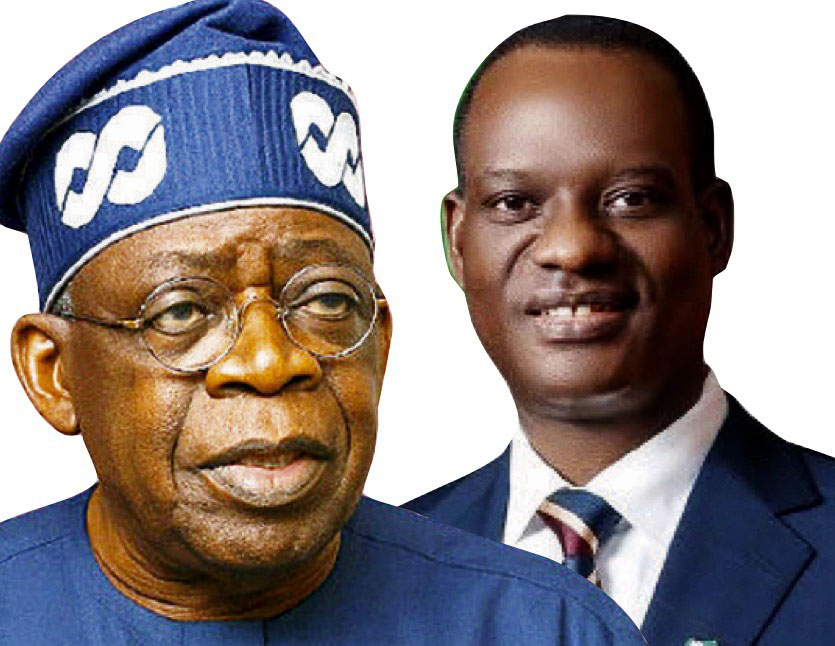
President Bola Ahmed Tinubu’s Independence Day broadcast, “From Reform to Prosperity,” presents a classic study in the growing divide between presidential ambition and everyday survival. Three and a half years after the administration introduced the twin policies of fuel subsidy removal and the floating of the naira, the President declared that the national economic foundation had been repaired and that the worst was over.
“The age of reform has done its work. Now begins the age of prosperity,” he asserted, asking Nigerians to believe that after painful macroeconomic surgery, the economy is now ready for recovery and broad-based prosperity.
Yet, on the streets, Nigerians are navigating one of the most severe cost-of-living crises in a generation. For critics of the administration, the reforms sold as necessary economic surgery have imposed enormous costs on households without yet producing corresponding improvements in productivity, purchasing power and living standards.
Inflationary pressure on daily life
The practical impact of the policy shifts is visible across key areas of household expenditure, particularly fuel, transportation and food. When Tinubu took office in May 2023, petrol sold for about N195 per litre. Today, prices hover around N1,395–N1,400, driving transportation costs sharply upward and putting additional pressure on household incomes.
Food prices have similarly moved beyond the reach of many ordinary Nigerians. Basic food inflation has breached 40 per cent, while the price of a 50kg bag of rice, which sold for about N35,000 two years ago, has risen to more than N85,000. Essential staples such as garri, once regarded as inexpensive safety nets for low-income households, have increasingly become costly purchases.
The naira has also suffered a dramatic loss in value since the foreign-exchange reforms. The currency moved from around N460 to the dollar at the beginning of the administration to well above N1,600 at various points, raising the cost of imported goods, raw materials, medical supplies and other essentials.
It is against this background that the President’s declaration that the economic foundation has been repaired has come under intense scrutiny.
Political economist, Martin Onovo, challenges the central premise of the President’s argument, insisting that prosperity cannot be declared without first establishing a credible economic foundation.
“People want to move from where they are to prosperity. Unfortunately, it is not a whimsical thing. If you want to move from wherever you are to prosperity, you must have a plan. Now, what prosperity is he defining? He is asking for more World Bank loans when he has already pushed the country into a debt crisis. What I am saying is that the position the President presented is deceitful, particularly the claim that he repaired the foundation of the economy. What foundation did he repair? What are the indices?
“The indices as of today show that we have unprecedented debt; we have unprecedented devaluation of the naira. His regime has the worst record in these two areas. We have the highest level of unemployment under his regime. Under his regime, we have the lowest GDP ever. So what working base is he using? That is why I said he is deliberately deceitful.
“He dropped the country to the sixth poorest country in the world by GDP per capita. Is that the foundation he repaired? He dropped the country to the lowest life expectancy in the world. Is that the foundation he repaired? He dropped the country to having the highest number of extremely poor people in the world. Is that the foundation he repaired? The facts are clear that he destroyed the foundation. Do you repair the foundation by collapsing the GDP or by growing the GDP? What was the GDP before he came in as President? He destroyed the GDP by 40 per cent and grew it by 4 per cent. Is that prosperity?”
Onovo’s argument goes to the heart of the debate over the administration’s economic scorecard: whether improvements in selected macroeconomic indicators should be interpreted as evidence of recovery when households and businesses continue to struggle with high prices, weak purchasing power and elevated operating costs.
Subsidy question and burden on households
The administration has consistently defended the removal of fuel subsidy as a necessary step towards eliminating a costly and inefficient system that benefited the wealthy disproportionately and drained public resources. The President has also pointed to investments in energy security as part of the government’s broader strategy to stabilise the energy sector.
But critics argue that the distinction between subsidy removal and other forms of government intervention remains unclear to ordinary Nigerians, particularly when the cost of energy continues to rise.
Public affairs commentator, Efiye Bribena, questions the President’s attempt to separate the reforms from the hardship experienced by citizens. “The only aspect of his speech I read is where he said the IMF and the World Bank said his reforms were not responsible for the suffering of Nigerians. It is very insensitive of the President to say that his reforms are not responsible for the hardship people are facing. With subsidy removal, one has to spend over 400,000, 500,000 naira to fuel a car in a month. And it is not like one is doing cross-country trips. Can you imagine?
“We know that things are difficult. During the Buhari administration, things were really bad. But now, things are far worse than the Buhari era. Everybody is facing difficulties. It is only a few of them that have their hands in the economy that can enjoy prosperity. But for the ordinary man on the street, what is the prosperity?
“On one side, the President is talking about fuel subsidy. On the other hand, he is talking about energy security. He should explain to us what energy security is. He should explain to us what they are spending trillions on as energy security. Let them explain now and give details. It is another word for subsidy. Subsidy itself is not the problem, the real problem is corruption. For me, subsidy is just a cliché; it is a slogan they are using to fool Nigerians. It is just a slogan. It is what Americans would call a double whammy.
“Again, they said they have abolished the parallel foreign exchange rate. Although the gap has narrowed between the official and the black market rate, it is not being controlled by market forces. We all know that they are also protecting the naira. As we speak, the naira is being protected. The naira has not been left completely to market forces. This is contrary to what they promised.”
The criticism highlights a broader contradiction in the reform debate. While the government argues that the removal of subsidies and exchange-rate reforms are necessary to create a more efficient economy, Nigerians are judging the policies primarily through their effects on transport fares, food prices, electricity bills, school fees, rent and business costs.
Power sector crisis
Energy remains another major obstacle to the administration’s prosperity narrative. Industrial operators and small businesses continue to contend with high electricity tariffs and the cost of alternative power generation, particularly diesel and petrol-powered generators.
For manufacturers, the energy challenge directly affects production costs and competitiveness. The administration’s emphasis on gas as a source of energy security could potentially address part of the problem, but critics argue that the benefits will remain limited unless reliable electricity becomes consistently available at affordable rates.
The central question, therefore, is not simply whether Nigeria is producing more electricity or investing more money in energy infrastructure. It is whether households and businesses can access dependable power at a cost that allows them to survive and expand.
Other News
Macroeconomic data versus structural fundamentals
The President highlighted several positive macroeconomic indicators in his address, including economic growth of more than four per cent, improvements in foreign reserves, moderation in headline inflation and increased non-oil export revenues. These developments have also attracted favourable assessments from international financial institutions such as the World Bank and IMF.
But macroeconomic stabilisation does not automatically translate into prosperity. For ordinary Nigerians, the more immediate test is whether wages can keep pace with inflation, whether businesses can reduce production costs, whether food prices become more affordable and whether economic growth generates sufficient employment.
Critics therefore argue that the administration’s economic scorecard should not be judged exclusively by aggregate GDP figures or foreign reserves. The quality and distribution of growth matter just as much as the growth rate itself.
Gaps in security architecture
Beyond the economy, security remains a critical component of any meaningful prosperity agenda. Nigerians cannot fully benefit from economic opportunities in an environment where kidnapping, terrorism, banditry and other forms of insecurity continue to threaten lives and livelihoods.
Retired General Ishola Williams believes the President’s tone suggested an awareness of the difficulties confronting ordinary Nigerians but argues that the address failed to provide sufficiently concrete solutions, particularly on security.
“The tone of his address shows that he is very much aware of what is going on with the common man and woman on the streets. But unfortunately, he did not offer any concrete solution. So, it does not offer any respite for the people.
“On the issue of security, things have not changed very much as far as I am concerned. The police and the military are talking about neutralising terrorists and kidnappers who are making money from the activities they do. Recently, 20 NYSC members were kidnapped and the Police have not been able to secure their release.
“For me, the security architecture of the country has not changed. I have always said that insecurity is not our problem. Nigeria is secure but Nigerians are not safe. And Nigerians can be safe if the government can design new security architecture. The President has appointed a committee headed by the Adviser on Homeland Security to do that. Let us wait and see what they will come up with.
“But the point is, no matter the report, the best responder for our safety is at the local government and state level. As I always say, if you are safe in your hometown, if you are safe in your state, you are safe in Nigeria. What I want to hear is the endorsement of state police. The Nigeria Police should cease to exist. Policing should be left to state and local governments. The Federal Government should be responsible for Crime Intelligence and Criminal Investigation. That is what we need, not state police and Nigeria Police. With that, the new security architecture is complete. We need a change of regime.
‘We need another set of people. Not Atiku and Tinubu who are over age. We need a younger set of people to make this country progress.
“He is talking about implementing the 2025 budget in 2026. How do you do that? The National Assembly is not exercising proper checks and balances.”
Williams’ intervention broadens the debate beyond the immediate question of policing. His argument is that Nigeria’s security problems are fundamentally linked to the structure of governance and the concentration of responsibility at the federal level.
The call for greater decentralisation of policing has remained one of the recurring issues in Nigeria’s constitutional and governance debate. Supporters argue that state and local authorities are closer to the communities they govern and therefore better positioned to respond to local security threats. Opponents, however, have raised concerns about political interference, abuse of power and the potential weaponisation of state police by governors.
Reach of social safety nets
The administration has introduced and expanded several intervention programmes, including NELFUND, CREDICORP and the National Social Register, alongside agricultural and transport initiatives designed to cushion the impact of the reforms.
However, the effectiveness of such programmes ultimately depends on their reach. Interventions that fail to penetrate rural communities or that do not address the structural causes of poverty may provide temporary relief without changing the underlying economic conditions.
Plans for mechanised irrigation, agricultural production and transport corridors are theoretically capable of improving food supply and reducing transportation costs. But Nigerians will ultimately judge them by whether they lead to lower prices in local markets and improved incomes for farmers and small businesses.
Prosperity test
The administration’s argument is that difficult reforms were unavoidable and that the economy is now entering a new phase in which the benefits will become increasingly visible.
The critics’ response is that Nigerians have already paid a substantial price for those reforms and should not be asked to measure prosperity through statistics alone.
That is the central tension in Tinubu’s “From Reform to Prosperity” narrative. The government is asking Nigerians to look ahead to the benefits of structural reforms, while millions are still struggling with the immediate consequences of those reforms.
For the administration’s “Age of Prosperity” to gain widespread credibility, macroeconomic improvements will have to translate into measurable relief at the dinner table, in local markets, in factories, in public transport and within small businesses nationwide.
Ultimately, prosperity cannot remain a promise contained in an Independence Day broadcast. It must become a condition Nigerians can experience in their everyday lives.