Follow Us on Google
By Agatha Emeadi
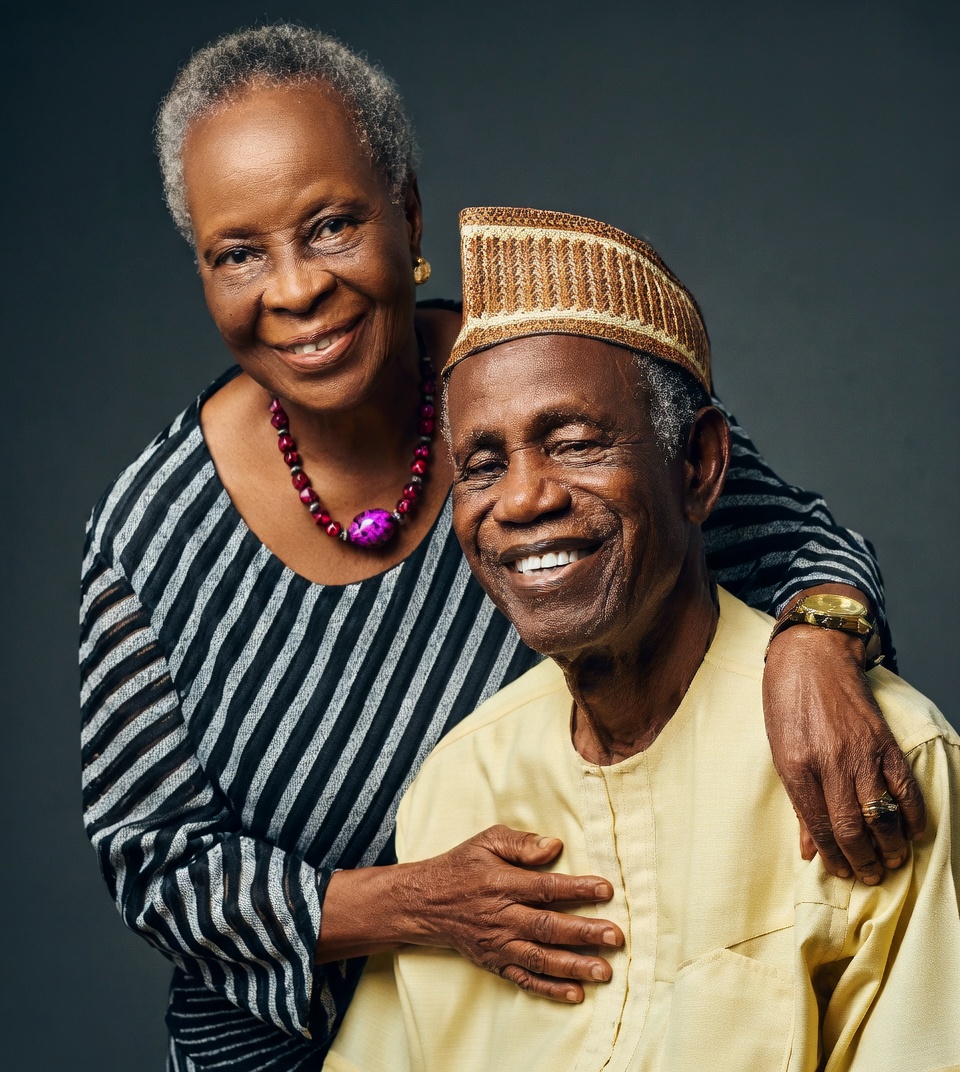
In four months’ time, Professor Moses Jonah Akpanudo and his wife, Jessie, would have lived as husband and wife for 68 years and counting. They are a couple widely recognised as educators, community leaders, and pioneers of private education in Akwa Ibom State. They started off with a teacher-pupil friendship which later became a legal union in 1958.
In a chat, Akpanudo narrated how he, a Grade 3 teacher in a rural community rose to become a professor in the United States. America. He later served briefly as a legislator in the Cross River State House of Assembly between 1980 and 1983. The couple founded Obong Christian High School, Gene and Sue Lamb Nursery and Primary School and also established Obong University in 2007, the first private university in Akwa Ibom State.
In this interview with Saturday Sun, the couple spoke about their life journey and how they have been navigating life together since they got married nearly 68 years ago.
Could we know more about you please? And how did you first meet?
Prof Moses: I was born on May 13 1933 and was raised by my widowed mother who supported the family through subsistence farming and petty trading. I am from Obong Ntak in Etim Ekpo Local Government Area of Akwa Ibom State. I can tell you that life was not easy then, rather very tough. But despite difficult economic circumstances, I demonstrated a strong determination to pursue education. I knew from the onset that education being the best legacy will wipe away poverty in my life. First, financial hardship hindered my admission to secondary school, but I continued to seek opportunities for advancement. In 1952, I was employed as a pupil teacher at Ibio Group School in Ibio Nnung Achat, Akwa Ibom State. I met her for the first time in 1956 as a teacher in the Primary school at Ibio Nnung Achat, her village. She was a Primary Four pupil in my class. Never did I know that she would later become my wife.
Mrs Jessie: I was born on November14 1942. I am the first child of Chief Thomas Chukwu Ekaiko, a respected village leader and successful merchant. I was raised in a supportive and comfortable home. I was also taught diligence and high sense of responsibility. With that natural father-daughter bonding, my father placed great trust in me as his first daughter. He ensured I received good upbringing and educational opportunities. In 1957 therefore, I returned to Ibio Group School as a pupil teacher. It was that year that my former teacher, Moses and I began our courtship, even though I was his former pupil. Our relationship culminated in marriage on July 29 1958 at the Qua Iboe Church in Ibio Nnung Achat in the presence of family and friends.
What was the attraction then? Is that attraction still relevant till date?
Prof Moses: The attraction was that I wanted a woman with a solid purpose in life. Someone who could stand by her decision; understand the force of discipline unto a family. She had these qualities. When I first saw Jessie, I liked her straight away. I admired her dedication to duties, her trustworthiness and her very sweet singing voice.
Mrs Jessie: When I first saw my Primary 4 teacher, he was smart, tall and handsome. I felt it was very nice of him giving me private lessons and helping me finish my assignments.
How did you propose to her?
Prof Moses: I just mentioned it to her that I would like her to be my wife, and she accepted. My poor background did not make it easy before her father. He saw me as a poor suitor because I had no mud building of my own. I had a cranky bicycle and a Teachers’ Certificate Grade 3 only. That was all I had and her father who was a wealthy merchant did not accept that. He really gave me a tough time. There were many other suitors, especially sons of his rich friends. But they all failed. Sometimes my wife would admire me and present me in a positive manner, but her father would say “I don’t like that one”. There was always disagreement between father and daughter, until they counselled themselves. And I was left alone as the last man standing.
Mrs Jesse: I love him, and that was why I married him. He was my third suitor and the only one that I accepted.
How do you manage your finances because most couples are challenged with finance?
Prof Moses: We do not have any problem with our finances. My wife has her bank account, while I had mine too. We initially had a joint account which did not really work out well. I never really knew and did not bother to know how much money she earned when she was working. So, we have no financial problems between us. I would give her whatever she needed monthly to run the home. Throughout the years she worked, I never knew what she earned and I did not ask her for it.
Mrs Jessie: I was a daughter of a rich merchant, but I never behaved like children from rich homes. I learnt early in our marriage to manage the meagre resources we had. My husband went back to school to get his GCE and BSc soon after we had our first child. I had to support him through this. I have processed palm fruits and other economic crops to feed my family with. Women should not be wasteful with finances at home and should be ready to step in to assist their husbands when it is necessary.
Are there things that your wife does that you do not like? And how do you correct her?
Prof Moses: Yes, she is very pessimistic at times and tries to discourage me from doing things I feel I should do. She is the opposite of me, because I am adventurous, and I like to try things. Even if I fail ten times, I do not mind. But my wife would be sure that the ground is very solid before she steps on it. Correcting her? Well, it has always been part of our lives. But I try to encourage her to think beyond that level.
Mrs Jessie: He is very picky with food. You can prepare this meal, and he will say he does not want it and you have to start all over again to prepare another one. I did not know how to cook well from my father’s house, so initially it was a challenge for me because he was a spoilt child from his mother.
What pet names did you call yourselves when you first got married?
Prof Moses: I have always called her darling.
Mrs. Jessie: I do not know about pet names. I have called him ‘Sir’ since he was my teacher in primary school. I still call him ‘Sir’ till today.
What challenges did you face in your first five years of marriage?
Other News
Prof Moses: My father-in-law did not make the marriage easy for me at all. He never wanted me to marry his daughter because he smelt poverty around me. I remember when I went to tell him that I wanted to marry his daughter. He asked “Who? You? I said yes. He said No! I do not think you can marry my daughter. You can come as a guest on the day she will get married; we will gladly serve you a drink.” That statement stood in my sub-consciousness as I remember it very well. But I am not a weakling, neither will I take no for an answer. I ignored him and continued to persist. He cautioned his daughter not to come near me, but it did not work out for him. When he saw I was not taking no for an answer, he eventually said to me; come and pay bride price. He requested for a huge amount of money that no suitor has ever paid in the history of Annang land. That was a ploy to scare me away and discourage me. Unfortunately for him, he did not know that I like challenges. I worked hard, borrowed from friends which I later paid back. I was able to give him part of the money that was enough to take care of the entire ceremony. He told me, “Well this is deposit. Go and bring more money.” I left and my sister helped me to get a little more money, and he said “Well, this is instalment, yet the marriage has not been solidified”. So, I asked him to allow an IOU, so I can continue payment while the marriage proceedings go on credit. And I thought that everything was settled, but during the church marriage in 1958, my father-in-law was not there to hand her daughter to me. Instead, his brother, Saul Chukwu Ekaiko, came to bail us out by walking her down the aisle. The most important thing is that the marriage successfully took place. Her father never recognised me as his son-in-law or visited us just because of my condition then. He thought his daughter would die of hunger in my house. Sometimes he would send her palm fruits to process and sell, to help her provide meals. Well, in life, determination through education remains a game changer.
In another scenario in our marriage, when my wife gave birth to our first child, my mother-in-law requested she come home, so she could do the needful as a mother. They went to be with them for two months. When I went to take them back to my home, my father-in-law seized my wife and my new born baby, saying we were not married since I had not completed the bride price. He told me that I did not have a wife or child. He went inside and brought out the dowry I had given him and said, “Here is your money! I had not spent a dime from it. This is the money you brought. Take it with you. I have taken back my daughter and my granddaughter!” The situation became worrisome because I wondered how I was going to deal with this. His utterances angered me and I became very sad at the same time. I told him “Take everything, money, your daughter and granddaughter.” and left the compound. But my wife could not accept that. As a big-man merchant, one day, he travelled to Aba for his business. My wife sneaked through the back door and came back to me with the baby till date. The situation made him very angry too. But we continued our marital life.
Surprisingly, after many years, my father-in-law visited us for the first time when someone told him that I was moulding big blocks (9 x 9 x 18 inches), which were usually meant for storey-buildings. He did not believe it, so he came to see things for himself, especially the big blocks. From that day, he recognised me as his son-in-law because he thought I would die in poverty. This is one of the reasons why I appreciate my wife dearly. She understood that my situation then was my stepping stone as a beginner. She came into poverty from wealth. She moved from a storey-building to live with me in a borrowed thatch house. That support she gave me was gold till date because I did not have a house of my own then. With time, I developed a small boys- quarter apartment which we managed together until life became clearer. For my father-in-laws attitude to me, I swore never to collect dowry on any of my daughters and I stood by that.
What about your own family? Did they accept your wife?
Prof Moses: Yes, they did.
Mrs Jessie: His family accepted me. But when my husband was not settled with my father, it also affected me.
How do you resolve issues at home?
Prof Moses: We have bonded for a very long time, so sometimes, unbelievably, the issue just resolves itself and we forget about them and move on.
Now that you are retired, how do you juggle your daily activities with your spouse?
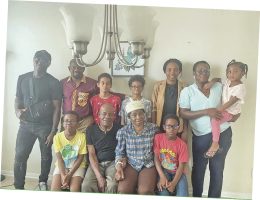
Prof Moses: Well, I take it one day at a time. The things that I can do, I do. The things that I cannot, I leave them alone. I am not bothered about much, because God has blessed us so much with a great family, good children, good daughters-in-law, responsible grandchildren. So we are very happy.
What childhood or early memories prepared you for marriage?
Prof Moses: As a teacher, I realised that the home is the cradle of civilisation. When I was growing up, I saw the problems of single parenthood, so I decided to prevent this from happening in my home. My wife makes it easy. She is what people today would describe as ‘marriage material.’ She has been my trusted companion, advisor and a voice of reason. Sometimes, I get over excited about new ideas.
Mrs Jessie: My father was a merchant and chief. Growing up, I saw him settle disputes between couples going through divorce. It was disturbing. They would draw large circles and ask the women to jump over the circles, just to terminate their marriages. There were other unpleasant circumstances that these women went through and I hated them. As a young girl, I swore to ensure that my marriage would be intact.
What is your wife’s favourite food and drink?
Prof Moses: She likes to eat garri and soup with plenty meat and fish. And I do not eat garri and meat. But because I do not like to eat anything cassava, she gave it up because of me.
What do you do jointly as a couple, even in old age?
Prof Moses: Oh, a whole lot. She tries to bring ideas that I will knock out. We agree and disagree on things in life. We eat together, we sleep on the same bed every night, we sing together and we pray together. Sometimes she amuses me by saying she would like if we would die together one day. But I have told her that it cannot happen. One of us will leave first. It would be too bad if we both leave on the same day. She hates the idea of my leaving her alone. I try to tell her that it is God that directs our lives and that there is nothing we can do beyond that.
When the curtain finally falls, what do you want to be remembered for?
Prof Moses: I would love to be remembered for being a very determined person, a dreamer. I had ambitions that brought dreams. These dreams when pursued brought practical results that would help me and the society.
Mrs Jessie: I would love to be remembered as a woman of faith and belief. I married my husband because I loved him. I saw the prospects of a young man in him.
What advice would you give young couples who are just starting?
Prof Moses: Do not marry for money. Instead marry for love. In fact, for a marriage to succeed, it must be love that defies human understanding. That is the love of God. Love that one does not understand why certain things happen in one’s life. For instance, one’s spouse does something you do not want; you will forgive and still love her. This never happens unless you have God’s principles in your mind because marriage without God is a complete fiasco.
Mrs Jesse: Love your spouse before you marry him or her because love can overcome all circumstances. I had wealthy suitors from prominent families then, but I chose the poor man from a humble background because I loved him. It was from my husband’s house that I learnt to sew the thatch of our roof when it leaked, something I had never seen in my father’s house. But it did not matter to me.