Follow Us on Google
From Juliana Taiwo-Obalonye, Abuja
The Presidency on Monday kicked off the final legislative push for the establishment of state police, unveiling a seven-week timetable that will culminate in the submission of an Executive Bill to President Bola Tinubu by September 3 as part of efforts to overhaul Nigeria’s policing architecture.
The proposed National Policing Bill, expected to provide the legal and operational framework for a dual federal-state policing system, will subsequently undergo nationwide public consultations before being transmitted to the National Assembly.
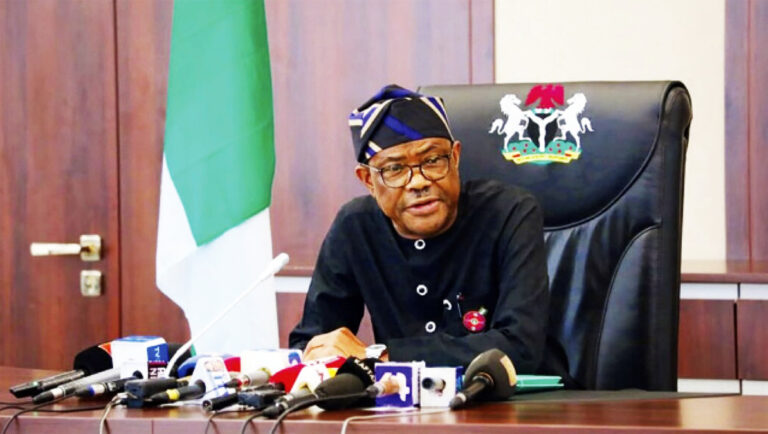
Briefing State House Correspondents after the inaugural meeting of the Presidential Working Group on the National Policing Bill at the Presidential Villa, Abuja, Chairman of the committee and Chief of Staff to the President, Femi Gbajabiamila, described the exercise as one of the Tinubu administration’s most far-reaching institutional reforms.
He said the administration was determined to ensure that the proposed state police system is backed by a comprehensive legal framework capable of seamless implementation.
“The approved work programme is a seven-week, milestone-driven exercise running from July 27 to September 14, 2026,” Gbajabiamila said.
“The resulting Executive Bill package is scheduled for presentation to the President on September 3. Subject to his approval, a national consultation on the completed draft will follow before the Bill is transmitted to the National Assembly.”
He stressed that the ambitious timeline would not compromise the quality of the legislation.
“The timetable is demanding, but it is not a shortcut. Legal drafting, policy research, data analysis and implementation modelling will proceed simultaneously with rigorous review mechanisms.”
According to him, the final legislative package will extend beyond a conventional bill to include implementation guidelines, fiscal projections, legal audits, state readiness assessments, risk analysis, implementation work plans and other supporting documents designed to ensure effective execution.
Gbajabiamila said President Tinubu constituted the committee to ensure that once constitutional amendments creating state police are completed, the country would have an implementation-ready framework.
“Our mandate is to produce a technically robust National Policing Bill that will move Nigeria from a single federal police structure to a functional dual-policing architecture,” he said.
In a move aimed at broadening public participation, the Chief of Staff announced that Nigerians would be invited to submit memoranda over the next 10 days through a dedicated website, nationalpolicingbill.com, where citizens can also monitor the progress of the reform.
“The whole idea behind state policing is for every Nigerian to take ownership of the process. Whether you are a student, a market woman, an academic or a security practitioner, your contribution matters,” he said.
Other News
On concerns over the financial capacity of some states to establish police services, Gbajabiamila dismissed suggestions that poorer states would be excluded from the reform.
“There is no cost to securing lives and property,” he said.
“We will not engage in guesswork. The financial implications will be determined through empirical, state-by-state assessments. Where a state is genuinely unable to establish its own police service, the Nigeria Police Force will continue to provide policing until such a state is ready.”
Attorney-General of the Federation and Minister of Justice, Lateef Fagbemi, assured Nigerians that the proposed legislation would incorporate minimum national standards to guarantee professionalism and prevent abuse of state police by political actors.
“It is important that state policing does not become a weapon of political persecution or oppression,” Fagbemi said.
“There must be minimum standards to ensure that every Nigerian enjoys the same level of protection, whether served by the federal or state police.”
Also speaking, Ogun State Governor Dapo Abiodun said the Working Group was developing the practical framework that would make the proposed constitutional amendment workable, noting that issues relating to funding, jurisdiction, command structure and operational responsibilities were being addressed.
He disclosed that the committee was considering federal financial support to assist states with the take-off of their police services.
“Some states may not have the same financial capacity as others. Part of our recommendations is expected to include federal grants to support the establishment of state police,” he said.
Abiodun also welcomed the decision to involve Nigerians in the drafting process through public consultations, saying it would strengthen public confidence and national ownership of the proposed reform.
Concluding the briefing, Gbajabiamila argued that decentralised policing was consistent with global best practices in federal democracies and insisted that Nigeria could no longer rely solely on the existing centralised policing structure to tackle growing security challenges.
“I do not know of any federal system anywhere in the world that operates a unitary policing structure,” he said.
“The time for state police is long overdue. There is now a broad national consensus that Nigeria must adopt a new policing model capable of effectively protecting lives and property.”