Follow Us on Google
By Henry Akubuiro

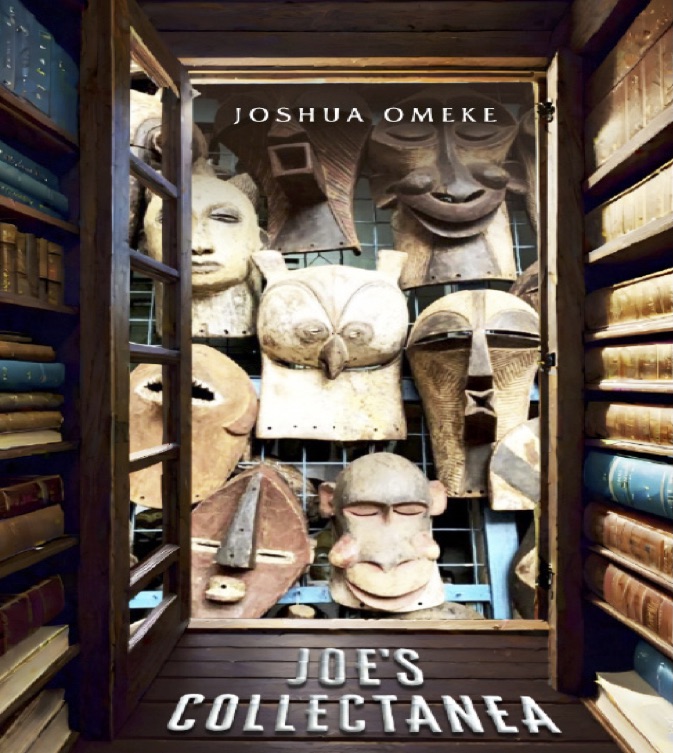
•Joshua Omeke
The Nigerian literary enterprise is bursting at the seams in the 21st century, like cassava flakes found in the country’s nooks and crannies. But not all the abundant talents in Nigerian literature are getting the merit they rightly deserve due to their sheer numbers. One of the writers from the unheralded elite poll whose poetry is deserving of validation is Joshua Omeke. The profundity of his art, the magic of his vignettes and the seduction of his lyrics make him a bard you can’t but doff a hat for.
Like the colonial African poets who bewailed the sordid rape of the African motherland and sang beautifully of its allures and pristine greatness, Omeke has elected to disparage and dismantle neocolonialism in his bardic project and at the same time play the timbrel of a realist by openly removing the log in the African eye in contemporary times. But, no matter the bleak reality facing Africa and Africans at the moment, the bard doesn’t buy into an African eclipse at noonday. His poetry, therefore, becomes a symphony whose keys teem with transformational possibilities.
There is one common thing among creative realists: they priotise observations of the society with all its contrasting hues, telling us stories we can relate to. Omeke isn’t given to laundering the oddities of life for a resonance of hurrahs. His verses take the form of a sponge that exposes filths and blemishes. He doesn’t skirt around that. Omeke’s historicisation of African past and present in Joe’s Collectanea is top draw, as he attempts cleverly not to legislate an utopian vision of Africa in his verses. Rather, his images are symbolic representations of a burning desire for social change.
Though Omeke is a Nigerian, he speaks for Africa with a poetic vuvuzela. He is just like that African echoed by Idowu Koyenikan in Wealth for All African: How Every African Can Live the Life of their Dreams: “You can no longer see or identify yourself solely as a member of a tribe, but as a citizen of a nation of one people working toward a common purpose.”
The poetic voyage of Joe’s Collectanea is a literary homecoming for a wayfarer. Culturally, Omeke straddles between the United Kingdom and Nigeria. He lives in the UK but does not allow the wanderlust spirit to engulf him and keep him away from his tropical home base. This remarkable poetry collection doesn’t betray that disconnect. When Omeke poeticises about alienation, he does it from the atonement perspective of an African emigrant abroad speaking for his kith and kin who have become moral dupes in strange lands. He functions, this, as a town crier with a querulous voice in a frigid zone, pointing out the road not taken – that remiss we ought not to have missed.
A great deal of this collection teems with reminiscences – of composure, life, affection, loss, deprivation, death, worries, self denigration, and whatnot. These random musings are indicative of a febrile mind whose pent up emotions are yearning for an artistic let out. He believes by doing so, a mutual empathy is felt by the entire humanity.
“Anarchiste Diplomatique” is a historical interrogation on the European hegemonic interests in Africa, which did not only dominate the African lives, economy and politics during colonial times but made them second class citizens in their own countries. Coming under the guise of civilising Africans, the poet laments that the actions of the white adventurers “brought tears to beautiful eyes.” The poem, however, does not exempt African kings from the ugly role they played in the success of the Atlantic Slave Trade. Hence: “Unexposed African kings traded youths for material prizes”. He recalls that “In the 1800s, the ships never sheared”, referring to the ubiquitous slave ships on the African coasts.
The end of the slave trade, recalls the poet, led to colonisation of the African continent. In the case of Nigeria, the Royal Niger Company birthed Nigeria, ushering in subaltern black leaders doing the biddings of the colonial masters. The poem also chronicles how Africans began to educate themselves under colonial rule, engaging also in trade and commerce, which led to the introduction of currency notes. It traced the era of independence and how things went awry.
This poem tells you so much about the evolution of Nigeria, from precolonial, colonial to postcolonial times. Omeke:s the satirical dish chronicles other important annals in Nigeria, including the discovery of oil, the civil war, military coups, inordinate ambitions among the youths, military dictatorships and the dispensation of criminal, civilian politicians. The poem laments: “Today, a lot of us want a change,/None of us is willing to change.” This sounds like a good performance poem, because the poet uses repetitions extensively to enhance the euphony of the poem with: “So, this is slavery/ Our dreams may be as high as Elroy in the space shift…”
The excruciating pains and experiences of the African slaves and their offsprings forcefully relocated to the West Indies and elsewhere smack of man’s inhumanity to man. Writing on “Maryse Conde’s Taste for History, Tales in Triptych” in JALA (Vol 9, No.2, Summer/Fall 2015., p. 5.), Felisa Reynolds of the University of Illinois-Urbana echoes that Francophone Caribbean slaves, in a face-saving effort by France, were hurriedly turned to citizens of France, which did not compensate for the alienation: “The era of nouveaux citoyens [new citizens] is referred to as the period after the abolition of slavery in the French Caribbean. It is a time period when overnight slaves stopped being possessions and we’re reborn as newly minted citizens of France.”
Joe’s Collectanea has a title poem in the collection entitled “Joe’s Collectanea from Ghana Side”. This particular poem stemmed from the rough ideas that stimulated the poet’s mind out of life encounters and stories that find resonance in the lives of many people. On one hand, the context of the poem points to West Africa, after the poet visited Ghana. Dressed in native kente cloth of Ghanains, he, a Nigerian, was mistaken for a Ghanaian in Ghana. Ghanaian lingo (like Chale), and food like Banku are mentioned in the poem, perhaps in celebration of African culture.
Joe’s Collectanea is like demerara sugar with a crunchy taste. Deploying spectacular images in “Danillo the Farm Boy”, the poet relives the story of workers abroad who are encouraged to keep working because of their financial needs and to maintain established bonds, regardless of how frustrated they have become from work chores.
In the opening lines, the poet gives a hint of the locale and what obtains in the farm house with: “Green herbs, yellow sun”, “dying grasses”, “hay …for cows and horses”, “Needles and syringe pump” and “…steroid shot”. When we encounter Danilo, the farm boy, he is consoling the mules in the farm house. He has to deal with stubborn cows, poor marshes and urine smells, which he must attend to.
Because his sustenance is dependent on the menial job, Danilo is unrelenting: the crops have to be milled, hays have to be arranged in the barns for the cows to milk. It’s not an easy job, which comes with tiredness, but he has to save for the rainy days. So he plows the fields, sprays pesticides and gets rid of rodents to save the plantation and bring more yields. The poet reminds us that there is Danillo in most of us. Though we are presented with difficult tasks of existence, we can’t but toil and moil. It’s a realistic portrayal of workaday life.
The dilemma of an immigrant in a foreign land is echoed in “A Coloured Dream”. It’s not just a Western society but the land of the colonial masters he is referring to here. The speaker in this poem describes the place he is seeking for greener pastures as being “In the land of the people that persecuted my ancestors,/ Here am I seeking greener pastures/ Believing I would someday be favoured”. But the voice tells us that the streets of the West are not always paved with gold, what with rejected job applications and struggles that hint that expectations do not always meet with dreams. So he resorts to prayers to see light at the end of the tunnel.
“Flies of Wilderness” also echoes alienation and hopes that hang in the balance. It captures the experiences of illegal migrants following the Sahara Desert route for Europe, hoping that things will be okay at the end of the day. The poet describes these groups as weary souls on a desperate flight seeking “a glimmer of light.” They trudge along with the past and haunting memories of their land. Despite the trials on the way, they are emboldened by the hope of a better tomorrow, yet the flies of the wilderness pay witness to loss and hope, “a poignant sweetness.”
Omeke mixes humour with urgency in some of his poems, like in “Problem” a poem about leaders of territories who are expected to handle every situation, though they have their own personal issues to confront. These leaders are expected to keep track of the bad eggs in society, but, along the way, relishes some fun like partying, taking trips abroad. This poem is couched in elusive idioms laced with mythical parallels.
The addiction to smoking echoes in “The Grass of Our Time”. Despite how fragile and cheap it is, and knowing that smokers are liable to die young, the speaker in the poem continues the addiction. The magic and otherwise of a stick of cigarette is captured by the poet using expressions such as “a worrisome object –innocent in craft”. There is a touch of Nigerian lingo in the line that says “African say something must kill a man”. It is an acceptance that, though a cigarette has health implications, it is a desirable nuisance that can’t be evaded. Hence, the resignation: “Thou art worthy of the risk.”
While the pangs of unrequited love echoes in “Long Lost Love”, “Romance in Poetry” is as aesthetically pleasing with sensuous words as it is intellectually stipulating: “She unfurled my shabbiness,/Parenthetical to my line of love,/ Became a concierge to my heart,/Sweet as a mild croissant crested with chocolate…” Throughout this poem, the poet makes references to ‘She”, which is a metaphor for a character existing in the mind of every man that has found a woman he so desires and is ready to do it all to keep her to himself. The profuse hyperboles used to address her says it all.
One of the well known villains in world history are the pirates. In “Scandinavian Pirates”, the poet uses it as a metaphor for those who desire to outsmart the status quo. Omeke is the master of narrative poetry. His strength is the ability to use familiar tales to tell unfamiliar stories that leaves you dumbstruck with his rendering, while ensuring the grotesque is de-emphasised. The personas in this poem are portrayed as rebels who have become the overlords and, “Work like an ant and eat like an elephant.”
Personal lyrics are deplored to a startling effect in “The Plague in Our Waves”, a poem reminiscing on life and its vanities. It takes Coronavirus to know that life is ephemeral – “…it has helped us to realise that the things we fight for or desire badly do not have as many values as they seem.” It’s a poem that emphasises on values rather than the mundane. The concerns about life also echoes in “Life”, a poem about the contradictions presented to humans in a highly demanding world. Omeke’s reminiscences continue in “Haunted Shadow”, a nature poem with symbols that point to hope in adversity.
Writers all over the world have responded to the Coronavirus pandemic, which ravaged the world recently. It’s often a tale of loss and agony. One of Omeke’s responses to the plague is “The Plague in Our Waves”. Using humour, the poet tells us that, since the beginning of the plague, it has has stopped us from living on our routines everyday and, “it was the first time we’d saved the world by staying at home and watching television everyday” and “we never knew the last time we met our friends would be long time away/ from when we would meet again.”
The speaker laments that “People died, people survive, but life never shakes/ This plague has rewritten so many events…” It’s a poem that depicts a horrifying epoch in human history, one that paints a harrowing vista that nullifies the notion of the supremacy of the being, which man has arrogated to himself. Man has been made to stand sentinel by coronavirus as precious time fleets away as a result of human error.
Omeke is the master of narrative poetry. His strength is his ability to use familiar tales to tell unfamiliar stories. Parabolic lessons and anecdotes are used sometimes to pass subtle messages, like in “Pies from Celestial Beings”, which has a folkloric opening – “A long time ago…” The poem tells the story of humans who feel they are above others, pompous in manners and talks until they run into a cul de sac.
Omeke’s preference for narratives in his bardic excursions enables him to pour his heart out without cryptic limitations. In “A friend of Mine”, he recollects an experimental story of a black friend who came from a lower background. Due to the severity of her mother’s disapproval, she decided to not introduce any of her friends to her. Evidently, the woman doesn’t like blacks and would like her daughter to date whites. This is the kind of inferiority complex and colonial mentality by Africans that Omeke abhors, making a call for attitudinal change by fellow blacks, be it in Africa or in the diaspora.
Joe’s Collectanea is published by Harmony Publishing Ltd, Lagos, 2023; pp. 57; ISBN: 979886366267