Follow Us on Google
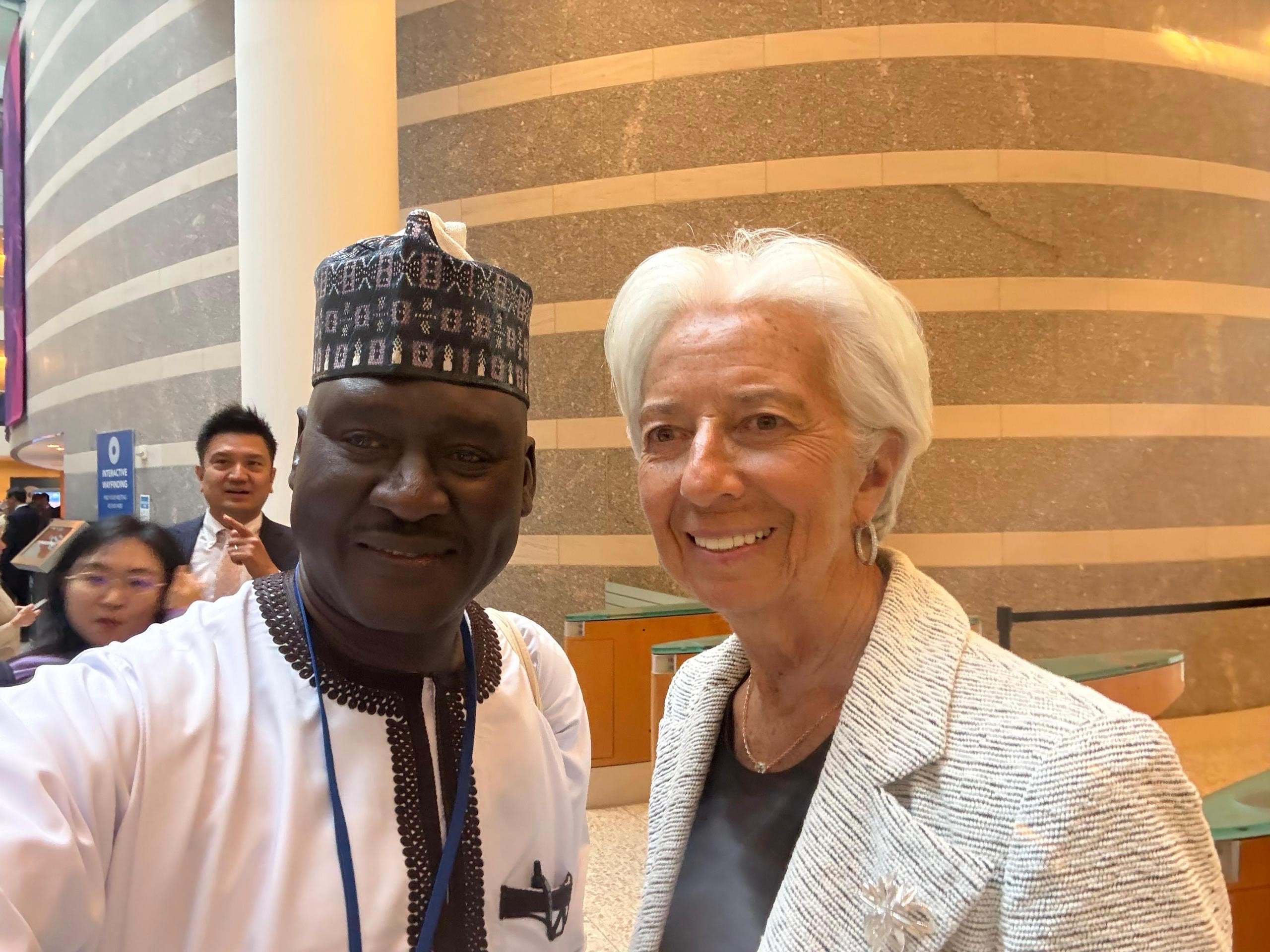
From Juliana Taiwo-Obalonye, Abuja
At the 2025 International Monetary Fund (IMF) and World Bank Annual Meetings in Washington D.C., Executive Director of the Civil Society Legislative Advocacy Centre (CISLAC) and Head of Transparency International Nigeria, Auwal Musa Rafsanjani, sounded a strong warning on Africa’s growing fiscal crisis, highlighting Nigeria’s escalating debt as reckless and unsustainable. He urged immediate reforms in global financial governance and robust debt management strategies for African countries.
In an exclusive interview on the Nigerian programme The Policy with Leah, on the sidelines of the meetings, Rafsanjani dissected Nigeria’s current borrowing practices. He criticised the heavy reliance on loans primarily funnelled into recurrent expenditures instead of development projects, resulting in negligible benefits for the citizenry.
“Most of the loans we take are not for development but for consumption,” Rafsanjani asserted. “There is little or no accountability around them. Civil society must be involved in monitoring these debts, especially when even lawmakers lack access to full disclosure.”
Rafsanjani aligned with the G24’s recent position that developing countries face a debt trap largely fuelled by weak governance, corruption, and rampant illicit financial flows. He expressed strong support for debt cancellations in cases where borrowed funds have failed to generate real development outcomes.
He also joined critiques of the IMF and World Bank governance, condemning the disproportionate influence of powerful nations. “Global financial decision-making must be more transparent, inclusive, and fair,” he insisted, endorsing ongoing global civil society campaigns pushing for institutional reforms.
On the domestic front, Rafsanjani raised concerns over Nigeria’s economic vulnerabilities, including its overdependence on oil, dwindling infrastructure, and persistent insecurity—factors he said deter foreign investments. He lambasted government austerity measures, such as subsidy removals in healthcare, education, and transport, which he said exacerbate poverty rather than alleviate it.
“It is ironic that while developed nations continue to subsidise critical services, we are removing support for the poor under the guise of reforms,” Rafsanjani said.
Other News
He also highlighted Nigeria’s urgent need for investment in science, technology, and education to avoid being left behind in the global digital economy. “Without quality and affordable education, our youths cannot compete in the digital economy,” he noted. “Our universities are underfunded, research is dead, professors and lecturers are continually finding it hard to survive and laboratories are non-functional.”
Rafsanjani called for the adoption of Artificial Intelligence (AI) tools across government sectors to boost fiscal transparency and accountability. He explained that AI could automate audits, track spending, and detect financial leakages early, but underscored that Nigeria must first invest in energy, digital infrastructure, and skilled manpower to support such technologies.
Addressing state fiscal management, Rafsanjani urged governors to prioritise internally generated revenue over dependence on allocations from the Federation Account Allocation Committee (FAAC). He warned that increases in FAAC funds must translate into tangible improvements for citizens, rather than fuelling wasteful “elephant projects.”
“The fuel subsidy savings must also be transparently accounted for by governors,” he stressed. “These funds belong to the people and must be used to improve healthcare, education, and infrastructure, not to enrich political elites.”
He condemned Nigeria’s high governance costs and the lavish lifestyles of some public officials, contrasting this with more modest practices among counterparts in advanced countries.
“You cannot expect development assistance from abroad while living lavishly at home,” Rafsanjani said. “Ministers abroad fly economy class; in Nigeria, one official moves with 20 cars. That kind of waste is unsustainable.”
Concluding, Rafsanjani called on African governments to prioritise sustainable financing, institutional reforms, and human capital development to break free from cycles of poverty and debt dependency.