Follow Us on Google
By Adewale Sanyaolu
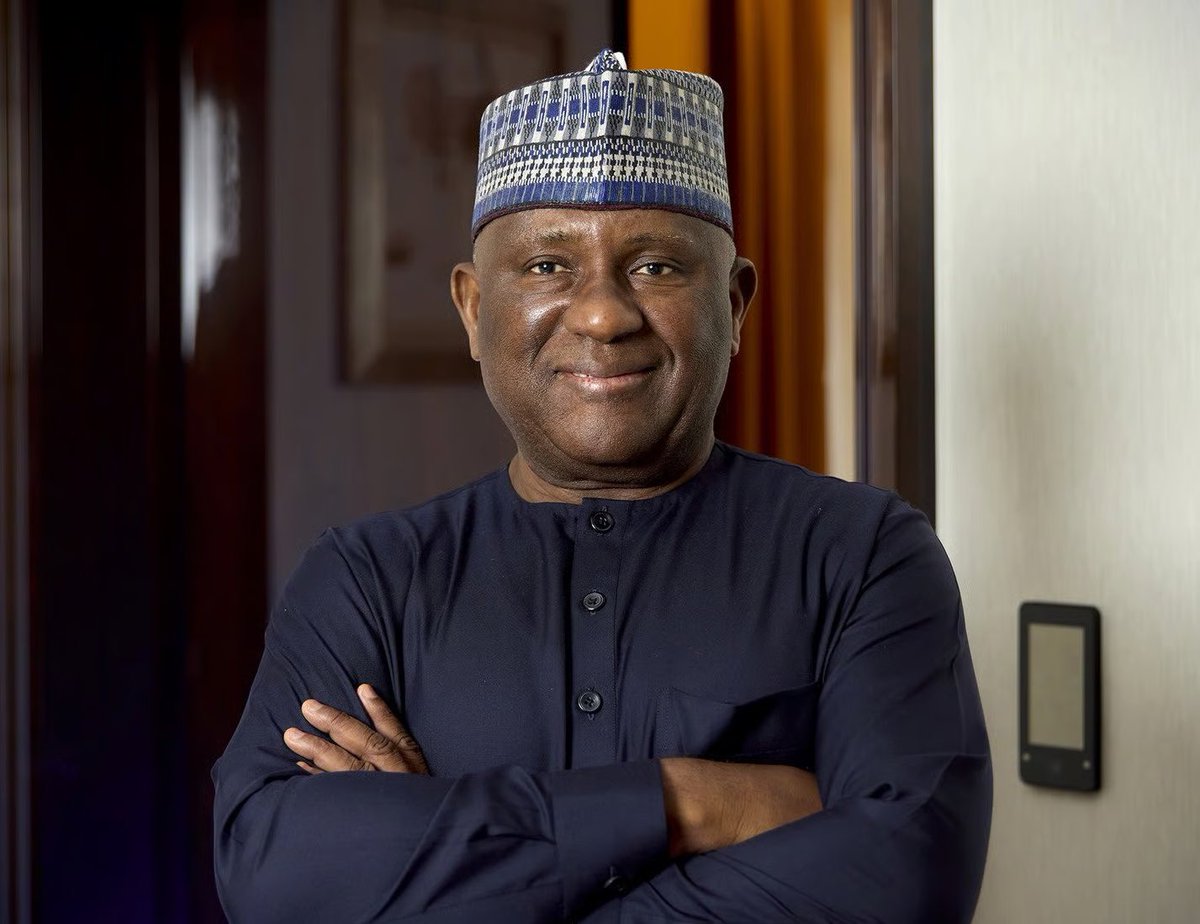
Founder and Executive Chairman of BUA Group, Abdul Samad Rabiu, has called for a decisive overhaul of Africa’s economic model, urging governments and financiers to prioritise large-scale industrial processing over raw material exports to bolster growth, employment, and foreign exchange stability.
The billionaire businessman stated this at an Africa Finance Corporation (AFC) forum during Mining Indaba 2026.
Rabiu said Africa’s challenge is not resource scarcity but weak processing capacity and limited industrial scale.
Drawing from BUA’s experience, he recalled how Nigeria once imported cement despite vast limestone reserves. Sixteen years ago, he said, BUA shifted from importation to domestic production — a capital-intensive move that has since helped transform Nigeria into a net cement exporter.
“Today, BUA mines about 40,000 tonnes of limestone daily and produces roughly one million tonnes of cement monthly, contributing to billions of dollars in annual foreign exchange savings.”
Rabiu credited long-term financing from development finance institutions, particularly AFC — which has provided over $400 million in support — as critical to executing such projects. He noted that a significant portion of the facilities has been repaid, demonstrating that African industrial ventures can be both developmental and commercially viable.
The BUA boss stressed that such a transformation wouldn’t have been possible without patient, long-term financing from DFIs, particularly the AFC, which has supported BUA’s cement and industrial operations.
Other News
He noted that the institution’s leadership and recent S&P Global rating with a positive outlook underscored the importance of strong development finance institutions in shaping Africa’s growth trajectory.
Broadening the argument, Rabiu described Africa’s export structure as a “structural paradox”, with the continent supplying much of the world’s minerals and agricultural commodities but capturing minimal downstream value.
He cited examples across gold, cobalt, copper, iron ore, diamonds and cocoa, noting that while Africa supplies much of the world’s raw inputs, it captures only a fraction of the value created downstream.
He argued that the same challenge extends beyond mining into agriculture, where Africa holds a majority of the world’s arable land yet continues to import billions of dollars’ worth of food annually.
“Africa does not lack resources,” he said. “What it lacks is processing capacity, industrial scale and disciplined execution.”
He urged governments to adopt deliberate industrial policies that incentivise local processing, while DFIs expand patient capital for beneficiation and value chains. Investments in power, transport and industrial infrastructure, he added, are critical to lowering costs and attracting private capital.
“Industrialisation does not happen by accident. Countries that industrialised did so by design. Africa must do the same,” Rabiu said.
The prominent industrialist stressed that Africa’s opportunity lies in aligning private enterprise, patient capital and supportive policy to move the continent from extraction to transformation and from potential to shared prosperity.