Follow Us on Google
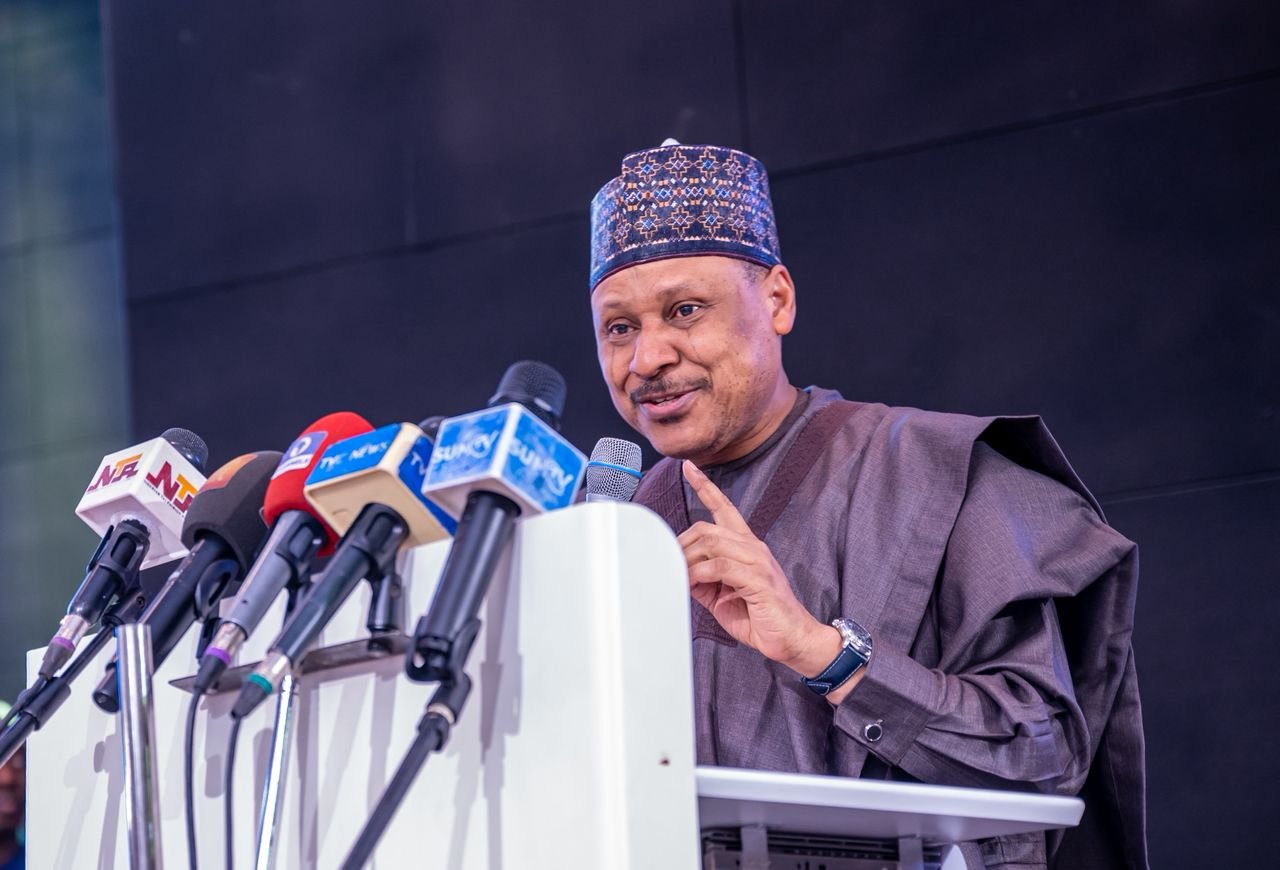
The Minister of Information and National Orientation, Mohammed Idris, has urged public relations practitioners to make truth, credibility and integrity the foundation of their profession, warning that emerging technologies could deepen the spread of misinformation and undermine public trust.
Idris spoke at the weekend in Kaduna during the maiden Bashir Adamu Chedi Annual Memorial Lecture and Annual General Meeting of the Kaduna State Chapter of the Nigerian Institute of Public Relations (NIPR).
The minister, who spoke on the theme, “Bridging Generations: Strengthening Public Relations Through Mentorship,” said the rapid transformation of communication through social media and artificial intelligence had made ethical responsibility more important than ever.
“Social media has made everyone a potential publisher. Artificial Intelligence is transforming how information is created and consumed,” he said.
According to him, “Images can be fabricated in seconds; voices can be cloned; manipulated videos can travel around the world before truth has even put on its shoes.”
Idris said public relations practitioners must therefore recognise that their core responsibility goes beyond publicity.
“In this environment, public relations cannot simply be about publicity. Our real business is trust,” he said.
He added that although technology and communication platforms would continue to evolve, the fundamental values of the profession must remain unchanged.
“Technology will change. Platforms will come and go. Artificial Intelligence will become more sophisticated. But the foundations of our profession must remain: truth, credibility, integrity, responsibility and respect for the public.”
The minister said the theme of the memorial lecture was particularly appropriate because the late Bashir Adamu Chedi, whom he described as a friend and professional colleague, had left a legacy through the people he influenced and the younger practitioners he encouraged.
“Bashir gave much of himself to the NIPR,” Idris said, recalling Chedi’s service as Secretary and Chairman of the Kaduna State Chapter, Fellow of the Institute, member of its Governing Council and Chairman of the Chapters Relations Committee.
“But his greatest legacy was not the positions he occupied. It was the people he influenced, the younger practitioners he encouraged and the professional values he represented,” he said.
Idris urged senior practitioners to deliberately mentor younger professionals while encouraging young practitioners to embrace the experience and wisdom of those who had gone before them.
“Young practitioners bring energy, creativity and an instinctive understanding of emerging technologies. Older practitioners bring experience, judgement, institutional memory and the wisdom of difficult professional encounters. Neither generation is complete without the other,” he said.
He cautioned young practitioners against dismissing experience as obsolete, while urging senior professionals not to see innovation as a threat.
“Bridging generations means bringing these strengths together,” the minister said.
He challenged the NIPR to turn the annual memorial lecture into a sustained mentorship platform.
“Let it become an enduring platform for mentorship. Let established practitioners deliberately identify younger professionals to guide. Let younger practitioners ask questions, challenge assumptions and introduce new thinking,” he said.
Minister defends Tinubu’s reforms
Idris also used the occasion to highlight the Federal Government’s reform agenda under President Bola Ahmed Tinubu, saying restoring public trust in government communication remained a central priority of his ministry.
“As Minister of Information and National Orientation, I have made the restoration of public trust in government communication a central commitment of my stewardship,” he said.
He said effective government communication required honesty, transparency and a willingness to acknowledge challenges.
“This requires government to communicate honestly and transparently, explain its decisions clearly, acknowledge challenges where they exist, and listen attentively to the concerns of citizens,” Idris said.
The minister described the removal of the petrol subsidy as one of the difficult but necessary decisions taken by the Tinubu administration.
“It was a difficult decision, and government recognises the pressures Nigerians have faced,” he said.
He, however, maintained that the previous subsidy regime was unsustainable.
“Continuing to commit enormous public resources to an unsustainable subsidy regime was postponing a problem that eventually had to be confronted,” Idris said.
He added that the government’s responsibility was to ensure that the benefits of reforms increasingly translated into improved infrastructure, public services, economic opportunities and living conditions.
Other News
CNG, security and state police
On transportation, Idris said the Federal Government was expanding the use of Compressed Natural Gas (CNG) as an alternative to petrol.
According to him, the deployment of CNG buses and vehicle conversion initiatives was designed to reduce transportation costs, diversify the country’s energy sources and provide Nigerians with cheaper and cleaner transportation alternatives.
On security, the minister said the Federal Government was strengthening security agencies and improving coordination in the fight against terrorism, banditry, kidnapping and other threats.
He also said President Tinubu had given fresh momentum to discussions around state police.
“Nigeria’s security architecture must evolve with its realities,” Idris said.
He argued that bringing policing closer to communities could improve intelligence gathering and response to local security threats, while constitutional and institutional safeguards would be necessary to ensure accountability and prevent abuse.
‘Criticism is essential to democracy’
The minister stressed that the government’s call for public support for reforms should not be interpreted as a demand for citizens to surrender their right to question government.
“Supporting reform does not mean citizens surrendering their right to question government. Constructive criticism is essential to democracy,” he said.
He added that criticism, like government communication, must be grounded in facts.
“But criticism must be based on facts, just as government communication must be based on truth,” Idris said.
He charged public relations professionals with the responsibility of combating misinformation without suppressing legitimate disagreement.
“We must explain without deceiving, persuade without manipulating, correct misinformation without suppressing legitimate disagreement, and remember always that trust is earned, not commanded,” he said.
Warning ahead of electoral cycle
With Nigeria approaching another electoral cycle, Idris warned that political competition would likely bring increased misinformation, disinformation and attempts to manipulate public opinion.
He urged public relations practitioners to uphold professional ethics irrespective of their political affiliations or employers.
“Public relations practitioners must not become merchants of falsehood in the service of political convenience,” the minister warned.
“We must verify before we communicate and defend professional ethics regardless of who employs us,” he added.
Addressing young practitioners, Idris urged them to seek knowledge and mentorship, stressing that access to information was not synonymous with wisdom.
“Access to information is not the same as wisdom,” he said.
“There are lessons that no search engine, textbook or AI platform can teach as effectively as someone who has walked the road before you.”
He equally challenged senior practitioners to make their experience available to younger professionals.
“Your experience should not retire with you. One of the greatest measures of professional success is the number of people you help to become better,” Idris said.
The minister congratulated the Kaduna State Chapter of the NIPR for establishing the memorial lecture, expressing hope that it would develop into a national platform for mentorship, professional reflection and ethical public relations practice.
“May the life of Mallam Bashir Adamu Chedi continue to remind us that our most enduring legacy is often not what we achieve for ourselves, but what we deposit in others,” he said.
Idris prayed for the repose of Chedi’s soul and wished participants a successful Annual General Meeting.