Follow Us on Google
From Jude Dangwam, Jos
The Petroleum Technology Development Fund (PTDF) has called on the University of Jos and its research team to move beyond academic publication and translate findings from its professorial chair programme into practical applications that can attract investment and drive national development.
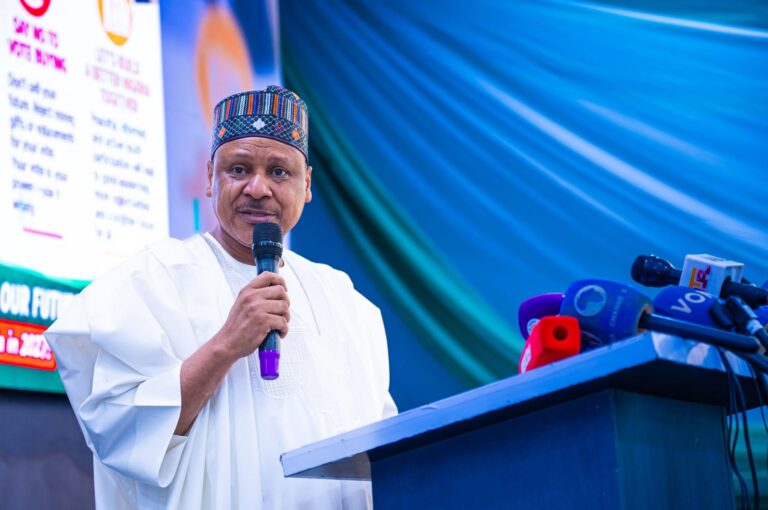
The Executive Secretary of PTDF, Professor Chai Ushiru Aliru stated this during the close-out seminar of the PTDF Professorial Chair in Geology and General Science at the University of Jos.
Represented by his Deputy Manager, Procurement, Mr. Dikko Abba, Aliru said as Nigeria continues to pursue economic diversification and sustainable resource development, “research of this nature becomes even more imperative. Detailed geological and geophysical studies provide the scientific data needed to understand subsurface structures, assess mineral resource potential and guide exploration and investment decisions.
“The outcome of this research has the potential to contribute immensely to national efforts aimed at unlocking the vast mineral and energy resources and if properly managed, could be a game changer for the region and the entire country.”
He said the PTDF established the Endowment Programme as a platform for promoting cutting-edge research, encouraging innovation and strengthening collaboration among academia, industry and government.
“Over the years, the programme has produced valuable research outputs, developed highly skilled manpower and generated knowledge that continues to support national development.
“The accomplishment of this project further demonstrates the value of sustained investment in research and the important role of our universities in addressing national challenges through science and technology.
“I wish to especially commend the chair occupant, Professor Luhu Samaila, members of his research team, the visionary vice-chancellor, Prof Tanko Ishaya, the entire management of the University of Jos and all stakeholders, who have contributed to the successful implementation of the chair’s activities.
“Your dedication, professionalism and commitment to excellence have produced research outputs that will enrich geological knowledge, support resource evaluation and provide a strong foundation for future studies and policy formulation.
“As the chair occupant’s tenure draws to a close, I strongly encourage the university and the research team not to see the expiry of this tenure as the end of the journey, but as the beginning of a new phase of impact. The gains recorded must be sustained, deepened and translated into practical value for the university, the industry and the nation at large.
“Therefore, the findings from this meeting should not end with this seminar, rather they should be transformed into practical applications, stronger industry partnerships, meaningful collaborations and mentorship opportunities for the next generation of geoscientists.
Other News
“It is our expectation that the knowledge generated through this chair will continue to create valuable contributions long after the formal completion of this tenure,” he stated
Prof Ishaya described research collaboration between universities and industry as essential to Nigeria’s development.
He maintained that the PTDF partnership had demonstrated the value of sustained investment in research and noted that outcomes from the project could support future policy direction on resource development.
Ishaya stated that “beyond scientific discoveries, the programme strengthened institutional capacity, promoted collaboration and created a foundation for future research.”
He added that the university was prepared to sustain the research momentum and explore opportunities for commercial application of the outcomes.
The chair occupant of the PTDF research and professor of sedimentology and petroleum geology, Nuhu Kadai Samaila, noted that findings on hydrocarbon potential presenting the outcome of the research, titled, “Integrated Geological and Geophysical Evaluation of the Shendam Sheet 212, Middle Belt Trough, Nigeria,” revealed evidence of hydrocarbon occurrence and migration within the study area.
According to him, although the broader research covered sections of the Benue Trough, the team concentrated on Shendam Sheet 212 and recorded geological indicators favourable for hydrocarbon generation.
He further explained that, “laboratory analysis showed appreciable organic carbon content in rock samples and sediment thickness exceeding 500 metres in some locations.
“Despite some samples being affected by weathering and erosion, researchers identified evidence associated with hydrocarbon movement within the subsurface.
“What we are able to establish right now is gas. We also have thick sediments and temperature gradients sufficient to mature source rocks within the basin,” he explained
The professor noted that “preliminary geochemical findings suggested that the dominant organic materials identified were largely Type III and Type IV, indicating stronger natural gas potential than crude oil generation.”
He further disclosed that “investigations around Langtang North/Langtang South formations recorded indications of oil occurrence, including degraded oil observed at the surface, suggesting additional petroleum prospects that may require further exploration,” he stated