Follow Us on Google
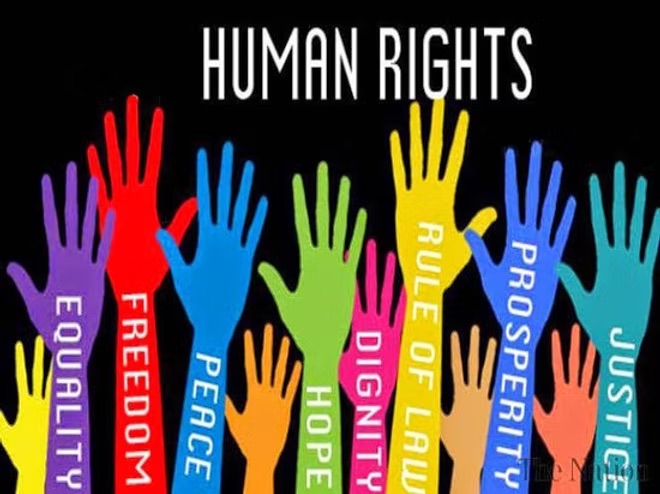
The Secretary-General of the United Nations, Antonio Guterres, has underscored the increasing threat of human rights across the world and called on the international community to do more to protect fundamental human freedoms. The UN scribe, who stated this in his message to mark this year’s International Human Rights Day on Wednesday, said “human rights—civil, political, economic, social and cultural—are inalienable, indivisible and interdependent.”
He also stated: “But recent years have brought a shrinking of civic space. We have grave violations that signal a flagrant disregard for rights, and a callous indifference to human suffering.” The UN Secretary-General reasoned that “together, we have the power to control these injustices: by protecting the institutions that make human rights a lived reality.”
The theme of this year’s International Human Rights Day, “Human Rights, Our Everyday Essentials,” reminds us that rights are not abstract or distant concepts. They are the freedoms we rely on each day: to speak, to learn, to work with dignity, and to live from discrimination.” Human Rights Day marks the adoption of the Universal Declaration of Human Rights by the United Nations General Assembly in 1948. The UN also explained that in this period of turbulence and unpredictability, where many feel a growing sense of insecurity, disaffection and alienation, the theme of Human Rights Day is to reaffirm the values of human rights and show that they remain a winning proposition for humanity.
“Through this campaign, we aim to re-engage people with human rights by showing how they shape our daily lives, often in ways we may not always notice. Too often taken for granted or seen as abstract ideas, human rights are the essentials we rely on every day,” the UN stated. However, all over the world, human rights are under serious threat and some governments appear to be doing nothing to address the challenge.
In Nigeria, human rights groups, media associations and others have also called for the protection of human rights and abrogation of repressive laws used by security agencies to harass and intimidate citizens, human rights groups and journalists. The Socio-Economic Rights and Accountability Project (SERAP) and Nigerian Guild of Editors (NGE) had in a statement issued to mark the day, expressed concern over the use of repressive laws, including CyberCrime Act and strategic lawsuit against public participation (SLAPP) to intimidate and harass journalists, activists and Civil Society Organizations (CSOs). They contended that “the use of these repressive laws and SLAPP erodes democracy, respect for human rights and the rule of law in Nigeria.”
Other News
They also stressed that “the use of repressive laws and SLAPP to crackdown on peaceful dissent is entirely inconsistent with the Nigerian 1999 Constitution (as amended) and the country’s international human rights obligations.” Some noticeable human rights violations and suppression of the press in Nigeria recently include unlawful arrest, detentions, malicious prosecutions and wrongful use of both legislation and law enforcement.
For instance, in August 2024 alone, at least 56 journalists were assaulted or arrested while covering demonstrations across the country. Nigeria has also dropped 10 spots to 122nd in the 2025 World Press Freedom Index. According to the Centre for Journalism Innovation and Development (CJID) Press Attack Tracker, there were 110 verified attacks in the year 2024. In comparison to the previous year, the press attacks between the first and third quarter of 2024 surpassed those of the entire year in 2023.
The Committee to Protect Journalists (CPJ) stated that at least three journalists in Nigeria have been detained since August 2025 on allegations of violating the country’s Cybercrime Act, despite the recent reform of the law—highlighting the continuing use of the law and defamation laws to target and harass journalists and activists. Some Nigerian journalists have also been detained for months for cyberbullying.
We call on the federal and state governments to ensure that the human rights of Nigerians are respected and protected. The police and other security agencies, including the Department of State Services (DSS), should stop the violation of human rights of Nigerians, especially journalists. It is worth reminding the government and security agencies that the role of the media is clearly defined in the 1999 Constitution of the Federal Republic of Nigeria (as amended).
Section 22 of the Constitution provides that: “The press, radio, television and other agencies of the mass media shall at all times be free to uphold the fundamental objectives contained in this Chapter and uphold the responsibility and accountability of the Government to the people.” Therefore, the government and the security agencies should not hide under the Cybercrime Act to bully and harass journalists and other Nigerians. All repressive laws used by security agencies to harass Nigerians should be abrogated forthwith.