Follow Us on Google
By Tanure Ojaide
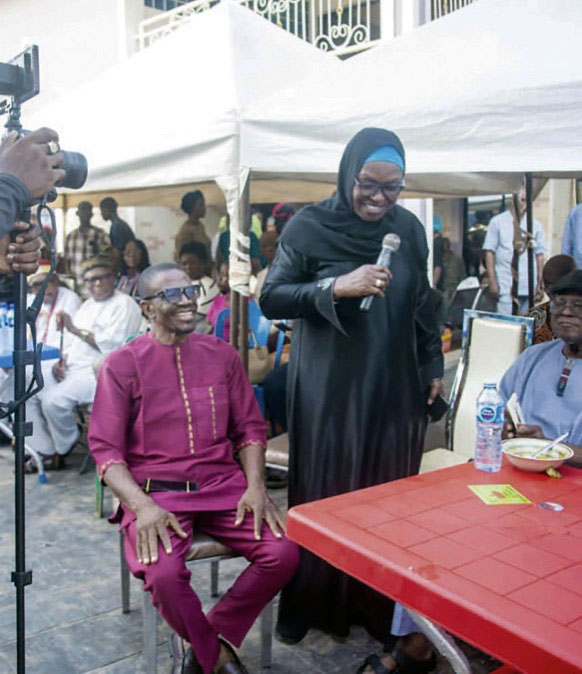
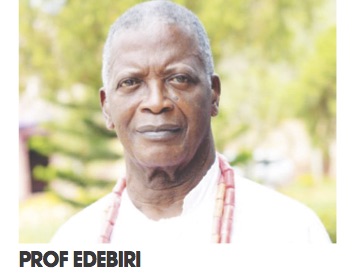
He exuded the nobility of body, spirit, and soul. In social, academic, and most events, he wore his white Benin princely/chiefly attire—simple but dignifying. He was the embodiment of Benin/Edo virtues of courage, fairness and justice. He was very affable and maintained a wonderful rapport with young and old and folks from all over Nigeria and outside. He built networks of associations from his study at Urhobo College, Effurun, and later at the Obafemi Awolowo University, Ife, University of Lagos, and University of Benin. He was loyal to friends. Several times I had called him thinking he was in his Benin City home but found out he was somewhere else in the country—in the East, Delta, or Lagos because of a friend doing something he had to attend. He was a Nigerian patriot who wanted all Nigerians, irrespective of ethnic group or religion, to be involved in good governance. He was from a prominent Benin family close to the Benin royalty and he married a Yoruba princess. For his service to the nation, the President awarded him Officer of the Federal Republic (OFR).
He studied French to perfection at the Sorbonne at a critical period of history immediately following the granting of independence to many African countries. He was the first Nigerian to receive a Ph.D. in French language and literature at the Sorbonne University in 1970. His French was impeccable, the sort that his colleague, Abiola Irele, spoke and wrote. He studied Bernard Dadie (1916-2019), the Ivorian writer, who hosted him in Abidjan. He told me he was also a guest of Leopold Sedar Senghor, a former Senegalese President and proponent of Negritude. He united African Anglophone and Francophone worlds into an Africa of mutual collaboration. In the last year he made efforts to collect his essays and publish them in one volume. He was not able to do this and I hope Nigerian/African scholars of French or Francophone African literature will complete the project for him.
Unionmwan Edebiri’s passion for justice and fairness made him not only to study law but also to struggle for the enlargement and fair representation in associations as the Nigerian Academy of Letters. Only this last summer before the last NAL election, he wondered out loud in a piece why only one discipline—theater/drama/performing art—was producing the Academy’s presidents in recent years. If there was a mafia, he broke it. If theatre arts had few professors than literary studies, language and linguistics, and history, for instance, others deserve to head the Academy. Andrew Haruna’s victory must have been his readiness to not keep quiet in the face of injustice and lack of fairness. He recruited those he felt qualified for consideration for any national association or awards from the marginalized areas. I was one of those he felt should be nominated for the national merit award which I won in 2016.
I had known him and he had heard of me before we met physically. We took a liking for each other. I visited him at the National Theatre which housed the CEBAC he directed. He was always happy. He celebrated with others their elevation. He showed keen interest in my writing career. We called regularly and if I did not call in two or three days, he called me. To him being senior did not make him wait for only the junior one to call him—it was a mutual bond that we both upheld. Whenever I called or he called, he chanted “NNOM!” and without his suggesting me for nomination I would not have got the award. After that he chanted “Frank Porter Graham Professor!” I had to respond “Yes!” or “Sir.”
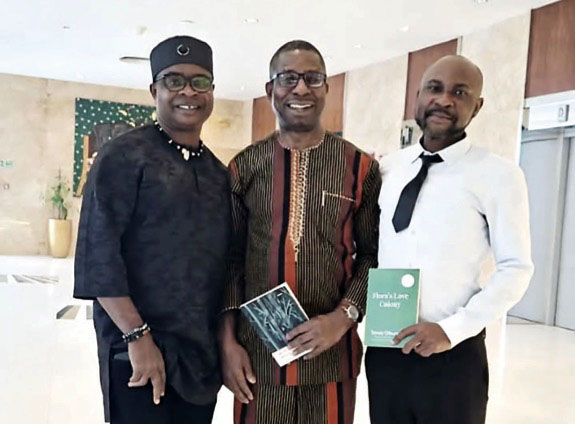
He was my confessor. He was my elder brother and friend at the same time. I did not keep any secrets from him and there was something exhilarating when you know that you were opening your heart to someone you trusted. I sought his advice on many things and from his repository of indigenous and Western knowledge and life experience proffered ways to navigate life. He always asked about my family and friends. “How is Abraka?” he would ask. And I would tell him how Abraka was at the particular time. He supported me in what I did. He came to Port Harcourt where a conference on my works was being held and stood by me. He also attended my mother’s funeral two years ago. We attended the African Literature Association conferences together. He had to skip last May’s ALA conference at Knoxville, Tennessee because of his declining health. Last summer when in Paris for the International Society for the Oral Literature of Africa and on a city tour, I called him from the Sorbonne and he was happy I was at his alma mater.
Since he fell ill and lost his wife, he had become subdued though still laughing. With dignity he bore his pain and sorrow. I knew that he felt different after his wife’s demise and the situation was further compounded by his sickness. I want to thank his children, especially Uyi and the daughters who took excellent care of him at Lekki and Apo in Abuja. They should be proud of the legacy their father has left—that of a virtuous man. God gives and God takes. One should grieve a little and celebrate the life of our dear friend, Professor, Unionwan Edebiri, who was a great human being. He has left us in this earthly life but he lives in my heart.
Tanure Ojaide, NNOM. FNAL, Frank Porter Graham Professor of Africana Studies, University of North Carolina, Charlotte.