Follow Us on Google
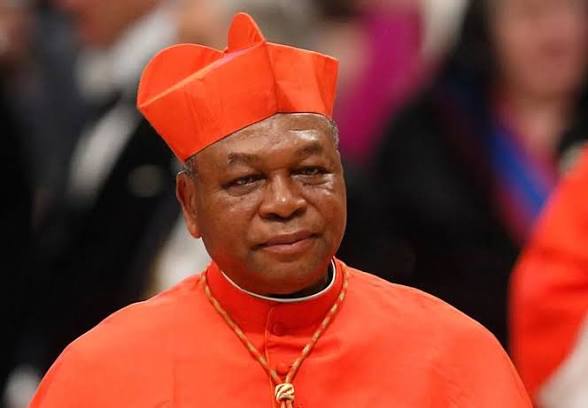
- Amupitan, Idris, Otu task media on democracy, AI threat, public trust
By Beifoh Osewele, who is in Enugu
John Cardinal Onaiyekan, Archbishop Emeritus of Abuja, has advocated a major change to Nigeria’s presidential electoral system under which no candidate would be declared winner without securing at least 50 per cent of votes cast.
He also called for a more independent process for appointing the leadership of the Independent National Electoral Commission (INEC), determination of election petitions before winners are inaugurated, independent candidacy and stricter rules against legislators defecting from parties on whose platforms they were elected.
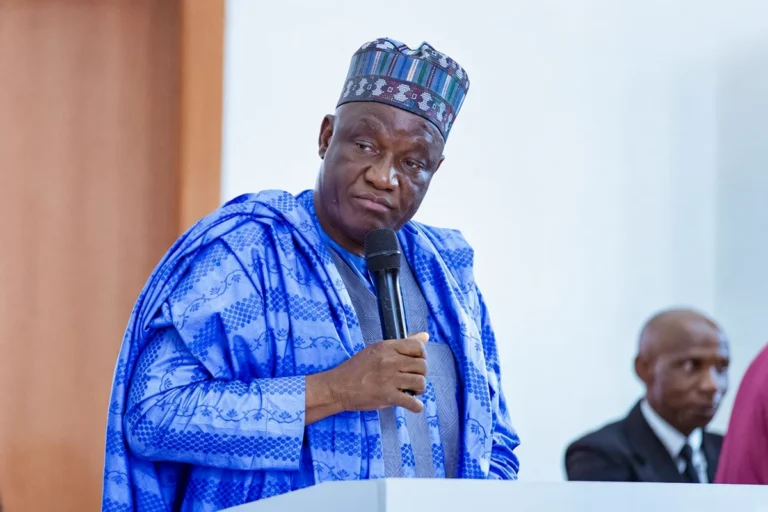
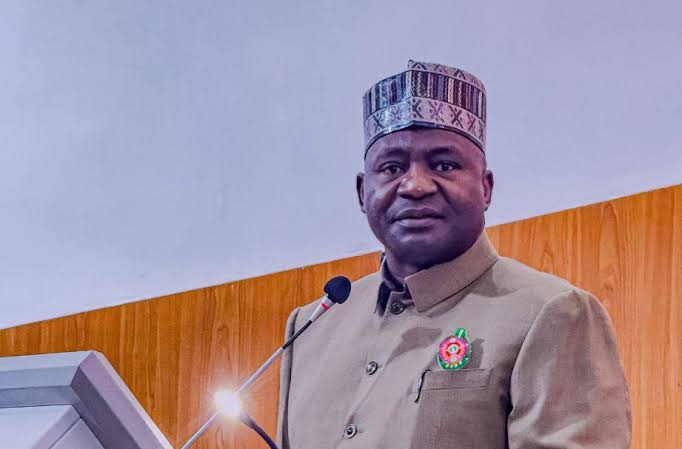
In their remarks, INEC Chairman, Prof. Joash Amupitan; Minister of Information and National Orientation, Mohammed Idris and Cross River State Governor, Senator Bassey Otu, raised concerns over technology, misinformation and declining public trust, challenging the media to defend truth and democratic institutions as Nigeria approaches the 2027 general election.
The positions emerged from separate interventions at the All Nigeria Editors Conference (ANEC) of the Nigerian Guild of Editors (NGE) in Enugu, themed, “The Ballot, the Media and the Task of Keeping Democracy Alive.”
While Onaiyekan delivered the keynote address, Amupitan and Idris addressed the conference in separate goodwill messages, with Idris represented by the Managing Director of the News Agency of Nigeria (NAN), Dr. Ali Ali.
Otu’s goodwill message was delivered by his Special Adviser on Media and Publicity and Chief Press Secretary, Mr. Linus Obogo.
Onaiyekan anchored his reform proposals on the primacy of the voter, insisting that political power must ultimately reflect the will of the people.
“We must insist on the primary position of the people who cast their votes,” he said.
On the presidential threshold, he said: “For the presidential election, we should insist on at least 50% of all votes cast before declaring any victory. In the absence of 50% at the first vote, a second vote should be called among the first two highest scorers to determine the winner.
“A 50% minimum would ensure that whoever becomes our president has a traceable margin of endorsement by the Nigerian people.”
The Cardinal also called for a review of the process for appointing the INEC chairman and national commissioners, arguing that the electoral umpire should be sufficiently insulated from political authorities with interests in elections.
“We need to review the method of appointment of the INEC, the Chairman and the commissioners. They should not depend on Mr. President and the governors, who are themselves contestants in elections,” he said.
He also proposed a special election tribunal devoted exclusively to electoral disputes, with petitions concluded before successful candidates assume office.
“We must do all that is necessary to dispose of all tribunal cases before swearing in any candidate,” he said.
“A situation where a candidate has been declared a president still going to tribunal to defend his position using state means and state resources to defend himself against his opponents is not serious as far as natural justice is concerned.”
Onaiyekan also canvassed legal standing for voters, rather than candidates alone, to challenge election results where they believe their votes have not been properly accounted for.
“As at now, only candidates have locus standi to challenge election results. But we who cast the votes and whose votes are at stake have no room to complain. This must change,” he said.
He renewed calls for independent candidacy, particularly at the grassroots, declaring: “It is about time we curb the tyranny of the political parties and their ruthless godfathers.”
The Cardinal also proposed that legislators who defect from the parties on whose platforms they were elected should return to their constituencies for fresh mandates.
“It is not fair for the constituents to watch their legislator changing the party they voted for without their consent,” he said.
Although he acknowledged that there might be limited room for fundamental changes to the electoral framework before 2027, Onaiyekan maintained that credible elections remained possible if existing rules were faithfully applied.
“For the 2027 elections, just around the corner, there is not much we can do to change the rules on ground. We therefore have to work with what we have now in terms of the legal frameworks.
“But I do believe that even with our deficient electoral laws, we can still conduct free, fair, and credible elections if the rules are followed with sincerity of purpose.”
Beyond the legal and institutional framework, Amupitan, Idris and Otu drew attention to another challenge confronting democracy — the integrity of information reaching citizens in a rapidly changing technological environment.
Amupitan warned that generative AI had made the production of convincing false audio, video and images cheaper and more difficult to detect.
“Generative AI has made it cheaper and considerably harder to detect manipulated audio, video and images,” the INEC chairman said.
“Its misuse extends beyond fabricated content to targeted messaging capable of dividing voters along conflicting narratives.
“This is no longer a distant, theoretical risk.”
Amupitan said electoral credibility could therefore no longer be assessed solely by what happened at polling units and collation centres.
“Election credibility today no longer depends only on ballot papers, BVAS machines and result sheets, but equally on the information environment in which voters form their judgments,” he said.
He warned that the challenge would intensify as the country moved closer to the next general election.
“We are preparing for the 2027 general elections, a period during which the volume, speed and, at times, the inaccuracy of information about the commission and the electoral process will increase considerably.”
Idris similarly drew attention to increasingly sophisticated AI-generated images, audio, video and documents and the danger they pose to public trust.
The minister stressed the importance of verification and professional journalism in an information environment in which fabricated material could increasingly resemble authentic content.
Otu reinforced the concerns from the perspective of the media’s democratic responsibility, describing editors as “custodians of public truth” and “indispensable guardians of democracy.”
The governor said technological advancement had brought enormous benefits to communication but had also “multiplied misinformation, sharpened division and tested the ethical foundations of journalism.”
Against that background, he described the editor as “an indispensable compass: calm amid turbulence, discerning amid confusion, and steadfast amid pressure.”
Otu said editors occupied “a sacred place in the architecture of every thriving democracy” because they stood at the intersection between information and public understanding, influencing “not merely what the nation reads, but how it reflects, reasons and responds.”
He urged the Guild to strengthen professional standards, protect press freedom, rebuild public trust, nurture younger journalists and ensure that technological innovation served truth rather than undermined it.
“Nigeria needs an editorial community that remains fearless without becoming reckless, critical without becoming cynical, and influential without surrendering its independence,” the governor said.
According to him, the media’s responsibility transcends transmitting information to helping society distinguish fact from falsehood.
“Through sound judgment, courage, balance and fidelity to fact, you illuminate the public square and help society separate substance from noise, truth from falsehood, and hope from despair.”
The interventions placed the integrity of the 2027 electoral process on interconnected fronts — the rules governing the ballot, the independence and credibility of electoral institutions and the reliability of information on which citizens make their choices.
Onaiyekan also criticised what he described as the do-or-die disposition of some politicians.
“They see elections as a struggle for power, which brings wealth and influence. In all this, the people hardly count at all. Rather, they are just pawns on the political game.”
He also questioned politicians who boast that they would “deliver” entire states to particular candidates.
“Where is the freedom of the people of the state to vote according to their individual consciences? Or does the governor intend to vote for everybody in his state?” he asked.
Onaiyekan equally called for a rethink of the heavy security deployment that traditionally accompanies Nigerian elections.
“We have to review our own habit of turning election days into a nation at war,” he said.
The Cardinal expressed concern about the growing prominence of post-election litigation, maintaining that courts and tribunals should resolve disputes rather than effectively become the arenas where electoral contests are ultimately decided.
“It should be stressed that the judiciary is not to determine elections about who wins, but rather to adjudicate disputes when they arise.
“Our experience in the recent past has almost become that we have been witnessing a situation where our elections are being determined not at the polls, but in the courts by the tribunals.”
Onaiyekan said the combination of contentious elections and an increasingly complex information environment imposed an even greater responsibility on professional journalism.
“The media has an important role in upholding democracy, to keep the people informed about the true state of the nation,” he said.
“A free press is necessary for a genuine democracy.”
On AI, the Cardinal said: “It is already working wonders in the communication space, though not without its dangers if it is allowed to spin out of human control.”
He urged journalists to preserve their professional independence and exercise their freedom responsibly, saying the objective of the democratic process must remain “to install a government that is freely chosen by the people and that works for the common good of the people.”
“The relatively good margin of freedom, which the Nigerian Media now enjoys, should be used with responsibility and professionalism, to rescue democracy in our nation, to uphold and to nurture it for a great nation under God.”