Follow Us on Google

•12 power plants record zero output amid gas supply disputes
Nigeria’s worsening electricity crisis has exposed the deep rot in the country’s power sector, with key industry stakeholders trading blame over the causes of deteriorating supply.
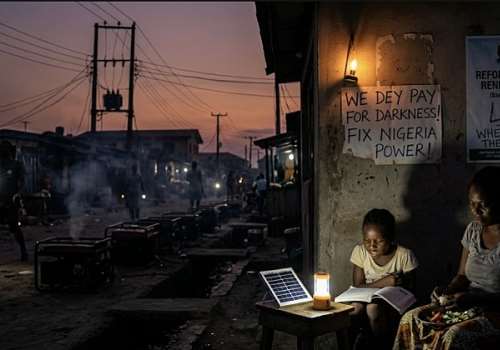
The bickering comes as millions of households and businesses struggle with prolonged blackouts and forced to spend more on petrol, diesel and other alternatives to keep going.
In the last two weeks, electricity supply has deteriorated across Lagos, Abuja and several other parts of the country, leaving consumers increasingly frustrated by a system in which every major operator appears to have an explanation for the darkness, but none has provided a comprehensive account of how the crisis will be resolved.
The scale of the deterioration became more apparent on Sunday, November 8, (Yesterday), when electricity generation plunged to 2,945 megawatts (MW) as of 11am, further exposing the inability of the national grid to meet the country’s electricity needs.
For households, the worsening outages mean more money spent on petrol and diesel to power generators, preserve food and maintain basic domestic activities. For businesses, particularly small enterprises, manufacturers, restaurants, cold-room operators, barbershops and welding workshops, unreliable electricity has become an additional operating expense, forcing some to increase prices, cut operating hours or struggle to remain profitable.
Yet, while consumers bear the economic consequences, the explanations from stakeholders across the electricity value chain have become increasingly contradictory.
From gas supply constraints and generating plant maintenance to transmission infrastructure and distribution network failures, the arguments have exposed a sector struggling not only with inadequate electricity generation but also with accountability and transparency.
Generation plunges as 12 power plants record zero output
According to statistics monitored on the Nigerian Independent System Operator (NISO) portal, 12 power generation plants recorded zero megawatts (MW) of electricity generation, while about 16 others produced a combined 2,945.62MW as of 11am. The latest figures highlight the worsening constraints facing Nigeria’s power sector, with several generation facilities contributing nothing to the national grid amid persistent electricity supply disruptions across the country.
The affected plants include Geregu NIPP, Alaoji NIPP, GPAL, Ihovbor NIPP, Kainji, MEPP, Okpai, Rivers IPP, Sapele, Shiroro, Taopex and Trans Afam Power.
The affected facilities cut across gas-fired, steam and hydroelectric power plants, indicating that the generation shortfall is not limited to a single category of power infrastructure. While the 12 plants remained idle, about 16 other generating stations supplied a combined 2,945MW to the national grid as of the same period.
The latest generation figures further underscore the challenges confronting the electricity sector, including inadequate gas supply to thermal power plants, operational constraints and infrastructure limitations across the generation and transmission segments. The continued inability of several generating stations to contribute electricity to the national grid raises fresh concerns about the country’s capacity to improve power supply, particularly as demand from households and businesses continues to outstrip available generation.
NISO, which coordinates the operation of the national grid, initially attributed the decline in electricity generation to inadequate gas supply to thermal power stations and reduced output from hydroelectric plants because of lower water inflows into their reservoirs.
According to NISO, the constraints had reduced the electricity available on the national grid, forcing operators to implement load shedding and allocate less power to distribution companies. While the reasons for the zero output were not established individually in the available data, the figures underscore the need to determine how much of the generation shortfall is attributable to gas shortages, scheduled maintenance, technical faults or other operational difficulties.
NNPC, NISO differ over gas supply constraints
NISO’s explanation soon encountered a qualification from Nigerian National Petroleum Company Limited (NNPC), which insisted that its gas transportation infrastructure remained available to support deliveries to power stations nationwide.
In a statement issued by its Chief Corporate Communications Officer, Andy Odeh, NNPC said the gas transportation network operated by its subsidiary, NNPC Gas Infrastructure Company Limited (NGIC), was not experiencing any constraints that could explain the decline in electricity generation.
The national oil company also disclosed that gas production volumes had increased by approximately 10 per cent year-to-date in 2026, as part of efforts to advance the Federal Government’s gas development and monetisation agenda.
But NNPC’s clarification raised another important question about the distinction between gas production, transportation and actual delivery to power generating stations.
The company acknowledged that the availability of its transportation infrastructure did not necessarily establish that sufficient gas was being commercially supplied and delivered to individual power plants.
It consequently called for a comprehensive assessment of gas supply arrangements, actual deliveries, generating plant readiness, maintenance schedules and gas offtake to establish the precise causes of the generation shortfall.
This distinction is significant because the availability of pipelines does not automatically translate into sufficient gas at power stations, just as increased gas production does not necessarily guarantee that generating companies receive the quantities required to operate their plants. The disagreement has therefore exposed a critical information gap in the gas-to-power chain, particularly regarding how much gas is available, how much is contracted, how much is delivered and how much is actually consumed by power plants.
TCN, Ikeja Electric trade accusations over Lagos blackout
The blame game subsequently moved to the transmission and distribution segments, following a disagreement between the Transmission Company of Nigeria (TCN) and Ikeja Electric over the prolonged outages affecting consumers in Lagos.
The controversy began when Ikeja Electric apologised to customers after failing to meet the minimum 20 hours of daily electricity supply guaranteed to Band A customers on November 4 and 5.
In its public notice, the distribution company attributed the affected feeder outages to grid instability, effectively assigning responsibility to TCN.
However, the apology itself generated another controversy after Ikeja Electric specifically addressed Band A customers, leaving consumers on Bands B, C, D and E questioning why they were excluded despite experiencing similar disruptions.
The reaction on social media reflected the growing frustration among electricity consumers over what they perceived as unequal treatment by distribution companies.
One consumer, Jude Okeke, accused the company of neglecting customers outside Band A, questioning whether electricity distribution services were now exclusively meant for those paying for the premium category.
Another consumer, Adeola Ijaola, similarly challenged the company, asking whether customers on the lower bands were not entitled to explanations and apologies for poor supply.
The controversy provided a glimpse into the wider dissatisfaction with the service-based tariff system, particularly the expectation that consumers should receive electricity supply commensurate with the tariffs they pay.
But TCN subsequently challenged Ikeja Electric’s explanation, describing its attribution of the outages to grid instability as inaccurate and misleading.
Citing Section 67 of the Electricity Act 2023, TCN maintained that determining the root causes of disturbances, shortfalls and interruptions on the national grid fell within the statutory responsibilities of NISO, not individual distribution companies.
It argued that NISO had already established that the prevailing decline in electricity generation was caused by gas supply constraints affecting thermal power stations and reduced hydroelectric output.
TCN further maintained that the resulting reduction in available generation had reduced the electricity allocated to distribution companies, leading to fewer hours of supply and increased load shedding.
The transmission company also presented operational figures to challenge Ikeja Electric’s account.
According to TCN, 68 per cent of the interruptions recorded on feeders supplying Ikeja Electric on November 1 and 2 resulted from frequency-control load shedding arising from low generation.
Another 26 per cent, it said, resulted from Ikeja Electric’s non-compliance with load allocation instructions issued by NISO’s National Control Centre or faults and maintenance works on the distribution company’s network.
Only six per cent of the recorded interruptions were attributed to TCN’s planned maintenance, switching operations or line limitations.
TCN also disputed Ikeja Electric’s explanation regarding the specific feeders identified in its public notice.
Of the 46 interruptions recorded on the 33kV feeders mentioned by Ikeja Electric, TCN said 29 resulted from frequency-control load shedding arising from low generation.
14 were attributed to Ikeja Electric, comprising nine cases of non-compliance with load allocation and five involving faults or trips on its network.
The remaining three resulted from scheduled TCN maintenance on the Ogba-Alimosho line on November 1.
TCN also cited the Rack Centre feeder, which it said was interrupted by a cable fault on Ikeja Electric’s network and subsequently repaired by the distribution company’s crew.
The transmission company consequently accused Ikeja Electric of misleading consumers by attributing supply shortfalls caused by generation constraints to the transmission network.
It urged distribution companies to communicate with consumers using verified information from NISO rather than independently assigning responsibility for outages.
The disagreement has exposed another layer of the accountability problem confronting the electricity industry.
While TCN insists that it can only transmit the electricity generated and made available to it, distribution companies are responsible for delivering allocated energy to consumers through their respective networks.
NISO, meanwhile, coordinates the operation of the national grid and determines the allocation of available electricity.
This means that inadequate generation will inevitably constrain supply, even where transmission infrastructure is available. Similarly, increased generation cannot guarantee uninterrupted electricity if transmission limitations, distribution network faults or non-compliance with allocated load persist.
Minister blames plant maintenance, gas shortages, sabotage
The federal government has also acknowledged the severity of the situation, with the Minister of Power, Joseph Tegbe, apologising to consumers and promising improvements within 48 to 72 hours.
The minister identified planned maintenance at Egbin Power Station and gas supply constraints affecting some thermal power stations as major factors responsible for the reduced electricity available on the national grid.
He also disclosed that sabotage of key transmission lines had restricted the use of alternative routes for supplying some locations, particularly Lagos.
According to him, grid operators had resorted to load shedding in some areas to manage the generation shortfall.
Tegbe said his team was working with relevant operators to return affected generating units to service in phases, with the first units expected to come back online within 48 to 72 hours.
He also promised interventions to improve gas supply and accelerate repairs to damaged infrastructure.
The minister’s explanation introduced another dimension to the crisis, particularly the reported sabotage of transmission lines, which could limit the ability of operators to redirect electricity through alternative routes when disruptions occur.
However, the various explanations have yet to provide Nigerians with a comprehensive breakdown of the contribution of each constraint to the current crisis.
Consumers bear the cost as accountability remains elusive
The bigger problem, therefore, is not simply the shortage of electricity but the absence of a clear, coordinated and verifiable account of why the system continues to fail consumers.
NNPC says its gas transportation network is available and gas production has increased. NISO says gas availability and reduced hydroelectric output have constrained generation. TCN disputes Ikeja Electric’s claim of grid instability and attributes most of the recorded feeder interruptions to low generation and distribution network issues. The power minister, meanwhile, has identified plant maintenance, gas constraints and sabotage of transmission lines.
These explanations may not necessarily contradict one another, as they address different parts of the electricity supply chain. However, they underscore the need for a single, independently verifiable assessment of the problems affecting the sector.
For instance, Nigerians need to know the actual quantity of gas required by thermal power stations, the volume delivered to them and the extent to which generating units are available to convert the gas into electricity.
They also need information on the number of generating units undergoing maintenance, those experiencing technical faults and those unable to operate because of inadequate gas supply.
Beyond generation, there must be clear information on the quantity of electricity available on the grid, how much is allocated to each distribution company, the extent of compliance with those allocations and the proportion of supply interruptions attributable to transmission and distribution infrastructure.
Without such transparency, consumers will continue to receive competing explanations from operators without knowing where the actual failures lie or who should be held accountable.
The economic implications are already being felt across the country.
For households, the additional cost of fuelling generators is becoming an unavoidable burden, while businesses are increasingly forced to factor the cost of alternative electricity into the prices of goods and services.
Manufacturers, in particular, face the prospect of higher production costs and reduced competitiveness as unreliable grid electricity forces greater dependence on self-generation.
The situation also raises questions about the effectiveness of the service-based tariff system, under which consumers pay different rates depending on the minimum hours of electricity supply guaranteed to their respective bands.
Ikeja Electric’s Band A-only apology has further exposed the sensitivity surrounding the arrangement, with customers outside the premium category questioning whether their complaints and experiences matter to distribution companies.
While the 20-hour minimum supply requirement applies to Band A customers, consumers on other bands are also entitled to reliable service in line with the applicable supply commitments.
The immediate priority is to restore electricity generation and improve supply to affected communities. But the 48-to-72-hour assurance by the minister should not become another temporary response to a recurring national problem.
Nigeria requires a more transparent and accountable electricity supply chain in which every operator provides verifiable information about its performance, identifies constraints within its area of responsibility and demonstrates measurable progress in addressing them.
Ultimately, the responsibility for ensuring that Nigerians receive reliable electricity cannot be discharged through public statements and exchanges of blame.
Until stakeholders move beyond competing explanations to a coordinated response backed by operational data and clear accountability, households and businesses will continue to pay for a crisis they have little power to resolve.