 Follow Us on Google

• Debt servicing gulps 65% of revenue as Atiku, Umeh question borrowing spree
From Fred Itua and Adesuwa Tsan, Abuja
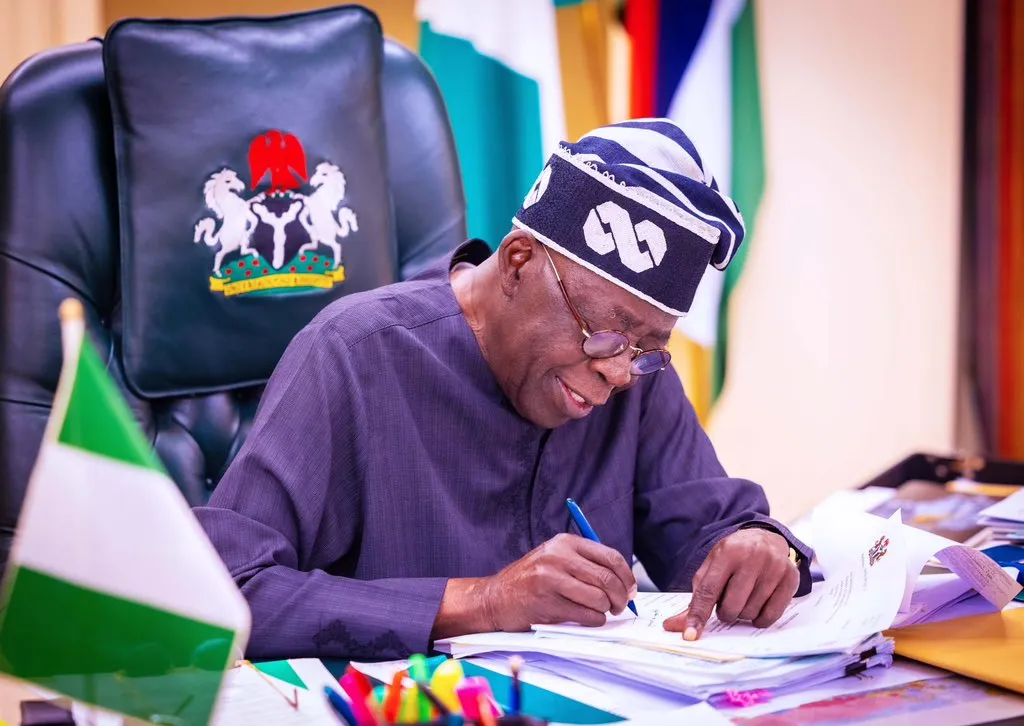
The National Assembly is facing renewed scrutiny over its approval of successive multibillion-dollar loans as President Bola Tinubu seeks another $7.707 billion in external borrowing, with Nigeria’s public debt rising to N166.79 trillion and debt servicing consuming about 65 per cent of government revenue.
The fresh request has reignited questions about the Senate’s oversight of government borrowing, particularly the speed of some previous approvals, the terms attached to the facilities and the extent to which funds already borrowed have translated into completed projects and improved public services.
Figures from the Debt Management Office (DMO) put Nigeria’s total public debt at N166.79 trillion as of June 30, 2026, equivalent to $120.93 billion, comprising N91.59 trillion in domestic obligations and N75.20 trillion in external debt.
The Federal Government accounted for N152.77 trillion of the total, while states and the Federal Capital Territory owed N14.01 trillion.
The debt stock represents an increase of N79.41 trillion, or approximately 90.9 per cent, from N87.38 trillion recorded in June 2023, shortly after Tinubu assumed office, although the increase reflects fresh borrowing, existing obligations and exchange-rate adjustments following the depreciation of the naira.
Tinubu recently acknowledged that debt servicing absorbed approximately 65 per cent of government revenue in the first half of 2026, leaving a substantially smaller proportion for other expenditure.
The President, however, maintained that Nigeria’s borrowing remained manageable, putting public debt at 35.75 per cent of Gross Domestic Product (GDP) in the second quarter of the year.
The latest request, amounting to $7,707,404,882.49, is intended to finance part of the external borrowing provision of N10.79 trillion in the 2026 Appropriation Act.
Senate President Godswill Akpabio, who read Tinubu’s letter during plenary on Wednesday, November 4, explained that the proposal superseded an earlier request for $20.52 billion and €1.045 billion under the 2026–2027 Supplementary External Borrowing Plan.
The revised request was referred to the Senate Committees on Local and Foreign Debts and Appropriations for consideration.
The replacement of the substantially larger proposal has raised questions about how borrowing requirements are determined and whether lawmakers receive sufficient details of proposed projects, interest rates, repayment obligations and other financial conditions before granting approval.
Under Section 21(1) of the Debt Management Office (Establishment, Etc.) Act, 2003, external loans cannot be approved or obtained by the Minister of Finance unless their terms and conditions have been presented to the National Assembly and approved by resolution.
Section 27 also provides for legislative approval of standard terms and conditions governing external loans and guarantees.
The controversy has been heightened by the speed with which some borrowing requests have received legislative approval.
On March 31, 2026, the National Assembly approved external financing facilities totalling approximately $6 billion on the same day the requests were presented.
The package included a structured financing arrangement of up to $5 billion with First Abu Dhabi Bank for budget financing, liquidity management and existing debt obligations, alongside approximately $1 billion in export financing arranged through Citibank for the rehabilitation of the Lagos Port Complex and Tin Can Island Port.
Other major approvals included $7.8 billion and €100 million in December 2023 under the 2022–2024 External Borrowing Plan, which had originally received Federal Executive Council approval during former President Muhammadu Buhari’s administration.
In November 2024, lawmakers approved $2.209 billion to finance the budget deficit, followed by an external borrowing programme of approximately $21.5 billion in July 2025 for projects covering transportation, energy, agriculture, healthcare, education, housing and security.
The National Assembly also approved $2.347 billion in October 2025, comprising approximately $1.229 billion in new financing and $1.118 billion to refinance maturing Eurobonds, while another $516.3 million facility was approved in May 2026 for the Sokoto–Badagry Superhighway.
Although the approvals demonstrate the scale of borrowing authorisations since 2023, their headline values cannot simply be added together as fresh debt incurred by the administration, since some cover multiyear programmes, others involve refinancing existing obligations, and actual additions to the debt stock depend on the facilities eventually contracted and disbursed.
Similarly, the December 2023 approval to securitise approximately N7.3 trillion in Central Bank of Nigeria Ways and Means advances converted existing short-term obligations into longer-term securities rather than creating an entirely new debt of the same amount.
Nevertheless, the growing debt burden and questions surrounding budget implementation have drawn criticism from lawmakers and opposition leaders, including Senator Victor Umeh, representing Anambra Central, and former Vice-President Atiku Abubakar.
Umeh, speaking on Channels Television’s *Politics Today* on October 27 while reacting to the earlier $20.52 billion request, questioned why successive loan approvals had failed to resolve outstanding budgetary obligations and payments owed to contractors.
“The truth is that we have approved so much funds to be borrowed in the past, and on each occasion we’ve been told that this borrowing would be able to fund the budgets and these budgets have remained unfunded up till this day,” he said.
He expressed concern that several budgets were being implemented concurrently without corresponding funding for capital projects.
Other News
“Three budgets are running concurrently and the government is not meeting its obligations to contractors on capital projects and so on and so forth.
“So if you borrow to finance a budget and you are not able to finance that budget, where has the money gone to? That is the question in the lips of everybody,” Umeh said.
Atiku, who also criticised the revised $7.707 billion request, challenged the Senate to reject any proposal that failed to provide sufficient details of the projects to be financed, the cost of each project, interest rates, repayment schedules and other contractual obligations.
“The Senate must scrutinise this proposal line by line. It must demand a full project list, clear funding allocations, the proposed loan terms and a credible repayment plan before considering approval.
“No government should receive a blank cheque to contract foreign debt in the name of budget implementation,” he said.
The former Vice-President also questioned why the government continued to seek foreign loans amid difficult economic conditions, insisting that Nigerians deserved evidence of tangible benefits from previous borrowings.
He faulted the indication that some final borrowing conditions would depend on market circumstances when the facilities were eventually raised, arguing that the financial implications must be adequately disclosed before the country assumed additional obligations.
The Presidency, however, has defended its borrowing strategy, maintaining that the administration is increasingly directing financing towards infrastructure and other productive assets capable of stimulating economic growth.
In an essay titled *From Reforms to Delivery: Our Infrastructure Investment and Growth Strategy*, released at the end of October, Tinubu argued that the value of borrowing should be measured by the economic benefits of the projects financed rather than the volume of debt alone.
“The key question is not how much we borrow, but what we build, the value we create and the future we leave behind,” the President said.
He identified the Lagos–Calabar Coastal Highway, Sokoto–Badagry Superhighway, Trans-Sahara Superhighway, electricity grid improvements and modernisation of major commercial ports in Lagos as strategic investments intended to reduce logistics costs, improve productivity and attract private capital.
Tinubu said his administration was pursuing longer-term financing arrangements that would align repayment obligations with the economic life of infrastructure assets while reducing refinancing pressures.
He also cited improvements in government revenue, including an increase in the tax-to-GDP ratio from seven per cent to 12.5 per cent, higher Federation Account Allocation Committee distributions and a stronger trade position.
According to him, net FAAC distributions increased from approximately N15.2 trillion in 2024 to N21.9 trillion in 2025, while Nigeria recorded a trade surplus of N20.1 trillion in the first half of 2026.
The President maintained that these gains had strengthened the government’s capacity to finance development while pursuing fiscal sustainability.
The latest controversy has also revived comparisons of the country’s borrowing records under successive administrations since 1999.
Former President Olusegun Obasanjo secured substantial external debt relief through the Paris Club agreement, reducing Nigeria’s external obligations from approximately $28.04 billion in 1999 to $3.65 billion by the end of 2007, although Federal Government domestic debt rose from about N798 billion to N2.17 trillion during the period.
Borrowing subsequently increased under the administrations of Umaru Musa Yar’Adua and Goodluck Jonathan. By June 2015, Nigeria’s total public debt had reached $63.81 billion.
Under Buhari, the figure rose from $63.81 billion in June 2015 to $113.42 billion in June 2023, an increase of approximately $49.62 billion. The June 2023 stock included the securitisation of N22.7 trillion in previously accumulated Central Bank Ways and Means advances.
Under Tinubu, total public debt increased from $113.42 billion in June 2023 to $120.93 billion in June 2026, a difference of approximately $7.51 billion in dollar terms.
However, the naira value rose much more sharply, from N87.38 trillion to N166.79 trillion, reflecting additional borrowing and exchange-rate movements.
The DMO applied an exchange rate of approximately N770.38 to the dollar in June 2023, compared with N1,379.18 in June 2026, making direct comparisons of debt stocks across administrations sensitive to currency depreciation.
The figures also include obligations incurred by the Federal Government, states and the Federal Capital Territory and do not, on their own, establish precisely how much each administration contracted or disbursed.
For the National Assembly, the immediate test is whether the latest $7.707 billion request will undergo sufficient scrutiny to establish the cost, terms, repayment obligations and expected benefits before approval.
For the Presidency, the challenge remains translating borrowing into completed infrastructure and measurable economic benefits, a responsibility Tinubu himself acknowledged in defending his administration’s investment strategy.
“Securing financing is only the beginning. The real achievement lies in completing projects, delivering value for money, and improving Nigerians’ lives,” the President said.