Follow Us on Google
•NDC candidate urges editors to press politicians on records, spending, basic services •President’s aide defends Tinubu’s reforms, seeks four more years
From Beifoh Osewele, Enugu
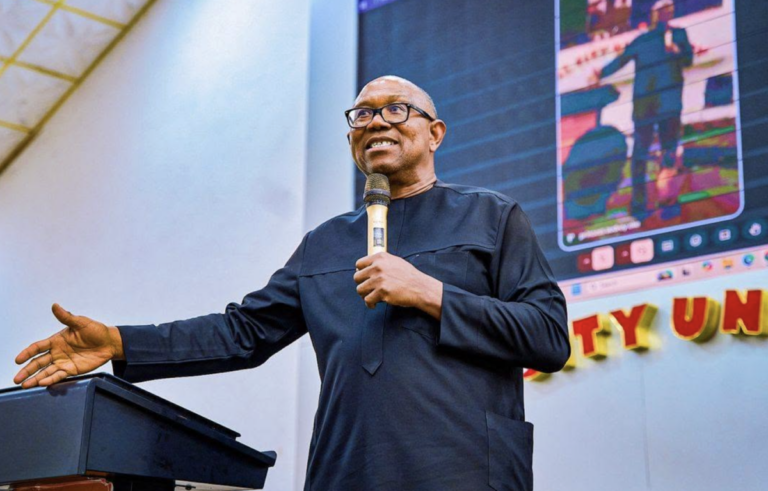
The Presidency and the presidential candidate of the Nigerian Democratic Congress (NDC), Mr. Peter Obi yesterday agreed that the 2027 campaigns should focus on governance and accountability but differed over the emphasis of the political debate.
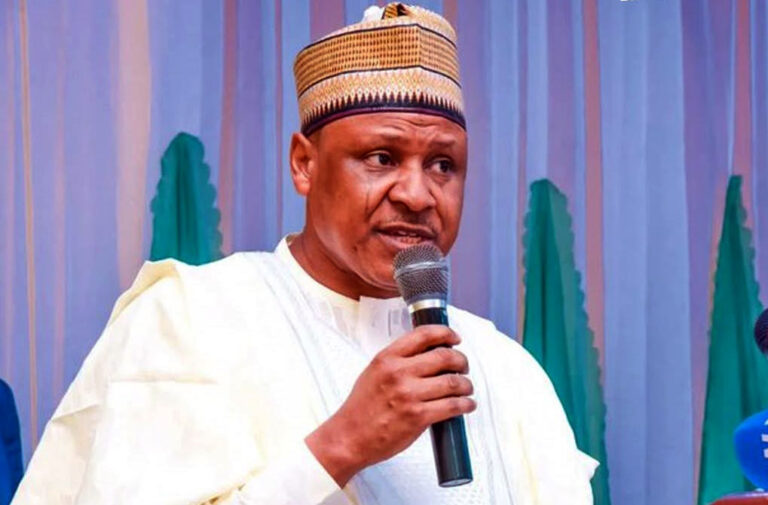
While Obi demanded tougher scrutiny of leaders, Senior Special Assistant to the President on Media and Special Duties, Chief Tunde Rahman, defended President Bola Tinubu’s reforms and seeking another term for him.
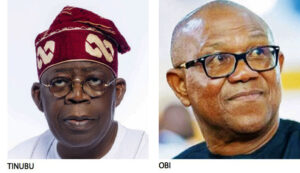
Obi urged Nigerian editors to reject name-calling, propaganda and personality attacks, ask politicians hard questions and demand explanations for poor public services and expenditure, while Rahman argued that the government must also be given space to present its record and make the case for Tinubu’s re-election.
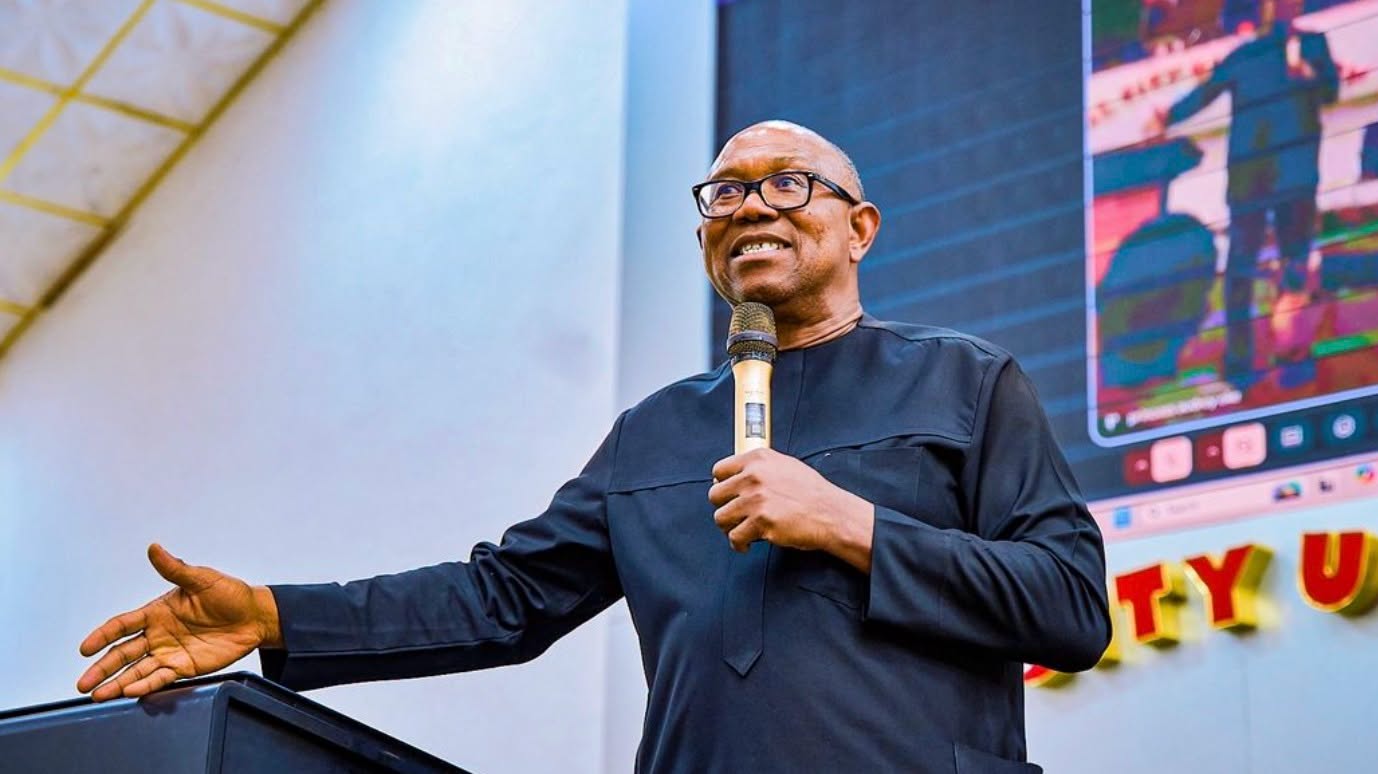
The two spoke at the ongoing 22nd All Nigeria Editors Conference (ANEC) of the Nigerian Guild of Editors (NGE) in Enugu, where they also stressed the importance of an independent media and an electoral process in which votes would count.
Obi said the media must hold politicians accountable and call them out whenever they abandon substantive questions or cross the line in their public engagements.
“If anybody steps out of bounds, we want you to name it,” the former Anambra State governor told the editors.
He said politicians seeking power should be compelled to explain how they intend to tackle the problems confronting Nigerians rather than divert public attention with insults and personality attacks.
“Come and explain because we are not voting for your wife. We are not voting for your children. We are not voting for your uncle or people representing you. We are voting for you,” he said.
He added that he was prepared to personally answer questions about allegations concerning his own past rather than send others to speak for him.
“If there’s anything about me, please feel free. Call me and say, ‘Peter, people said you were a thief, or you stole when you were in secondary school, or you did not do this.’ I will explain it to you, and if it’s true, I will apologise,” he said.
“Our discussion, our campaign, everything we do is strictly based on issues that will bring good governance, harmony, unity, security and prosperity for everyone,” he said.
Rahman, who spoke for the Presidency, agreed on the need for fair media scrutiny but insisted that the government must also be given the opportunity to put its record before Nigerians.
“If you allow the opposition to speak, as you have done with the NDC presidential candidate, Mr Peter Obi, the government too must speak,” he said.
Rahman said the media occupied a critical position in safeguarding democracy, declaring that with the military back in the barracks, the ballot and the newsroom had become crucial to sustaining democratic rule.
“Democracy lives in three places: the ballot, the barracks and the newsroom. The soldiers have returned to the barracks. What is left is the ballot and the newsroom. If either fails, democracy fails,” he said.
According to him, the power of the ballot lies in making every voter equal on election day irrespective of social or economic status.
“The ballot is the only thing that makes a market woman equal to a billionaire. For four hours on election day, they have the same power,” Rahman said.
He said political actors and government had a responsibility to protect that power by ensuring that votes count and electoral institutions function effectively.
But he maintained that elections required citizens to be properly informed.
“That is where editors come in. You are not just reporting politics; you are keeping democracy alive.
“When you verify a fact, you keep democracy alive. When you give opposition and government equal space to be interrogated, you keep democracy alive,” he said.
Rahman also warned editors about the growing challenge posed by artificial intelligence, fake news and deepfakes.
“Anyone can sit on WhatsApp and announce a fake election result. Only you can debunk it with credibility,” he said.
He criticised politicians who, according to him, prepared for elections largely on social media instead of taking their campaigns to the people and building the political structures required for a national contest.
Obi also demanded an electoral process in which the votes of Nigerians would count.
“We should ensure that we have free, fair and credible elections,” he said.
Other News
Rahman said the media occupied a critical position in safeguarding democracy, declaring that with the military back in the barracks, the ballot and the newsroom had become crucial to sustaining democratic rule.
“Democracy lives in three places: the ballot, the barracks and the newsroom. The soldiers have returned to the barracks. What is left is the ballot and the newsroom. If either fails, democracy fails,” he said.
According to him, the power of the ballot lies in making every voter equal on election day irrespective of social or economic status.
“The ballot is the only thing that makes a market woman equal to a billionaire. For four hours on election day, they have the same power,” Rahman said.
He said political actors and government had a responsibility to protect that power by ensuring that votes count and electoral institutions function effectively.
But he maintained that elections required citizens to be properly informed.
“That is where editors come in. You are not just reporting politics; you are keeping democracy alive.
“When you verify a fact, you keep democracy alive. When you give opposition and government equal space to be interrogated, you keep democracy alive.
“Let us punish lies with facts. Let us punish propaganda with professionalism. Let us not let clicks kill credibility,” he said.
Rahman added that the media should not become an appendage of any political party.
“The media should not be pro-APC or pro-LP or pro-PDP. It should be pro-Nigeria, pro-ballot, pro-people.
“If the ballot is free and the media is fair, democracy will not just survive in Nigeria, it will thrive.”
Obi, on his part, challenged editors to interrogate Nigeria’s performance against developments in other countries and ask why basic services and institutions that function elsewhere continue to pose major problems in the country.
“It is important that we also follow what other countries are doing. Ask questions about it,” he said.
Responding to questions from editors, Obi turned to healthcare and public expenditure to illustrate the kind of scrutiny he said political leaders and their promises should face.
He argued that public expenditure should not be judged merely by the amount of money announced as spent but by what the same resources could actually deliver for Nigerians.
Using healthcare facilities as an example, Obi asked the editors to consider what it would cost to build and equip a functional health centre and then relate that to the hundreds or thousands of facilities needed to expand access to healthcare.
His argument was that every major government expenditure represented a choice and should therefore be weighed against alternative uses of the same resources in healthcare, education and other essential services.
He also turned to education, using humour to highlight what he described as the contradiction of Nigerians pursuing advanced degrees in institutions still struggling with basic infrastructure such as electricity.
Obi spoke of students studying for higher degrees but having to resort to prayer when basic services failed, arguing that prayer should not become a substitute for functioning institutions and responsible governance.
Obi maintained that journalists should constantly ask why services taken for granted elsewhere remained difficult to provide in Nigeria and demand answers from those seeking or exercising political power.
He said the political conversation ahead of 2027 should therefore move away from personalities and insults to governance, security, education, healthcare, public expenditure and the living conditions of Nigerians.
The former Anambra State governor said the choices being made today would ultimately determine the country inherited by younger Nigerians, reinforcing his call on editors to scrutinise political promises, interrogate public spending and insist that those seeking power remain focused on governance.
Rahman, however, said the Tinubu administration had already taken difficult decisions to stabilise the economy and that the gains of the reforms were beginning to emerge.
“The President has done the hard part,” he said.
He cited the performance of the naira, economic growth, foreign reserves and inflation figures as evidence of progress, arguing that macroeconomic stability was necessary before improvements could be felt more broadly by citizens.
“You will say these are macroeconomics. But they matter. Without macroeconomic stability, you cannot even think of any impactful micro. Without a stable foundation, you cannot build the house,” he said.
Rahman said the administration was now moving into what he described as the “micro” phase, where the effects of the reforms should increasingly reach businesses and households.
He cited the Central Bank of Nigeria’s recent reduction in its benchmark interest rate as one indication of the direction of policy.