Follow Us on Google
By Danjuma Zuru
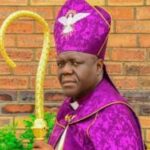
As troubling concern continues to envelop Nigeria over the zone that will produce the next President in 2023, the Lagos State chapter chairman of the Christian Association of Nigeria (CAN), Bishop Stephen Adegbite, was reported to have called on the political class to entrench the zoning of the presidency in their political parties. The CAN leader’s suggestion was applauded across the country, even by those that hitherto had reservations over their positions on national issues.
The logic embedded in the suggestion of the Lagos CAN leader on making zoning of the presidency a convention by politicians can hardly be faulted. Adegbite said the arrangement would save the polity from undue political pressure that tended to heat up the system at elections.
His words: “If zoning is upheld by the political elite and, by extension, the political parties, the unhealthy rivalry that pitch one ethnic or political zone against the other will fizzle out.
“We should find a way to de-emphasise the tension associated with electioneering. We should focus more on things that bond us through good governance to stabilise the economy and cater to the nation’s teeming unemployed youth,’’ he said.
Indeed, as rightly pointed out by the clergyman, there is rising tension in the country over allegations that the North is not ready to allow the presidency to rotate back to the South after President Muhammadu Buhari completes his second tenure in 2023. The prominent feature of former Vice President Atiku Abubakar and Governor Yahaya Bello in the presidential race wipes away any doubt that some elements in the North are putting their personal interest over and above the national interest. But is it in the favour of the North to now repudiate the zoning arrangement that became an unwritten tradition in the country since 1999?
It is very obvious that, since democracy returned to Nigeria in 1999, the North has been playing wrong politics by default and the most unfortunate thing is that it has made the region look like a public enemy to the rest of Nigeria. Obviously, the administration of President Muhammadu Buhari has given the rest of Nigeria and the global audience watching the events going on in the country reasons to believe that we, the core North, are the problems of Nigeria. From economic, political and religious perspectives, we have wrongly projected ourselves and defaced our values because we corrupted them with greed, arrogance and inordinate quest for power at all cost. The value that is being advanced by the new leaders of the region is disruptive, haughty and does not encourage any fair union among multi-cultural and social structures like Nigeria.
It is an established fact that, under the Buhari administration, the North has squandered its goodwill that Nigerians overwhelmingly gave it and it needs urgent remedy. This has resulted in inestimable collateral damage to its political fortunes in the Nigerian project.
Worst still is the siddon look posture of the critical elite of the region. It is shocking that whenever there are clashes between herders and farmers and blood spills in the northern minority areas, or other areas in the country, the position of the leaders of the core North betrays the interest of the common North. The region has thus traded off the existential mutual trust between the North and South over the years.
Under the present circumstance, it is important to buttress the fact that the North will benefit more from a Nigerian President of southern descent, if it takes a deep reflection on the cracks as a result of deep-seated mistrust in its hyped monolithic “United North.”
It is only delusional for the core North to continue to hallucinate that its pristine, one, united northern voice still remains intact. That brings us to the point that the governance system and practices in Nigeria by the Buhari administration have done more harm to the region than good. For instance, which region is the most affected in terms of the prolonged problem of insecurity? Which region is the poorest in terms of national economic productivity? Which region has the most shameful number of school dropouts like the North?
The crux of the matter is that, unless the philosophical understanding of power of the Hausa-Fulani changes, or it is configured in line with modern thinking, whether it holds onto power for the next 100 years, it will never know or understand the meaning of human and physical development. But are our leaders and people ready to accept this very challenging responsibility? The entire world is undergoing transformation at a breath-taking speed but our people are still enmeshed in an ostrich mentality of burying their heads in the sand and living in the Dark Age, believing that the world will wait for them. Where else do you want to be when your children are not in school?
It is very evident that the far North, which is essentially the Hausa-Fulani oligarchy, has oppressively dominated the various minority groups, multi-ethnic Christians, in their midst for years. The largest concentration is in the North-Central dominated by the Middle Belt. People of the Middle Belt have consistently cried out loud against the regional politics of exclusion.
This sub-regional interest has formed a strong pressure group under the aegis of the Middle Belt Forum and other associations through which they express their grievances against the Hausa-Fulani domination and land-grabbing agenda, which is believed to have been contrived in the incessant herders-versus-farmers conflicts.
Since, the Christian-dominated people of Plateau, Benue, Taraba, Nasarawa, Kogi and Kwara states have been the recipients of the country’s protracted security problems. For decades now, the Fulani herders have turned the farm fields and lands of the peasants of the area to battlefields, where blood of the peasants flows nearly daily, where women are raped on the farms, communities are invaded and destroyed, the inhabitants displaced and their land occupied and possessed.
Also, Southern Kaduna has attracted global attention as one of Nigeria’s killing fields. The people have continued to lament that they are being killed daily and their land and farms are being forcefully taken and destroyed but nobody has heard them yet. The situation is made worse by the state governor who has introduced unpardonable religious bigotry into the volatile state, where the slightest religious smoke can turn to an inferno. This is the kind of self-conceit and abuse of power that destroys mutual confidence and trust, the belief that one religion has higher numerical strength and so they should be the natural rulers. This is what the governor of Kaduna State has exemplified since he came to power.
That is why the state has not known peace and he does not care. Besides, there are several other minority groups within the far northern states whose voices are scarcely heard.
There is a growing mass awareness among these marginalised ethnic groups in the region that they understand that the time they are referred to as a United North is during elections where their votes are needed after which they are forgotten again.
In other words, they are only good at being used during elections and any time the Hausa-Fulanis need the support of the ethnic groups within its monolithic structure where regional interest is at stake; they are not invited to partake in the spoil of war.
In 2023, it is very clear that the so-called monolithic North cannot stand with one voice and it is already showing. For instance, all the major minority groups in the region are in tandem with the people of the South regarding the 2023 presidential election, Value Added Tax, State Police and other critical national issues.
How can we indeed claim to be one North when suspected Fulani herders have continued to invade, destroy land and property, kill innocent people including pregnant women, children and the aged in Plateau, Benue, Taraba, Kogi, Nasarawa, Southern Kaduna and other places? If we are at war with every other ethnic group in Nigeria, including the minority groups within the Northern region, how can we achieve any meaningful goal when our interest matters most in the country?
We made the mistakes because of our selfish interest, pride, arrogance and pretences. We didn’t manage Obasanjo politics well when he opted for President Umaru Yar’adua. We ought to have allowed President Goodluck Ebele Jonathan to continue by having his second tenure but we played bad politics and ended in the Buhari fiasco. Now, we are thinking of returning to GEJ because he is presently our best option in the mess we have created in the present Nigeria.
The bottom line is that in the current calculation, the North’s best strategy is for power to shift to the South in 2023. There is no belabouring the fact that the North will be the biggest beneficiary because that is the only way the region can remedy its fatal political errors since 1999.
It will win the mutual confidence of its Southern alliance because in the future, the North will soon need the South to equally fulfill similar obligations when its (North) interest is at stake. This is the greatest need of the period we are living in, that is, in 2023, power should shift to the South.
Some of our people up here in the North are of the view that the reluctance of some leaders in the north to allow power to rotate back to the south is based on the fact that they are still searching for a southern that can protect their interest. If that be the case, then they don’t need to go far to get a trustworthy southern to succeed President Buhari.
We just need to go to Bayelsa state to get former President Goodluck Jonathan who, constitutionally, can still contest the presidency. Dr. Jonathan in 2015 not only proved himself to be a trustworthy gentleman; he has continued to service his relationship with his friends from the north, including those that even worked against him in 2015. With Jonathan succeeding President Buhari in 2023, the North can even have a shot at the presidency again in 2027, depending on how the negotiations work out.
• Zuru wrote from Kaduna Polytechnic, Kaduna