Follow Us on Google

Isaac Anumihe, Abuja
Of all Federal Government’s agencies offering services to the Nigerian economy, the power sector appears to be the most indisciplined.
This perhaps, may be due to the so many vested interests in power distribution and generation arms of the industry.
Regrettably, the Federal Government and some highly placed and powerful politicians in the society who ought to play legislative and supervisory roles in the industry have themselves become active players.
That also explains why the Transmission Company of Nigeria (100% government-owned by government) is always at war with distribution companies while Nigerian Electricity Bulk Traders (again, a government enterprise) is always at loggerheads with the generation companies.
Unfortunately, the Minister of Power, Sale Mamman, who by his position is expected to call the shot, suddenly realised he has very little influence to weigh in to correct the disorder inherent in the system and therefore may not be able to restore sanity in the system since some of the heads of these agencies under his watch are more connected to the source of power than himself.
For instance after a recent system collapse that embarrassed most Nigerians, the distribution companies (DisCos) released statistics which indicated inefficiencies in transmission infrastructure. The DisCos noted that though the Transmission Company of Nigeria (TCN) had received about $1.6 billion multilateral funding, the agency caused over 100 electricity grid collapses since the sector was privatised,.
Executive Director, Research and Advocacy, Association of Nigerian Electricity Distributors (ANED) Sunday Oduntan, in a statement, said that the DisCos had not rejected energy load as claimed by TCN, but that the agency had continued to falsify data that conflict with what is presented to DisCos by the National Control Centre (NCC) which is under TCN but coordinates power allocation to DisCos. “It raises questions as to the veracity and accuracy of TCN’s response, in terms of the energy that it delivered to the DisCos.
How could TCN’s supposed sent-out or delivered energy exceed that recorded by its control centre, the singular source for such information,” he asked. According to the utility distributors, the $1.6 billion Federal Government-guaranteed and multilateral funds and grants that TCN got is unavailable to the privatised Generation Companies (GenCos) and DisCos.
But the General Manager, Corporate Communications, of TCN, Mrs Ndidi Mba, equally accused the DisCos of misinterpreting their load analysis. She claimed that the DisCos have not been off-taking the quantity of power allocated to them under the Multi-Year Tariff Order, leading to increased unutilised power because of poor infrastructural base. As a result of poor investment, Managing Director of TCN, Mohammed Gur has always called for the recapitalisation of the DisCos to enable them perform optimally.
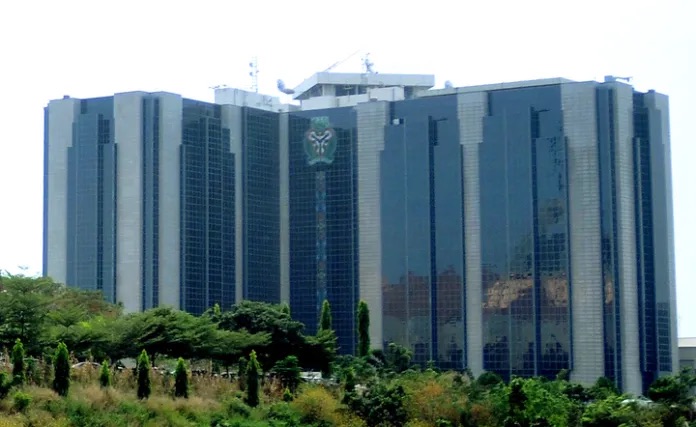
But this was yet to crystallise, the generation companies (GenCos) were up in arms against Nigerian Electricity Bulk Traders (NBET) over 0.75 per cent administrative charge on all collated and submitted gas and transportation cost invoices to the Central Bank of Nigeria (CBN) for payment.
The Managing Director of NBET, Ms Marylin Amobi had written to the chief executives of all the generation companies (GENCOs) to pay 0.75 per cent administrative charge on all collated and submitted gas and transportation cost invoices to the Central Bank of Nigeria (CBN) for payment. But this directive did not go down well with the GENCOs who threatened to declare force majeure on their operations if the the NBET boss insist on the payment
At the twilight of 2019, the Minister of Power, Sale Mamman, unaware of the turbulent terrain he was in, dabbled into suspending two powerful and highly connected individuals under his ministry with a view to sanitising the system. But his actions immediately backfired as the Executive reversed his decisions and he is now nursing his wounds. The Christmas eve suspension directed the chief executives of Nigerian Electricity Bulk Traders (NBET) and Rural Electrification Agency (REA) to hand over to the most senior directors in the organizations.
According to the Minister, the action was in continuation of the government’s effort to reorganise and sanitise the Federal Ministry of Power and its affiliate agencies.
Whereas the MD of REA, Damilola Ogunbiyi was suspended for alleged infraction in the agency, the MD of NBET was suspended over allegations of corruption.
Members of the NBET top management had petitioned the Chairman of NBET Board and Minister of Finance, Budget and National Planning, Zainab Ahmed, about the fast deteriorating situation of the agency. They accused their leader of constituting herself into a “clear and present threat to staff” by inviting the SSS to invade their office under her watch.
But to chagrin of many, President Muhammadu Buhari, on January 7; this year, reversed the minister’s actions and took NBET, an agency under his ministry to the Ministry of Finance, Budget and National Planning, although the National Assembly overruled the president and brought Amobi back to Ministry of Power. While the industry is in turmoil, the regulator, Nigerian Electricity Regulatory Commission (NERC), watched helplessly because it lacks enough powers to discipline the players. So, for any meaningful thing to happen in the industry, politicians should leave the transmission and distribution businesses to the private sector. The government should resist the temptation of meddling into the affairs of technocrats and NERC should be given enough teeth to bite.