Follow Us on Google
By Adewale Sanyaolu
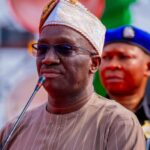
The convener of the Renewed Hope Alive Movement (RAHM), Prince Kayode Tejuoso, has thrown his weight behind President Bola Tinubu’s electricity sector reforms, declaring that the administration’s biggest challenge is not policy failure but a growing perception gap among Nigerians.
Tejuoso, who spoke during a press conference for the unveiling of RHAM campaign movement for Tinubu, argued that opposition narratives had overshadowed key reforms in the power sector, creating widespread misunderstanding about the government’s direction.
According to him, the Tinubu administration was pursuing a deliberate strategy to decentralise electricity generation, an approach he said would dismantle long-standing inefficiencies and unlock private sector investment.
“What this government has done differently is to decentralise power generation. Once you take that burden off the Federal Government and involve states and the private sector, efficiency will improve,” he stated.
He stressed that Nigeria’s current electricity output, estimated at about 5,000 megawatts for over 200 million people, highlights the urgency of reform, noting that the figure pales in comparison with countries such as South Africa.
He further cited the Federal Government’s plan to clear over N3.3 trillion owed to power generation companies as a critical step toward stabilising the sector and restoring investor confidence.
“Once liquidity improves in the sector, generation capacity will improve. The foundation is being laid,” he said.
However, he maintained that the administration’s efforts were yet to resonate with the public due to weak communication, insisting that many Nigerians were unaware of the scale and intent of the ongoing reforms.
To counter this, he unveiled a nationwide grassroots mobilisation campaign aimed at reshaping public perception and building support for the government’s policies ahead of future political contests.
The initiative, he said, would deploy a multi-layered structure, spanning states, local governments, wards and polling units, with messaging tailored in local languages to reach diverse communities.
“This is about taking the message directly to the people. We will communicate in the languages they understand and ensure they see how these policies affect their daily lives,” he said.
Describing RAHM as a citizen-driven movement with strong private sector backing, Tejuoso said the group would also serve as a feedback channel, relaying public sentiment to policymakers, while reinforcing support for the administration’s agenda.
He emphasised that the movement’s strategy goes beyond conventional political mobilisation, focusing instead on influencing voter perception at the grassroots level.
“At the end of the day, it is about the individual voter and their conviction. Our role is to ensure they are properly informed,” he added.
Present at the RAHM launch were stakeholders from the movement across the country, including the Managing Director of Nigerian Railway Corporation (NRC), Mr. Kayode Opeifa.