Follow Us on Google
•Reprieve for physically challenged, prison inmates
By Lukman Olabiyi
The National Council on Education (NCE), has approved the exemption of physically challenged candidates and prison inmates from writing post-Unified Tertiary Matriculation Examination (UTME). It also approved that “affected candidate who is minimally qualified should be granted admission by higher institution.”
NCE is the highest policy-making body for the education sector under the chairmanship of the Minister of Education with the Minister of State as vice chairman. Other members of the council are commissioners and Head, Education Secretariat, Federal Capital Territory (FCT). The approvals were okayed at the ministerial session of in Lagos.
Theme of the meeting was “Addressing the Challenges of Policy Implementation: A Panacea for the Achievement of Education 2030 Agenda.” The council also approved some major policy decisions that would guide implementation of the education sector in the next one year.
They included: “The draft roadmap for the Implementation of Quality Early Childhood Care Development and Education (ECCDE); the implementation of the Education for Renewed Hope: A Roadmap for the Nigerian Education Sector (2024 – 2027) by stakeholders as a means to addressing the challenges of education; that candidates with disabilities (blind, deaf, Down Syndrome, Dyslexia Disorder, Attention Deficit Hyperactivity Disorder (ADHD) – including prison inmates be exempted from post-UTME and their obtainable scores be adjusted to 100% while any one minimally qualified should be granted admission; the draft re-entry guidelines for girls who dropped out of school prematurely, as a result of marriage/pregnancy, as a reference document;the reviewed National Policy on Inclusive Education as a working document in Nigeria; the reviewed National Education Quality Assurance Policy and its implementation guidelines as a working document in Nigeria; the reviewed National policy on HIV & AIDS for the Education Sector as a National Working document in Nigeria.”
It lauded President Bola Tinubu for exempting tertiary institutions from the Integrated Payment and Payroll Information System (IPPIS) and autonomy to recruit their own staff, for which the ministry would develop guidelines to guard against the abuses observed.
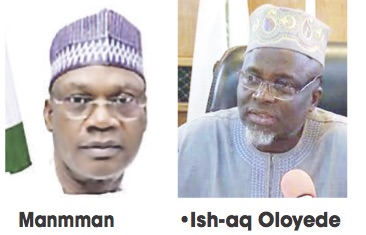
Minister of Education, Professor Tahir Mamman, revealed that various reforms embarked upon by government in education sector, were meant to reposition it: “In recognition of the importance of education in preparing and equipping the citizenry, the Federal Ministry of Education has set in motion the process of repositioning and reverberating the sector to attain BAT’s agenda for development.
“The process includes developing a well-structured roadmap that lays down the building blocks that align the education system with the current socio-economic realities of the 21st century. The roadmap captioned education for Renewed Hope specially focuses on Out-of-School Children, Girl-Child, Skills and Entrepreneurship Education.
“To reposition the educational system, it is important to enhance the quality of basic education in paying attention to inclusivity, review and update the curriculum across levels, improve teaching and promote professionalism, reinvigorate and strengthen the provision of vocational, technical and entrepreneurship education, revamp and build new educational infrastructures and reengineer tertiary institutions to achieve transition to innovative institutions.
“The Federal Government approved in May 2023, the conversion of two federal colleges of education to federal universities of education. They are Adeyemi College of Education, Ondo and Alvan Ikoku Federal College of Education, Owerri.
“Data management and upgrading of ICT facilities in the education sector must also be given priority to ensure effective planning and management of policies and programmes.”
Governor Babajide Sanwo-Olu called for a review of policies and elimination of bottlenecks impeding proper implementation of educational policies that would be beneficial to the development of Nigeria. Represented by Commissioner for Basic and Secondary Education, Mr. Jamiu Alli-Balogun, said the theme “is very apt and consistent with the state advocacy for pragmatic approach to policy formulation and implementation in education and its constant review in order to align it with changing realities and our national development priorities.
“Lagos State is implementing policies that are moving the education sector forward with adequate security and safety at all schools. Besides, government has strategically embarked on school rehabilitation to confront the challenge of infrastructural decay as a result of decades of neglect, while 293 libraries were upgraded in public schools.
“Others are consistent payment of WAEC fees, establishment of two universities, launching of EKO EXCEL programme, which is a game changer to support teachers to achieve better learning outcomes in all our public primary schools.”