Follow Us on Google
By Steve Agbota, [email protected]
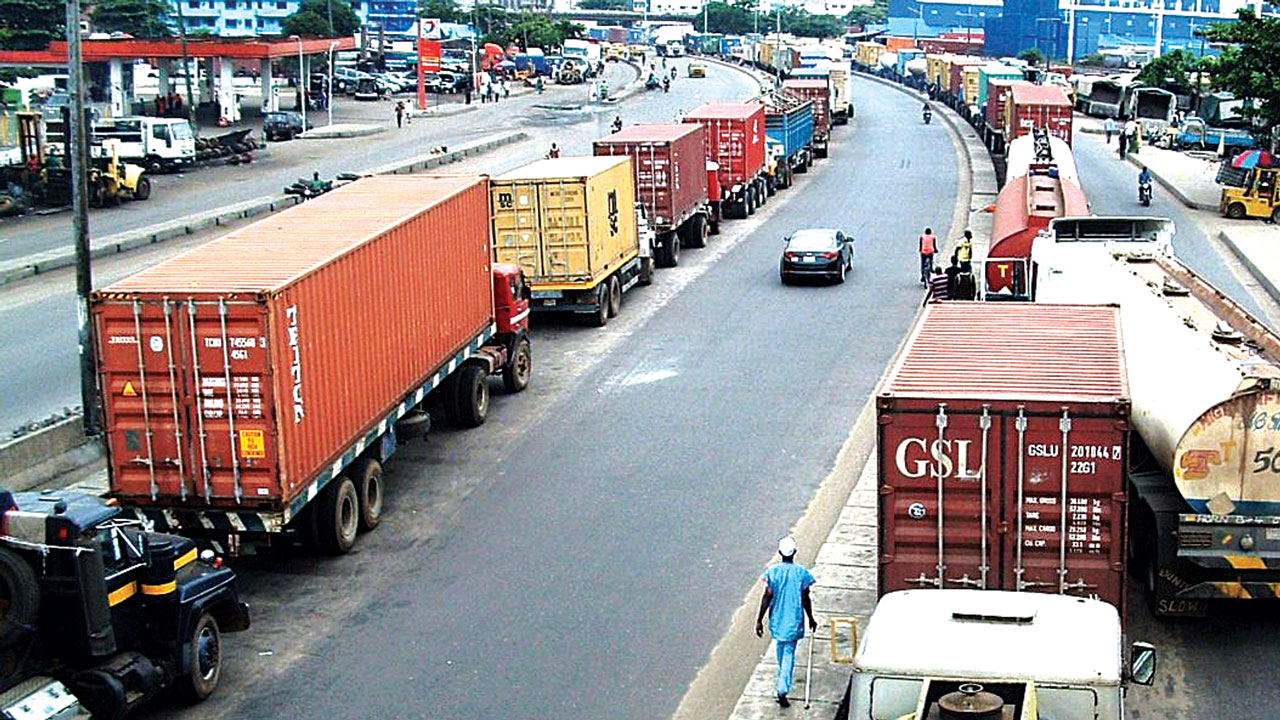
The port access roads in Lagos have become battlegrounds of extortion and violence, leading to a grave crisis for truck drivers.
According to the truckers, the situation on Lagos’ port access roads, especially in the Apapa-Ijora and Tin Can-Mile 2 areas, has deteriorated into a critical problem.
Here, gangs of local thugs, known as “area boys,” and corrupt security personnel have turned these routes into a battleground for extortion and violence. Truck drivers, essential to the logistics and supply chain, are often subjected to severe harassment, including physical assaults and sabotage, if they refuse to pay bribes.
According to them, the unchecked violence and corruption have not only tarnished the reputation of Nigeria’s seaports but also claims the lives of over 40 drivers each year, alongside robbing the government and other stakeholders billions of naira.
The Nigerian Association of Road Transport Owners (NARTO) and other stakeholders who sounded the alarm about the devastating impact of these criminal activities have asked the government to cripple the activities of the hoodlums and return sanity to the port ecosystem.
It is estimated that over 40 truck drivers lose their lives annually due to the unchecked violence of these gangs. In addition to the human cost, the financial toll on the industry is staggering, with billions of Naira lost each year due to extortion and disruptions.
A truck owner, Dike Collins, highlighted the grim reality faced by drivers on these roads. He criticized the Lagos State government under Babajide Sanwo-Olu for failing to effectively address the menace of hoodlums and corrupt officials. Collins accused the government of using divide-and-rule tactics that only benefit corrupt entities rather than resolving the issue. He called for direct engagement with genuine transport stakeholders to address the underlying problems and find practical solutions.
“The government of Babajjde Sanwo-Olu has to stop the divide and rule methods the state government has deployed for years by addressing this menace once and for all. All the unions are benefiting from this menace.
“Sanwo-Olu has not done anything tangible enough to address this. The reason why I’m saying this is that if you go there now, these hoodlums are still there. People are dying on a monthly, weekly and daily basis both reported and unreported case.
“What I expect the government to do to is speak to the real stakeholders and stop talking to those that have no connection with transport. There is need to talk to the real transporters so that they will be able to understand the nitty gritty problems” he said.
Further complicating matters, Collins alleged that many of these criminals are protected by powerful individuals within government and various agencies. This protection has led to immense financial losses for truck owners, who are forced to part with substantial sums in bribes, resulting in billions lost annually.
Aloga Ogbogo, Executive Secretary of NARTO, painted a stark picture of the daily ordeal faced by truck drivers. He described how criminals often attack trucks, demanding money, sabotaging vehicles, and causing roadblocks. These violent tactics disrupt logistics and supply chains, imposing significant financial burdens on truck owners who must repair damaged vehicles and compensate injured drivers. The human cost is profound, with many drivers suffering from severe psychological trauma and their families facing the loss of primary earners.
“As you approach them, they get on the truck, start attacking you, asking for money, distracting you. Sometimes they even go ahead to pull the gasoline supply to the trucks to ensure that the truck comes to a standstill. When that happens, it causes unnecessary hold-ups, because the truck blocks the road,” he added.
According to him, the violence and intimidation tactics often employed by these hoodlums usually escalate to physical assaults with the drivers are beaten-up, trucks vandalised, and valuable cargo sometimes stolen.
“They break the windscreen of the truck, attack the driver, bring the vehicle to a halt. Most of these activities are negatively impacting trucking business and the drivers.
“The result is not only a disruption of logistics and supply chains but also a significant financial burden on truck owners who must repair damaged vehicles and compensate injured drivers. The human cost of this lawlessness is devastating”, he said.
Ogbogo reported a distressing death toll among truck drivers, estimating that between 40 and 45 drivers die annually due to these criminal activities. These figures, he noted, only reflect a portion of the true toll, as many incidents go unreported due to inadequate documentation and attacks on drivers. The psychological impact on survivors is severe, with many experiencing chronic anxiety and stress, which affects their mental health and well-being.
The economic ramifications are equally dire. The trucking industry is crucial to Nigeria’s economy, facilitating the movement of goods across the country and beyond. However, the activities of these criminals severely impede this process, causing substantial disruptions. Despite the serious impact on both lives and the economy, efforts to combat these issues have been largely ineffective. Security agencies in the area have been unable to deter the criminals, who operate with impunity.
Mohammed Bala, General Secretary of the Association of Maritime Truck Owners (AMATO), emphasized the financial impact of these criminal activities. He detailed incidents of violence and extortion, such as a recent event in Mile 2 where a truck and its cargo were destroyed, resulting in the death of the driver. Bala criticized the government and non-governmental extortionists who operate freely along the port access roads, employing brutal methods to extort truckers.
Bala also highlighted the extensive network of over 50 extortion checkpoints from Ijora Olopa and Mile 2 to the Apapa and Tin Can Ports gates. These checkpoints, manned by security and traffic operatives, as well as members of the National Union of Road Transport Workers (NURTW) and the Road Transport Employers Association of Nigeria (RTEAN), use violent tactics to extract money from truckers. This pervasive extortion undermines truck maintenance and safety, resulting in rickety and unsafe vehicles on the road.
Stephen Okafor, General Manager of Operations at NARTO, explained that the extortion translates into significant unbudgeted expenses for truck owners. He estimated that these illegal activities add 10 to 15 percent to overhead costs daily, contributing to billions in annual financial losses. This financial strain not only affects the transport sector but also has broader economic implications.
The need for a coordinated and sustained response from law enforcement and government authorities is critical. The port corridors are vital economic arteries, and ensuring their safety and functionality is essential for Nigeria’s economic health. Effective security measures are necessary to protect drivers, maintain smooth operations, and enhance Nigeria’s international reputation as a reliable transport hub.
Cornelius Chiwendu, a transport sector stakeholder, underscored the severity of the problem, estimating that the annual financial losses due to these criminal activities run into billions of Naira. He highlighted the human cost, including over 20 annual deaths within Apapa and Tin Can areas caused by non-state actors.
Chiwendu called for a comprehensive effort from law enforcement, government authorities, and the community to address the crisis, restore economic stability, and improve Nigeria’s image as a secure transport hub.