Follow Us on Google

A vacation is a scheduled period of time spent away from work, school, or daily responsibilities, used for rest, travel, relaxation, or recreation. This simply means that whoever is working is not on vacation and whoever is on vacation is not working. No one can be working and vacationing at the same time because vacation principally means to be away from work. The notion, therefore, created by the All Progressives Congress Presidential Campaign Council, and Tinubu’s Spokespersons that Tinubu is on “working vacation” is a demonstration of outright falsehood. Since Tinubu is on vacation as admitted by his aides, automatically he is away from work, and the issue to be discussed in this article is the legal implications of a President of Nigeria who embarks on vacation with or without following due process.
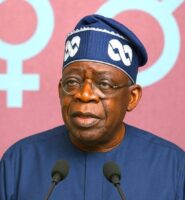
The position of the law is that no president of Nigeria has the legal right to proceed on a vacation without informing the National Assembly that he is embarking on such a vacation and if he defaults in obeying this mandatory injunction, the National Assembly shall within 21 days of the default mandate his Vice President to perform his functions as Acting President.
For the avoidance of doubt, section 145(1) states that “whenever the President is proceeding on vacation or is otherwise unable to discharge the functions of his office, he shall transmit a written declaration to the President of the Senate and the Speaker of the House of Representatives to that effect, and until he transmits to them a written declaration to the contrary, the Vice-President shall perform the functions of the President as Acting President.”
Our Constitution does not qualify the word vacation in the section. Whenever the President proceeds on vacation he is expected to transmit a written declaration that will enable the Vice-President to act as President. By our Constitution, it is either the President is on vacation or not. The written declaration is expected from day one of his vacation. There is no mention of 21 days in section 145(1), so there is no nexus between the President and 21 days. Our Constitution did not make any provision for power vacuum for even a second.
The argument in some quarters that a President should not transmit the written declaration because he is on a working vacation is spurious and unconstitutional. Once the word vacation is used in any form whatsoever, power must be transmitted to the Vice-President to act as President. The National Assembly has no power to do anything in subsection (1) of section 145. They simply need to be informed by the President and the written declaration by the President automatically bestows power on the Vice-President to act as President.
In section 145(2), the President has no role in it. It is a reference to an errant, irresponsible, and failed President who has no regard for rule of law. It is for a President who had violated subsection (1) of the Constitution and had already put the country in danger of descending into anarchy. It is a subsection that mandates the National Assembly to rescue the nation from the hands of a recalcitrant President who does not care about the survival of the country.
The subsection states that “in the event that the President is unable or fails to transmit the written declaration mentioned in subsection (1) of this section within 21 days, the National Assembly shall, by a resolution made by a simple majority of the vote of each House of the National Assembly, mandate the Vice-President to perform the functions of the office of the President as Acting President until the President transmits a letter to the President of the Senate and Speaker of the House of Representatives that he is now available to resume his functions as President.”
It is self explanatory that the reference to 21 days is the constitutional declaration of the limit of tolerance any nation must not exceed to the violation of subsection (1) of 145. A detailed examination of the subsection reveals that the subsection is activated only when the President “fails” or “is unable” to transmit the written declaration. This is a description of a President that has no respect for rule of law and had decided either intentionally, manipulatively, deceitfully, capriciously, or despotically to subvert the obvious provision of subsection (1) within 21 days. Being unable means to be physically indisposed or seriously unwell that the President is no longer capable of making independent decision with clarity of intentions.
Other News
Section 145 of the Constitution was the first section of the 1999 Constitution that was speedily amended when Nigeria was thrown into a national crisis owing to the absence of the then President Umaru Yar’Adua from performing the functions of the office of President as a result of his incapacity from a terminal ailment. In the original unamended version of the Constitution, no time limit was given within which the National Assembly could invoke its powers to appoint the Vice-President to act as President in the event that the President fails to transmit the written declaration to the National Assembly to give way for his Vice to act on his behalf.
Yar’Adua unfortunately became so ill in office that he was unable to transmit the written declaration mentioned in subsection (1) and the people around him shielded him from doing so because of the fear of losing presidential powers if power is transferred to his then Vice-President Goodluck Jonathan. The country became paralysed because Goodluck Jonathan couldn’t issue presidential directives. There were certain duties that could only be performed by the President. Jonathan couldn’t, for instance, swear in the Chief Justice of Nigeria (CJN) after the retirement of the previous one and there was no sitting President to do it.
In order to avoid a constitutional crisis, the outgoing CJN, Justice Idris Legbo Kutigi GCON, had to swear in the incoming CJN, Justice Iyorgher Aloysius Katsina-Alu. The Nigerian Bar Association (NBA), led by President Chief Rotimi Akeredolu, boycotted the ceremony. The NBA and other prominent lawyers termed the event unconstitutional and an illegality,.
Such absurdities occurred in different segments of the society within this period. Even the Secretary to the Government of the Federation (SGF) to Yar’Adua couldn’t definitely and categorically state where the President was. A group emerged, named “Save Nigeria Group”, to raise awareness of the dangers of leaving Nigeria ungoverned due to the absence of the President with a wide protest around Nigeria.
As the power vacuum became unbearable, the then President Yar’Adua’s faint voice was posted in the media stating that he was recovering from an ailment and would soon be back to continue his functions as President. His speech was reported on several media channels. The then Senate President, David Mark, relied on the information released by Yar’Adua from his sick bed which was publicly and widely circulated on the social media as figurative of his written declaration that he was on a medical vacation and invoked the doctrine of necessity to rescue a floundering nation. The Vice President Jonathan was appointed by the National Assembly to perform the functions of President Yar’Adua as Acting President.
Our democracy would have been toppled by some undemocratic forces if that doctrine of necessity was not invoked as rumours were rife that some elements were plotting to take over power forcefully in order to restore order in Nigeria. President Umaru Yar’Adua never came back healed from the terminal ailment. He died later in office and was replaced as President by Goodluck Jonathan, his erstwhile Vice-President.
After that experience, Nigerians prevailed on the National Assembly to amend section 145 to set a time limit within which the Vice-President would take over power as Acting President without the consent of the President if the President refuses, fails, neglects, or is unable to transmit power to his Vice while proceeding on vacation. The mischief this amendment intends to cure is to avoid power vacuum that could sink the nation in the absence of a defaulting President.
President Tinubu has been travelling abroad often on vacation. He has spent almost 290 days outside Nigeria since 29 May 2023 in about 52 trips abroad. In all his vacations, he had never adhered to the spirit of the Constitution in section 145(1) to transmit a written declaration to the National Assembly to enable Vice-President Kashim Shettima to act as President. This, he does, even when he exceeds 21 days on vacation. His aides prepared this foundation of falsehood by declaring that Tinubu can govern Nigeria from any part of the universe. They added falsely that Tinubu is on “working vacation” to justify his flagrant disregard of section 145(1) of the Constitution.
Our Constitution recognises only one word – vacation. Any other spinning of the word by mischief makers is a ploy by APC to deceive Nigerians. The cardinal question to ask is whether there is anything Tinubu knows about his Vice, Kashim Shettima, that makes him mortally afraid to hand over power briefly to him while on vacation? Shettima himself told a bewildered Nigeria that after he was sworn in with President Tinubu, some distinguished politicians from his state and geo-political zone came to Tinubu to advise him not to wear some of the clothing Shettima made for him (the president) because Shettima had put juju in them to make the president die so he, Shettima, could become President. Could it be that at times Tinubu consciously or unconsciously gets over anxious about that admonition even when Tinubu assured Shettima that he didn’t believe it?
Whatever is the intention of Tinubu for his disobedience of section 145(1), he should understand that Nigeria’s national security is compromised whenever there is no clear leader in his absence. The National Assembly should do its duty by making Kashim Shettima the Acting President if Tinubu fails within 21 days to transmit a written declaration to them to that effect. Rule of law demands obedience to the law whether convenient or not.