Follow Us on Google

The tragedy of a people is not always that others oppose them. Sometimes, it is that those entrusted with defending their interests become silent spectators, comfortable beneficiaries or willing collaborators in arrangements that disadvantage them.
For the Igbo, this is an uncomfortable question demanding urgent reflection. It is easy to condemn external forces for the political, economic and institutional challenges confronting Ndigbo. But beyond these grievances lies a disturbing question: what happens when those positioned to challenge injustice choose personal comfort over collective interest?
The enemy of a people is not always sitting across the negotiating table. Sometimes, he is sitting on their side, enjoying proximity to power while avoiding issues that could threaten personal arrangements.
This is the painful paradox of the Igbo against Ndigbo.
Nigerian politics has cultivated a culture in which personal access to power is mistaken for public achievement.
What is the value of having Igbo sons and daughters in influential positions if they cannot use their offices to promote fairness, inclusion and equitable consideration for their communities?
When questions arise over distribution of federal resources and appointments, those with influence should demand explanations, insist on transparency and pursue corrective action instead of being more concerned about preserving pursuits that do not serve the public interest. Thus, silence becomes a political currency.
An appointment is not a personal trophy. A political office is not an ethnic settlement. Proximity to power is not evidence of effective representation.
Loyalty to a political party or administration does not require unquestioning obedience. Those inside government often have greater opportunities to influence decisions than those outside it. Their responsibility is therefore greater.
The issue is not whether every Igbo politician must oppose every policy of a government led by someone from another ethnic group. Nor should ethnic solidarity excuse corruption, incompetence or injustice. The real test is whether public officeholders challenge demonstrable unfairness, regardless of who benefits.
A controversy over funding for River Basin Development Authorities illustrates why such scrutiny matters.
Concerns were reportedly raised last year over the distribution of a ₦380 billion Special Intervention Fund, with the Anambra-Imo River Basin Development Authority said to have been excluded despite its importance to agricultural development in the South-east.
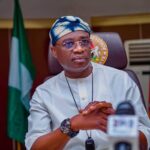
The issue has resurfaced over subsequent allocations. Citing figures presented before the Senate, Umeh listed the Cross River River Basin Development Authority as receiving ₦3 billion, the Niger Delta River Basin Development Authority ₦4 billion, the Lower Niger River Basin Development Authority ₦5 billion and the Anambra-Imo River Basin Development Authority ₦4 billion.
These figures raise questions. What criteria governed the distribution? Were allocations determined by project needs, institutional capacity or an established funding formula? How were the amounts calculated, and what safeguards ensured equitable treatment?
Igbo political officeholders with access to decision-makers should seek clarification. Their responsibility is to ensure that decisions affecting their region are transparent and defensible.
The question of equity extends to national borrowing and gas infrastructure. Why should the South-east share the fiscal burdens of the federation while its development priorities are sidelined in major infrastructure decisions? The issue is not opposition to projects elsewhere, but fairness in deploying national resources and borrowed funds.
Equally troubling is the movement of gas from producing regions to distant industrial centres while resource-bearing communities continue to demand meaningful development. If the South-east contributes to the nation’s energy wealth, its people deserve infrastructure, investment and tangible economic benefits alongside the wider national benefits of gas development.
Igbo political representatives must therefore demand transparent project selection, equitable investment and accountability for public borrowing. National development should unite the regions, not leave some bearing burdens while others enjoy disproportionate benefits.
Silence must not become the price of retaining an appointment. Otherwise, political service becomes a transaction in which the people provide legitimacy while officeholders collect rewards.
Nevertheless, responsibility for the Igbo predicament cannot be placed entirely on individual politicians. Internal disunity has also weakened the region’s capacity to articulate common interests and negotiate effectively within Nigeria’s complex political environment.
Political leaders compete for recognition and supremacy, allowing personal rivalries to overshadow shared priorities. Sometimes, a leader would rather see an initiative fail than allow a rival to receive credit. The result is fragmented voices, inconsistent demands and diminished negotiating strength.
Unity, however, must not mean blind allegiance to every politician claiming to speak for Ndigbo. It must not shield corruption, incompetence or abuse of office. Real unity rests on shared principles and practical objectives, not personality worship.
The South-east needs sustained, cross-party engagement on federal representation, infrastructure, industrial development, security, education, trade and employment. Its representatives must identify common concerns, examine evidence and pursue practical solutions despite political differences.
They must also build constructive alliances with leaders from other regions. The pursuit of fairness is not a zero-sum contest in which one ethnic nationality must advance at another’s expense.
However, internal fission must never excuse external injustice. Political divisions exist in every community, but they become particularly damaging when personal rivalries prevent leaders from defending legitimate collective interests.
Ineffective Igbo leadership does not absolve the federal establishment of its responsibility to uphold constitutional principles and ensure equitable treatment.
The marginalisation of Ndigbo remains a serious concern that must be examined through reliable records, comparative data and objective analysis. Recruitment concerns should be tested against vacancies, qualifications and selection criteria. Appointment disputes should be examined against institutional composition and applicable rules. Infrastructure grievances should be assessed through budgets, approvals, funding releases and implementation records.
Evidence strengthens the case for fairness and makes it harder for officials to dismiss legitimate concerns as ethnic agitation. It also prevents opportunists from exploiting the marginalisation narrative while in opposition, only to abandon it upon entering government.
Ndigbo must ask their leaders harder questions. What has an officeholder done to improve representation? What policy has a legislator scrutinised? What development proposal has a minister advanced? What unfair practice has a political leader challenged? What measurable benefits have reached the people?
Legislators should make their interventions and voting records accessible. Public officials must explain decisions they influence. Journalists, professional bodies, civil society organisations and community leaders should monitor their activities without fear or partisan prejudice.
Above all, Ndigbo must refuse to romanticise leaders merely because they share their ethnic identity. An incompetent or self-serving politician does not become a defender of the Igbo simply because he bears an Igbo name. Ethnic identity may create a cultural bond, but public responsibility must be judged by integrity, courage, performance and results.
A people cannot permanently outsource their destiny to politicians whose first instinct is self-preservation. Neither can they build a compelling national case for justice while refusing to hold their representatives accountable.
Every Igbo politician occupying a strategic position must confront a simple question: when decisions affecting your people are made, where do you stand? Are you at the table to influence outcomes or merely to enjoy its privileges? When unfairness occurs, do you speak? When opportunities are distributed, do you demand transparency? When your people raise legitimate concerns, do you pursue solutions or remain silent to protect political benefactors?
Ultimately, the Igbo question is both a national challenge and an internal test of political character. Nigeria must confront credible instances of exclusion and uphold the principle that citizenship should never be diminished by ethnicity. Ndigbo must equally confront members of their political class who convert collective aspirations into private bargaining chips.
The future of the Igbo cannot depend solely on the goodwill of other Nigerians, nor can it be secured by condemning outsiders while excusing failures at home. It requires fair national institutions, courageous representation, strategic alliances and a citizenry unwilling to be manipulated by political patronage.
The most dangerous political marginalisation occurs when a people are disadvantaged by decisions made elsewhere and abandoned by those who could have challenged them.
The Igbo struggle, therefore, is not merely against those who shut them out. It is also against those who enter the room in their name, secure their own interests and leave the door closed behind them.
Until Ndigbo hold such leaders accountable, the region may continue to suffer not only from decisions that exclude it, but also from the silence of those who should fight for its inclusion.