Follow Us on Google
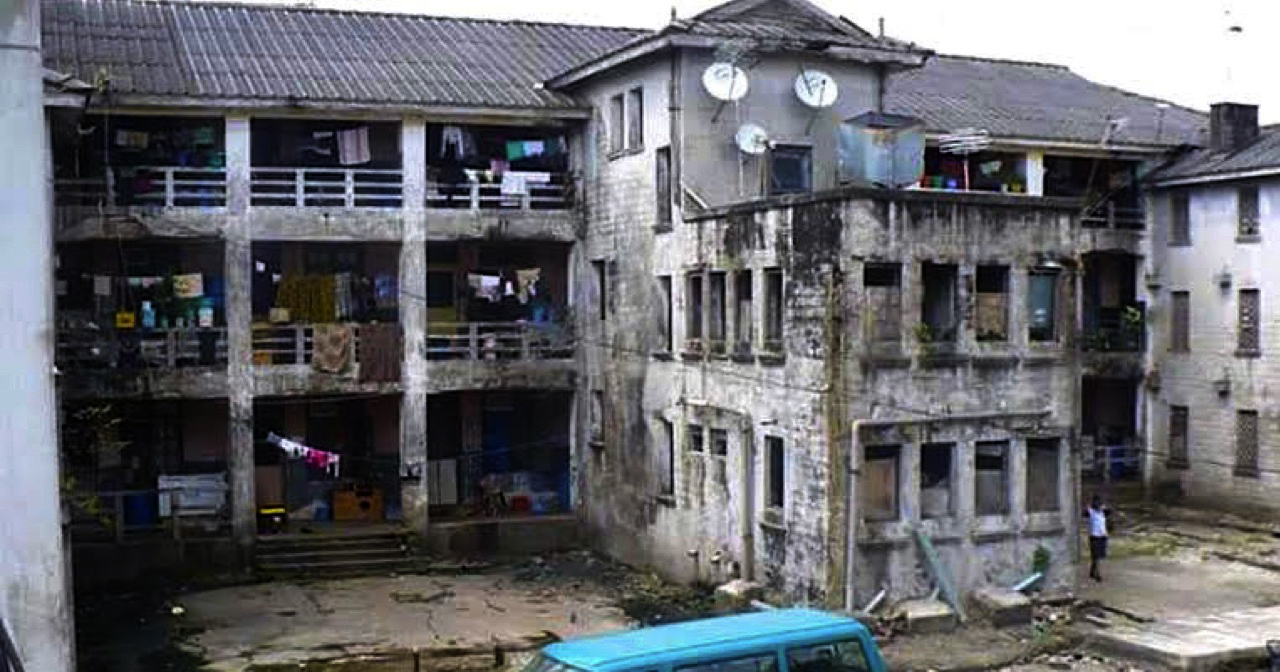

•Families share toilets, live in squalor with derelict facilities •Buildings’ decay, demolitions, poor welfare breaking families, killing officers’ morale • IGP Disu currently touring barracks; he’ll address challenges’
By Christopher Oji (Lagos), Oluseye Ojo (Ibadan), Laide Raheem (Abeokuta) Jude Owuamanam (Jos), Tony John (Port Harcourt) Stanley Uzoaru (Owerri) and Aniekan Aniekan, Calabar
Several years after shocking revelations were made about the uninhabitable state of Police Barracks in the country, most police barracks across the country still remain an eyesore, even as fresh accommodation problems surface in some state commands.
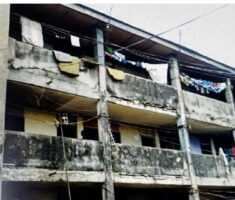
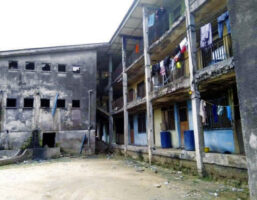
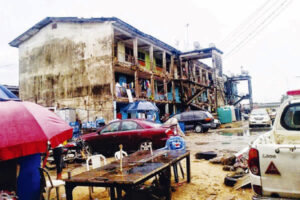
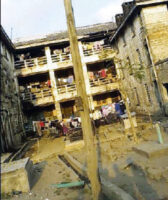
Leaking roofs, broken fences, blocked and overflowing sewage systems; inadequate water supply and general neglect have become their lot in the dilapidated buildings.
In the Lagos State Police Command, some police some officers and men are now facing severe accommodation problems as some barracks are being demolished and redeveloped.
IGP Disu currently touring barracks; he’ll address challenges’
Efforts by this newspaper to get reactions from the police authorities were unsuccessful. The Force Public Relations Officer (FPRO), Ani Iniedu, directed the newspaper to an assistant, who promised to get the police spokesman to talk. Neither the FPRO not the assistant got back since Tuesday.
However, a senior police officer, who spoke on the condition of anonymity, said the IGP is currently touring police barracks across the country to have first-hand knowledge of the challenges confronting personnel.
The officer said the IGP would complete the tour before determining the areas requiring urgent intervention by the police high command.
“You know the IGP loves his subordinates very much. I am part of the entourage, and he will speak on these issues on Saturday.
“Actually, in every barracks we have visited so far, the officers have acknowledged that the present IGP has no hand in the challenges confronting the personnel. Rather, he is doing everything humanly possible to address those challenges,” the officer said.
Marked for demolition
Investigations revealed that about 25 police barracks and related facilities in Lagos have been earmarked for demolition and redevelopment. This is putting officers and men serving under the state command under accommodation pressures.
The barracks marked for demolition include Ije Police Barracks, Obalende; Highway Police Barracks, Ikeja; K9 Police Barracks, Ikoyi; Falomo Police Barracks A and B; Bar Beach Police Barracks, Victoria Island; MOPOL 20 Barracks, Ikeja; Women Police Barracks, Obalende, Model 2 Police Barracks, Keffi Street, South-West Ikoyi; and Mounted Troops Barracks, Ribadu Road, Ikoyi.
Others are Queen Barracks, Apapa; FPRO Annex Office and Barracks, Ijora Olopa; Iponri Police Barracks, Surulere; Adekunle Police Barracks, Yaba; Federal Highway Patrol Office, Yaba; Alausa Police Barracks, Ikeja, Mounted Troops Barracks, Ikeja; Okesuna Police Barracks, Obalende; and McCarthy Barracks, Obalende, among others.
Several of these facilities have already been demolished. Among them are Ije, Falomo, K9, Obalende, Iponri and Women Police Barracks. For policemen who still occupy some of the remaining facilities, demolition of the barracks is just a matter of time. An average policeman who lives in the barracks lives in anxiety. That is understandable.
Lagos: Lamentations over decay, accommodation crisis
At Ije Police Barracks, former residents said years of neglect had transformed the facility into one of the dirtiest police barracks in Lagos. The situation became so bad that passers-by may have to cover their noses as a result of the stench from leaking toilets and overflowing sewage.
A former resident who spent 12 years in the barracks before it was demolished, said the authorities did nothing to maintain the facility throughout his stay.
“My predecessors, who lived there for more than 20 years before I came, also said no repairs were done throughout their stay.
“I moved from Ije to Elere Police Barracks, Agege, and it was the same complaint – no repairs and no new construction. Some of us were living in a room and parlour apartments, while those who had connections were living in two rooms.
“But Elere, despite the same government neglect, is better than Ije. Here in Elere, everybody is living in a one-room apartment, but two families share one toilet.
“In Ije, five or more families shared one toilet. It was that bad. Each time the soak-away pit got to the brim, it took several months for residents to contribute money to evacuate it. That is why the place was always emitting foul odour.”
Another resident of Elere Barracks, who identified himself simply as Pastor for fear of victimisation, said policemen and their families had practically taken over the responsibility of maintaining the facilities.
“I have lived here for over 10 years, and we have been the ones maintaining the place. We contribute money to fix leaking roofs, repair damaged walls, sweep the barracks and carry out maintenance.
“There was a time the fence collapsed and we were exposed to external infiltration. Hoodlums were coming into the barracks at night to vandalise our vehicles until we contributed money to rebuild the fence.
“We used to go outside the barracks to fetch water until the 2023 general elections, when a politician graciously provided a borehole for us. Since then, we have been responsible for maintaining the borehole.”
But Pastor said residents were now living in fear of uncertainty as Elere Barracks was listed for demolition.
“Many of us have developed high blood pressure because we have seen what our colleagues in Falomo, Ikoyi, Queen Barracks, Obalende, Iponri and others are going through. Their barracks were demolished and the government gave them between N1 million and N2 million to relocate.
“To rent a room and parlour in Ikoyi or Iponri is not a tea party. So, many of them have sent their families back to the villages and are now squatting.”
A former resident of Iponri Police Barracks, an Assistant Superintendent of Police (ASP), also expressed disappointment over the demolition of the facility.
According to him, an insurance company operating in the area had been assisting with the maintenance of the barracks because it wanted police personnel to remain around its premises.
“The insurance company wanted the police to be around the company, otherwise, we wouldn’t have been able to maintain the place,” he said, adding, “We were shocked when the former Inspector-General of Police, Kayode Egbetokun, the Lagos State Government and a top All Progressives Congress (APC) stalwart sold the barracks and demolished it.
“Outside the senior police officers’ barracks in GRA, Ikeja, Iponri Barracks was one of the best because of maintenance.
“They chased us away and sold the barracks to private individuals. They have started mounting billboards showing that they are going to build a shopping mall, event centre and tower.”
The ASP, who has since relocated to Ikorodu, Lagos, said the demolition had created another security problem for policemen.
“I moved to Ikorodu to rent an apartment, living with civilians who hate the police. I don’t put on my uniform because I didn’t tell my landlord that I am a policeman. The government has exposed us to danger because we are living in the midst of people who see us as endangered species.
“All these are happening to us because the former IGP sold the barracks. A government that does not value us, can they try this with Army Barracks?
“They won’t try it because the Army authorities will resist them. But the police high command is treated as a pushover.”
The housing crisis, the officer said, also affects the families and marriages of policemen.
He said, “Some of our wives who refused to go back to the villages have divorced their husbands. This is a serious issue because it affects the morale of an average policeman. How do you concentrate on your duty when you are living with civilians and your family is torn apart?”
At the Alausa Police Barracks, Ikeja, residents are also living with the fear of eviction, demolition and possible sale of the facility. A resident, who identified himself as Justice, said the owner of the land had threatened to challenge any attempt to evict the police and sell the property to private interests.
“As you can see for yourself, our barracks is very clean because we contribute money to maintain it. Of course, you know that senior police officers live here. We have Commissioners of Police, Deputy Commissioners of Police, Assistant Commissioners of Police and other ranks living here.
“That is the reason the barracks is clean. Go to other barracks and see how dirty and dilapidated they are. Without maintenance, the barracks would have become dilapidated.”
Justice blamed the poor condition of many police barracks on the failure of the authorities to maintain them, adding that the authorities left the barracks the way colonial masters built them.
For a Deputy Superintendent of Police (DSP), Sunny (real name withheld), who lives in the senior police officers’ barracks in GRA, Ikeja, the good condition of the facility is largely the result of the personal contributions of its occupants.
“As senior officers, it will not be good if we leave our barracks dirty. We lead by example. We contribute individually towards maintenance and repairs. The government doesn’t do anything for us.
“The reasons police barracks are dilapidated are, first, government insensitivity to our plight. How much is the average salary of a rank-and-file policeman that he will use for the maintenance of a place when he is not even sure he will not be transferred to another state the next day?
“Second, an average policeman knows that when he is no more, his family will be chased out of the apartment and another policeman will take over almost immediately.
“Third, a police officer is disgruntled because he knows his salary cannot afford a flat, send his children to a good school and buy a car. What can N120, 000 or N200,000 do for an officer who works under the rain, in the sun and at night?”
The senior officer said the situation had created frustration among policemen, making many reluctant to spend their limited resources on facilities they could lose at short notice.
“You can see what has happened to our colleagues who were sent out of demolished barracks. Those who were staying in one room were given N1 million, while those who stayed in two rooms were given N2 million to rent new apartments.
“A man who was living in Ikoyi Barracks and had his children in school would have loved to get an apartment near the school, but can N2 million rent a room in Ikoyi or Ikeja? You find out that the person will be forced to go to a Lagos suburb and find new schools for his children.”
Police officers and men are appealing to the government to halt the sale of police barracks to private investors and urgently address the housing and welfare crisis confronting them.
“They have increased the salaries of the military twice but have not done anything concerning the police. Our pension scheme is nothing to write home about.
“If not for state governments, I wonder how we would manage our obsolete equipment, arms and other gadgets,” he lamented.
For the policemen, the barracks crisis goes beyond leaking roofs, broken fences, poor sanitation and inadequate water supply. It is a question of welfare, security, family stability and the morale of the men and women expected to protect the public.
They want the government and police authorities to embark on a comprehensive rehabilitation of existing barracks, provide new accommodation where necessary and, above all, ensure that policemen are not left at the mercy of an uncertain housing policy.
In Ogun police barracks, electricity, potable water are a luxury
In Ogun State, a visit to police barracks in Ibara and the state police headquarters in Eleweran, Abeokuta, showed that the structures have seen better days, and in a state of disrepair. At the police barracks in Ibara located opposite the Government House, the situation of the infrastructure such as the internal road and buildings are in a deplorable condition.
Other News
Also, amenities such as electricity and potable water have become luxury for the residents. The barracks, which shares a boundary with that of the Nigeria Correctional Service, has lost its colours due to long years of neglect and lack of renovations. Perimeter fencing which could deter, prevent and delay any invasion by intruders was non-existent. The barracks serve as a thoroughfare for civilians.
The situation at the Eleweran Police Headquarters is no different from the Ibara Police Barracks. Most of the buildings – bungalows and story buildings are decrepit.
While the roofs of some of the buildings have been blown off by windstorm, many others that appear worn and dilapidated are just being managed by the squatters.
A senior police officer who preferred anonymity, lamented that poor and deplorable physical infrastructure across the police barracks in the state is far from accommodating let alone befitting.
“The situation in our barracks is an eyesore. I am sure that you have visited Eleweran several times, what do you see – dilapidated buildings and worn-out facilities. Even though the roofs of many buildings have been blown off and begging for repairs over the years, nothing has been done. Personally, I feel some of our personnel being quartered in those buildings are risking their lives and that of their families.”
Plateau: State govt, HYPPADEC battle cracked walls, leaking roofs, failing structures
In Plateau State, the story is slightly different. In Jos, the Plateau state capital there are about six major barracks. They are the A division barrack, C division, Bukuru, Jos Laranto, and MOPOL Squadron 8, Anguldi barracks.
On the outskirts, there are smaller barracks in Bassa and Jengre as well as pockets of barracks housing a lesser number of policemen. The most prominent and fully completed renovation of a major police facility in Plateau State occurred in July 2024, when the Federal Government commissioned a massive renovation of police barracks. One of the barracks that received massive renovation work was the A division, which is the largest of the barracks in Jos. Apart from the A division police station, the vicinity of the barracks also houses the Area Command, Jos Prisons and the headquarters of the Department of State Services (DSS).
When our correspondent visited the barrack, all the buildings wore new looks as they appeared to be newly painted. Some of the buildings were also re-roofed.
Another barrack that received such rehabilitation was the MOPOL 8 Barrack, Anguldi. Built in 1976, the barrack had not received major rehabilitation work until 2024.
An officer who spoke under the condition of anonymity, said that prior to the recent works, the barracks suffered from cracked walls, leaking roofs, and failing infrastructure.
He said that although the barrack had received appreciable facelift, a large number of the building still have leaking roof. The officer said that sometimes some personnel who are newly posted to the command had to use their personal money to put some structures in order to make their families comfortable.
Apart from the renovation works by the Federal Government, some organisations had also undertaken rehabilitation works on some barracks as part of their corporate social responsibility.
In July 2024, the Secretary to the Government of the Federation officially commissioned the renovated Mobile Police Barrack in the Kakuruk Community, Barkin Ladi Local Government Area of the state. The project was funded by the National Hydro-Electric Power Producing Area Development Commission (N-HYPPADEC) as part of their CSR. The upgrade covered older structures that were converted to modernised administrative block, quarters for junior and senior officers, a multipurpose hall, and an armoury.
Also in January 2025, Plateau State Governor Caleb Mutfwang, unveiled a newly constructed Mobile Police barrack in the Gashish District of Barkin Ladi LGA.
The new barrack was necessitated by the need to station officers for easy deployment following the series of attacks in the area.
A senior officer in the works department at the police headquarters told our correspondent that one of the major factors hindering the renovation of police barracks was the centralisation of such projects at the Force Headquarters.
According to him, when reports are made, it usually takes a lot of bureaucratic bottlenecks before such projects are approved. He advocated that approvals be made for works departments in state commands to be able to handle minor rehabilitation works.
He said, “If such provisions were made, we won’t be able to have such massive dilapidations as we currently witness.”
Rivers: Overflowing sewage, abandoned toilets, broken railings
The state of police barracks in Rivers State remains dire, with officers lamenting their stay in over 50-year-old buildings with leaking roofs, no water, toilet facilities, and poor sanitation, even as they struggle to carry out renovations by themselves.
Investigation revealed that most of the barracks in Port Harcourt — Moore Road Barracks, Olu Obasanjo Police Station, and Mobile Police Barracks, Harbour Road — were constructed more than five decades ago and have received little or no renovations.
Overflowing sewage, abandoned toilets, broken railings and visibly deteriorating buildings throughout the premises are common sights in the barracks.
At Olu Obasanjo, many roofs have become dangerously weak after decades of exposure.
Similarly, At Mobile Barracks behind Harbour Road, walls and pillars have begun to crack. One officer described that situation as a disaster waiting to happen.
The standard barracks consist of old blocks of flats, mostly one and two bedroom units for Constables to Inspectors. Senior officers get slightly bigger apartments.
The only major new type in 10 years is the NDDC-built SPU Base 6 at Omagwa – 64 units of one-bedroom flats, plus commanders and 2ICs’ residence.
In one of the barracks in the state, officers who reside in a block, housing 27 families, each person contributes N100,000, amounting to N2.7 million for emergency repairs.
A source, who craved anonymity, said: “Without those self-funded interventions, many of the buildings would have become uninhabitable. We don’t have water. We don’t have toilets. We don’t have decent bathrooms. When it rains, our roofs leak. Water scarcity has compounded the misery. Residents often fetch water from nearby churches and neighbouring communities,” the source said.
At the Mobile Barracks, Harbour Road, one officer’s teenage son said: “When it rains, most rooms will be filled with water. The place is not hygienic for human habitation. The government should come here and evacuate everyone and then renovate it.”
Meanwhile, only one major project: The Nigeria Police Barracks, SPU Base 6, Omagwa, Ikwerre LGA, built by NDDC, has 66 units — an administrative block, armoury, gatehouse, underground cell, commander’s residence, 2IC residence, and 64 one-bedroom flats. It was inaugurated by former President Yemi Osinbajo on Sept 28, 2021.
It was gathered that allocation of an apartment is through the Command, usually prioritising married junior officers. But, spaces are grossly inadequate. For instance, in 2021, it was learnt that over 100 families were rendered homeless after demolition of illegal structures at Mobile Barracks, Harbour Road and Miniokoro Barracks.
Oyo: A call for integrity tests on buildings
A visit to four of the five police barracks in Ibadan – Testing Ground at Idi Ape, Sango, Iyaganku and Eleyele, revealed deteriorating infrastructure and inadequate basic amenities. But it was discovered that some intervention projects by the Oyo State government are providing a measure of relief in the barracks.
At Sango Barracks, some houses appeared to be in relatively good shape. But several blocks of two-storey buildings have deteriorated. Plaster has peeled off portions of the concrete decks, exposing reinforcing iron rods, while some roofs are partially damaged, making life uncomfortable for those who live in the upper floors of the buildings.
The smaller Testing Ground Barracks in Idi-Ape faces similar challenges. Erosion has damaged parts of the premises, while residents rely on well water. The barracks at Idi-Ape houses a divisional police headquarters and area command.
At Iyaganku, the buildings are obviously old. However, one block of flats was undergoing renovation, while work was also on-going on the internal road network. The barracks at Iyaganku is a divisional police headquarters, area command, and State Criminal Investigation Department (SCID).
At Eleyele, which is the headquarters of the state police command, one block of flats within the Police Training School had no roof. It was gathered that rainstorm wreaked the havoc sometime ago.
Although the Eleyele Barracks lacks tap water and residents depend on wells, its road network has been tarred. The road project at the command headquarters was also said to have been executed by the state government.
A policeman told Saturday Sun that only a small fraction of personnel live in the barracks, while majority live in towns. He added that vacant apartments were scarce and allocated through applications whenever an occupant moved out.
Another officer called for structural integrity tests on the buildings, warning that some of the structures could be disasters waiting to happen. He recalled a building collapse at Sango Barracks some years ago, alleging that no replacement had been provided. He also said he was unaware of any new block of flats constructed for policemen in the barracks in the past 10 years.
The exact number of policemen accommodated in the barracks and those living outside could not be obtained at the time of filing this report.
Imo: Leaking roofs, cracked walls, crumbling structures
The Nigeria Police Force is under public scrutiny in Imo State over plans to sell or redevelop police barracks in Owerri, amid warnings from officers and men that the exercise has no clear provision for alternative accommodation.
Authorities have described the move as part of a renovation drive. But the proposal comes at a time when housing conditions in the barracks have worsened due to decades of neglect.
A review of conditions inside the barracks shows widespread structural decay. Roofs leak in multiple blocks, walls are cracked, and concrete structures are crumbling.
Water supply is inconsistent and sanitary infrastructure has largely collapsed. In several quarters, blocked drainage channels are being used as makeshift toilets because the bathrooms are not functional, raising health concerns for families living on the barracks.
With little intervention from authorities, occupants say they have resorted to self-help. Families pool personal funds, often in excess of ₦100,000 per household, to carry out emergency repairs to roofs and walls.
Accommodation is processed through the Quartermaster’s Office at the Imo State Police Command Headquarters in Owerri and requires the approval of the Commissioner of Police.
The system is rank-based. Assistant Superintendents and above are allocated accommodation in the officers’ quarters, while Inspectors and below personnel are housed in separate blocks. Operational and tactical units are prioritised for on-site spaces to allow quick deployment during emergencies.
Command sources say available barracks infrastructure cannot house up to half of the personnel deployed to Imo. The deficit previously triggered protests by tactical officers over lack of residential quarters.
Officers are forced to live outside because of full capacity and collapsing structures, most officers serving in the state now live in private accommodations in Owerri, Orlu, and Okigwe.
Those without official barracks allotment are entitled to monthly rent allowances. However, officers say the allowances do not match prevailing rents for decent apartments in Owerri, forcing many to accept substandard housing or share accommodation.
Federal projects continue despite the housing crisis, federal budget lines for police infrastructure remain active. The Mbutu police station and barracks project is among those listed as receiving on-going allocations with work said to be progressing. For officers in Imo, the central question remains whether the planned sale and redevelopment in Owerri will deliver new, habitable quarters, or leave thousands of personnel and their families without a place to live.
Cross River: Families living in squalor
Officers of the Nigeria Police Force posted to Calabar, Cross River State capital are forced to live in barracks that pose grave health hazards. Visit to Akim Police Barracks and Moore Road Police Barracks reveal abject decay and a cruel deprivation where basic human dignity has been stripped away.
Dilapidated structures, leaking roofs, broken railings, abandoned toilets, and the absence of potable water and proper sewage systems have turned these barracks into nightmare for officers.
At the Akim Police Barracks, the story of deprivation is particularly heart-wrenching. An officer who craved anonymity said he has lives there for years and the toilet facility has been bad over the years.
“Since I started living here eight years ago, I have never for once made use of the toilet in the barracks,” he said.
The toilet pipes are leaking and the septic tank in front of one of the blocks in the barracks has been damaged. Another resident in the barracks said there has been no renovation of the barracks for the past two decades at least. He added that most parts of the roof in the building are leaking and this year’s rains have destroyed their files, electronics and food items.
“This building would have collapsed years ago because of poor maintenance and why it is still standing today is because of the skeletal maintenance officers living in each room contributes. The little changes you see are from our personal contributions,” he said.
The story is not different at the Moore Road Police Barracks, where officers and their families endure comparable hardships. The buildings constructed decades ago have received little or no rehabilitation, leaving occupants to battle with the same issues of water scarcity, poor sanitation, and structural decay.
Besides, no new police barracks have been constructed in the state in the last decade.
The state government intervened recently by constructing an access road within the Akim Barracks, which has improved access. This intervention was also extended to other police formations within the state but the condition of officers in the barracks which is a direct responsibility of police authorities remains very critical.
And police spokesman keeps mum
Several efforts to get the reaction of the police spokesman to the story were frustrated.
Messages by Saturday Sun to the Force Public Relations Officer (FPRO), Ani Iniedu, did not yield the desired fruit. His response to a Whatsapp message sent to him on the matter reads:
“Thank you esteemed. I’m unavailable to respond right now. However, for complaints against police action, kindly call 08057000001-3. You can also reach my assistant on +2348138152990 please.”
When contacted by our correspondent via a Whatsapp message, the assistant also asked the reporter to reach out to one Aminu Koji, whom she said is in charge of press, to get clearance for an interview with the police spokesman.
She said: “Please reach out to the officer in charge of press. Don’t you need someone that will give you the date, time and cleared you from the gate?”
When told that the Police Public Relations Department could not afford to operate like a difficult bureaucracy, especially when the story at hand had to do with police welfare and accommodation, the assistant promised to reach the FPRO and get back to the correspondent.
That was never done.