Follow Us on Google
By Henry Akubuiro
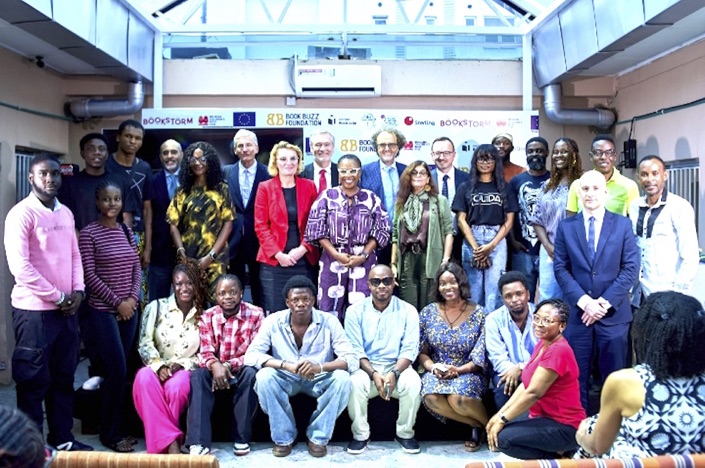
Lagos-based Book Buzz Foundation recorded another milestone in the Nigerian book sector last week when it launched the Nigeria Picture Book Project, a collaboration with the European Union, at its Ouida, Ikeja, Lagos, head office.
The project is a groundbreaking, creative and capacity-building initiative designed to promote authentic Nigerian storytelling for children. The October 17, 2025, launch event converged stakeholders in the book, art, cultural development and diplomatic sectors to project a common literary ambition.
Lola Shoneyin, founder of BookBuzz Foundation, said the Nigeria Picture Book Project aimed to transform the landscape of children’s literature in Nigeria by bringing together authors, illustrators and publishers to create high-quality picture books that reflect Nigeria’s diversity, languages, and cultural heritage.
Supported by the EU, the initiative seeks to empower Nigerian creatives through mentorship, workshops and collaborative publishing opportunities. Shoneyin said the collaboration would also produce locally inspired picture books that help Nigerian children see themselves represented, books that foster imagination, empathy and pride in Nigerian identity. In the same vein, it would build sustainable structures that strengthen the children’s book ecosystem in Nigeria.
“This partnership represents a shared commitment to investing in creativity, cultural identity and education. It ensures that the next generation of Nigerian children can access stories that celebrate who they are and where they come from,” said Shoneyin.
Moderated by Ayomide Oshunluyi, the audience was enlightened briefly with a screened documentary on the Bookstorm initiative, which highlighted the journey and impact of Nigerian illustrators, who participated in it. In attendance were prominent children’s book authors – Mazzi Odu, author of Get Rid of Your Phone, Mummy; Tonye Faloughi-Ekezie, author of Ugo and Sim Sim, I Don’t Like the Birthday Song, and Simsim Goes to the Salon. The latter’s works have played a key role in raising awareness about autism through inclusive storytelling.
In her address of welcome, Shoneyin was upbeat the collaboration would birth a new generation of children’s book and illustrators in Nigeria to facilitate their training and publishing excellent books that would meet global standards, describing it as “a project “where storytelling meets purpose.”
She noted: ‘’With the support of the European Union in Nigeria, we will train dozens of young authors and illustrators, pair them into creative duos, and guide them through the process of producing children’s books that have art and are culturally relevant. These stories would spark imagination, affirm identity and introduce our youngest readers to the power of possibility.”
She was affirmative that “representation matters deeply”, this, Nigerian children “deserve to see faces like theirs, names that they recognize, and worlds that reflect their realities and dreams.” Shoneyin’s remarks were informed by the prevalence of foreign books stocked in Nigerian bookshops written by foreigners with Western settings and contents.
“The books that we are creating,” she said, “will give children the agency to imagine, question, and to start designing their own futures. When a child reads a story that reflects exactly where they belong, they learn to dream without permission. That’s how nations grow storytellers and leaders. Our excitement isn’t only about the books that will emerge, although I can already picture them in classrooms and homes across Nigeria.”
According to her, her greatest joy with the new book project was the process of grooming the abundant talents to take their talents to the next level. The magic would be “watching writers find their rhythm, seeing illustrators groom their talents, designing, supervising layouts and covers, and eventually birthing stories that I hope will outlive us all.” She praised the European Union Delegation to Nigeria and West Africa for having a strong faith in Nigerian creativity and contributing in shaping its futures.
At the conclusion of the project, she hoped 20 new children’s book titles would be produced and sent across the country, thereby reflecting the nationwide focus of the fantastic project. She also urged Nigerians and booklovers worldwide to patronise the forthcoming titles.
Ambassador Gautier Mignot, Head of the European Union Delegation to Nigeria and the ECOWAS States, who graced the occasion, was excited that to the Nigeria Picture Book Project was being launched after some administrative delays. He informed that the EU had been supporting culture in Europe for many years as a block while individual countries had been supporting different countries internationally. The EU, he also said, had recently made a foray into international cultural relations, connecting creatives in third world countries and finding sustainable economic models for them to survive.
The EU’s six programes launched in Africa, Mignot said, were geared towards strengthening relationships with the creative industries: “We provide support in particular to policy design, artists, festivals, museums, cultural institutions and the creative economy.”
Together with Mignot, the Nigeria Picture Book Project was unveiled by Lola Shoneyin. The event also welcomed participants from the Lagos International Festival of Illustrations (LIFI and celebrated the achievements of Bookstorm illustrators, including Kayode Onimole and Chiamaka Chukwu, who were recognized by the Bologna Children’s Book Fair for their outstanding contributions to illustration and storytelling.
For the new project, BookBuzz, she said would, in one year, train 24 writers and 24 illustrators aged between 21 and 30 to publish 20 books. Also, “12 participants will be selected from each geopolitical zone. We’re taking six illustrators, six potential writers from each zone to be trained.”
Her undying interest in children’s books, she noted, was informed by the urgent need to remedy problems associated with quality, production, and accessibility, adding: “I have a bookstore. Most of the books here are from the UK or the US. I want to see more Nigerian books for Nigerian children. Nigerian children deserve to be able to see a book and when they open it, the landscape in the book looks familiar. It’s called representation. It’s very, very important to a child, or else you feel excluded from the world.”
The end resuit of the children’s book project held a greater fascination for her: “When people see that children’s books are doing well, it gives young people more options of what they can do when they’re older. But beyond that, it’s a way of giving people employment. I have a soft spot for people who are talented and creative, and I want to do everything that I can to support them. By the time we have done 100 books, I am convinced many people are going to start saying, ‘We want to publish children’s books as well.’ So the point is to not only do it, but to do it successfully,”
With the Nigeria Picture Book Project, stakeholders, who attended the launch, were optimistic that a new dawn had come for children’s books publishing in Nigeria. As the days go by, the picture would be clearer.