Follow Us on Google
•Anger over alleged oversight failure, poor budget scrutiny
•Legislature trading oversight for executive favour, stakeholders allege
•︎Budget processes: Executive legislature need massive house cleaning – Lawyers
By Omoniyi Salaudeen and Lukman Olabiyi
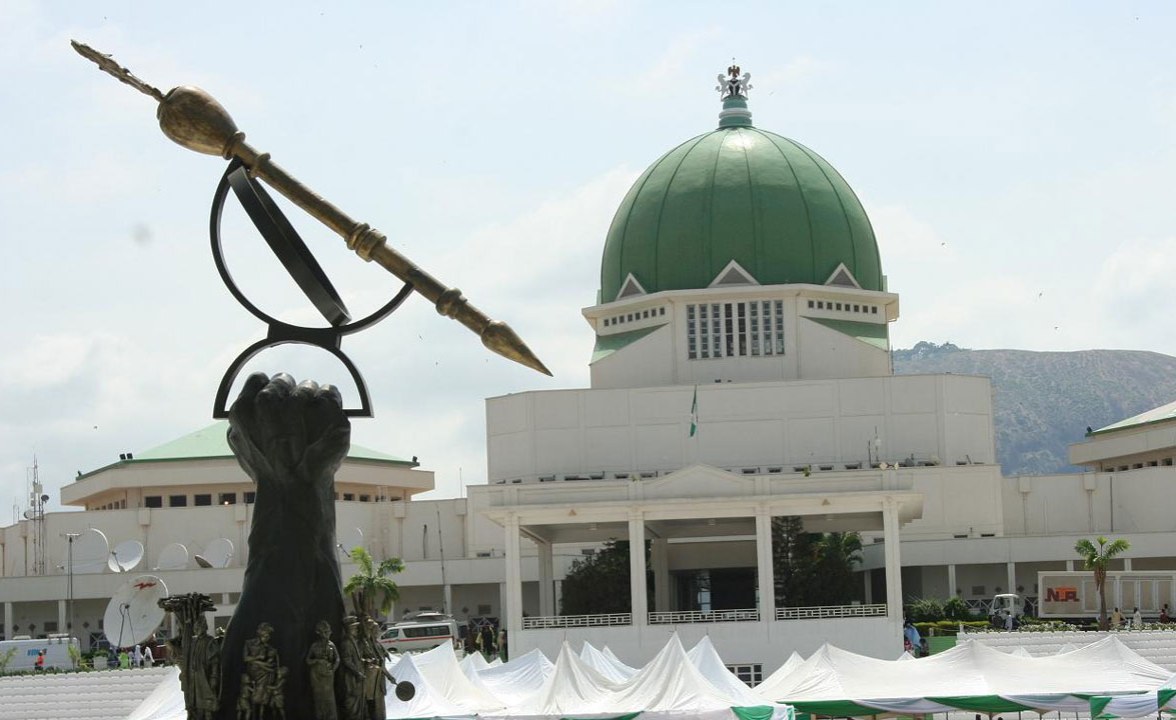
Though the mystery of how the Presidential Foreign Intervention Promotion Council (PFIPC) came into being is still under investigation, it has already cast a shadow of doubt over the National Assembly’s oversight and budget scrutiny. With a ₦1.3 billion budget appropriated to an agency the Federal Government has since disowned, questions naturally arise about how a scandal of this magnitude could escape the eagle eyes of the leadership of the Senate and that of the House of Representatives.
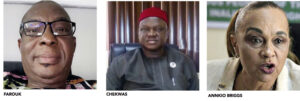
Commenting on this fiscal anomaly, the Secretary General of the Ijaw Elders Forum, Efiye Bribena, said in a telephone discussion with Sunday Sun berated the National Assembly. “Publicly available facts show it is the most obsequious legislature in this country’s history. Both the Senate and the House of Representatives approved a N1.3 billion budget for a fake agency, yet they see no need to investigate how that figure slipped through. This oversight implies clear complicity. It also raises serious questions about how a fake agency could operate out of the Presidency, suggesting that the executive branch itself is culpable.”
This administrative blind spot is not an isolated oversight but part of a deeper institutional malaise. The 10th National Assembly has repeatedly faced intense public blowback over systemic budget padding, a practice where lawmakers quietly inflate fiscal estimates or insert unauthorised, vague projects into the national budget for personal or political gain. The most glaring manifestation of this occurred when Senator Abdul Ningi blew the whistle on an astronomical ₦3.7 trillion allegedly padded into the 2024 budget for projects without specified locations. Rather than opening a transparent investigation to redeem its image, the Senate’s swift move to suspend the whistle-blower only fuelled public suspicion, reinforcing the belief that the legislature’s budgeting process has been weaponised as a tool for political patronage.
Compounding this crisis of confidence are persistent allegations regarding the monetisation of the legislative process itself. The hallowed chambers have been rocked by claims that lawmakers routinely engage in financial lobbying—popularly termed lobbying with money—where massive cash sums allegedly change hands to fast-track friendly executive bills or clear ministerial nominees with minimal friction.
Bribena pointed to the rapid passage of laws as proof of this breakdown: “Out of 109 senators and 360 representatives, not a single person raised an alarm over this N1.3 billion allocation. This legislative rot mirrors the executive corruption gripping the country. For instance, a recent police bill passed its first, second, and third readings in a single day without any public hearing or standard legislative procedure. This is not democracy; it is a criminal enterprise.”
When legislative actions can seemingly be bought, influenced, or rewarded with robust financial allowances, the independence of the parliament as a co-equal branch of government is completely compromised.
Ultimately, these recurring scandals have fundamentally eroded the moral authority of the 10th National Assembly, shifting its public perception from a democratic watchdog to a mere rubber stamp for the executive arm. Chief Chekwas Okorie shared this damning assessment in an interview with Sunday Sun.
His words: “The recent N1.3 billion budget approval is the final nail in the coffin for the 10th National Assembly’s reputation. To me, this is the most complacent, subservient, and incompetent legislature since independence. They kowtow to the executive, approving massive sums without a shred of interrogation or oversight. However, the rot extends beyond the legislature. The Presidency—including the Chief of Staff, Secretary to the Government of the Federation, Attorney General, Accountant General, Auditor General, and Head of Service—must answer for the ghost workers reportedly on the government payroll.”
From the controversial procurement of luxury SUVs amid national austerity to Senate President Godswill Akpabio’s infamous hot-mic gaffe about sending “holiday tokens” to lawmakers’ bank accounts, the legislature continues to project a culture of self-aggrandisement. By prioritising financial compromises and self-serving budget insertions over strict fiscal discipline, the current assembly has left Nigerians asking a painful question: whose interests are these 469 lawmakers truly representing?
Trust deficit
When public trust in elected lawmakers collapses, the damage isn’t just a matter of hurt feelings or bad press; it triggers a dangerous, systemic breakdown across the entire country. When the people look at the 10th National Assembly and see financial self-interest instead of representation, the consequences ripple out in three major ways: Democratic apathy, public indignation and institutional decay.
When citizens believe the national budget is merely a cake to be shared among politicians, they lose all incentive to participate in the democratic process. This deep-seated distrust manifests as severe voter apathy, where citizens stay away from polling booths because they believe their votes cannot change a pre-determined, monetised system.
Rights activist, Annkio Briggs, highlighted how poverty and financial inducement prevent citizens from exercising their constitutional powers to correct these anomalies:
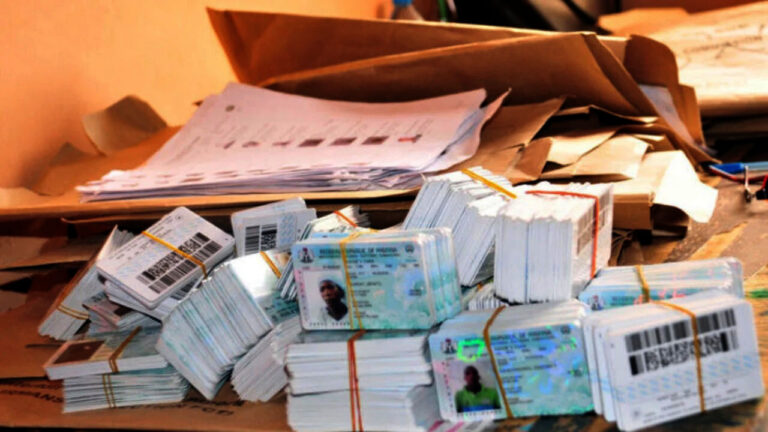
“The law allows citizens to recall a representative who is not performing by collecting signatures in their district. However, poverty has been weaponised against the people. In the recent Ekiti State election, people openly accepted 20,000 Naira and voters’ cards to cast ballots. The very people who should recall failed politicians are trapped by poverty and fear, allowing corrupt leaders to use money to stop any accountability. It is a win-win for corruption and the corrupt. The losers are the ordinary people.”
Beyond elections, it breeds a culture of tax resistance. It becomes incredibly difficult for the state to drive civic compliance or collect taxes when the public is convinced that hard-earned public funds will simply be funnelled into unvouched agencies or padded constituency projects.
In a healthy democracy, the National Assembly acts as a pressure valve—a place where the grievances of the masses are debated and resolved through policy. When that valve is welded shut by corruption, public frustration has nowhere to go but the streets. The collapse of legislative integrity directly fuels volatile mass protests and civil disobedience, as citizens realise that agitation is the only language the political class understands.
Faced with this gridlock, Bribena suggested that traditional democratic corrections are no longer viable: “Ultimately, holding these lawmakers accountable through traditional means is nearly impossible. The recall process is ineffective, and Nigeria’s flawed electoral system ensures the public has little say in who gets elected. When abnormality becomes the norm, the only real solution left to rescue the country from this national embarrassment is a total revolution.”
Even worse, it creates a dangerous vacuum. When the masses stop believing in constitutional representation, they often turn their loyalty toward ethnic champions, populist agitators, or extremist groups who promise the protection and voice that the state has failed to provide.
The erosion of legislative trust doesn’t stay within Nigeria’s borders; it actively deters foreign direct investment (FDI). International investors and development partners look at an assembly that passes disowned agency budgets or suspends its own whistleblowers and see a massive sovereign risk. They see an environment where laws can be bought, contract enforcement is unstable, and oversight is non-existent. Domestically, it leads to total distrust of the government. When the legislature lacks moral authority, the executive arm is emboldened to bypass them entirely, leading to a breakdown of checks and balances, policy inconsistency, and an economy stuck in a loop of high debt and low productivity.
The collapse of robust opposition oversight
While it is easy to pin the blame entirely on the ruling All Progressives Congress (APC), the harsh reality is that the opposition parties, including the Peoples Democratic Party (PDP), Labour Party (LP), and New Nigeria Peoples Party (NNPP), are deeply embedded in the exact same system. Chief Chekwas Okorie observed that this institutional failure crosses party lines, weakening the political alternative:
“This incompetence is handing the opposition ammunition for the 2027 campaign, yet the opposition itself is compromised, with many lawmakers merely acting as lackeys for state governors. This ‘rubber-stamp’ culture dominates both state and national assemblies,” he said.
When it comes to the perks and compromises of office, the line between the majority and the minority completely blurs. For instance, when the controversial ₦160 million luxury SUVs were distributed to lawmakers, or when Senate President Akpabio slipped up about sending “holiday tokens” to bank accounts, the outrage from opposition lawmakers was virtually non-existent. Minority party members queued up alongside their APC colleagues to collect these allowances. By accepting these lavish perks during a punishing national economic crisis, opposition lawmakers effectively compromised their moral authority to criticise the ruling party’s extravagance.
Budget padding is not an APC-exclusive enterprise; it is a bipartisan phenomenon. When constituency project funds are inflated or inserted into the budget, those allocations go to districts represented by both ruling and opposition lawmakers. When Senator Jarigbe Agom-Jarigbe (a PDP senator) revealed that senior senators received ₦500 million each for constituency projects, it exposed a bipartisan hierarchy of privilege. Opposition lawmakers routinely cooperate in passing these inflated budgets because doing so ensures their own localised political machinery remains well-funded.
In a functional democracy, the minority leader and opposition caucuses are supposed to act as a shadow government, aggressively vetting executive bills and probing questionable spending. Instead, the 10th Assembly has seen a trend of opposition lawmakers acting as co-travellers with the executive. Key controversial bills and approvals pass with minimal friction or debate from the minority benches. Rather than offering alternative policy directions, much of the opposition has been weakened by internal leadership tussles or co-opted by political patronage, leaving the public with a unified political class that protects its own interests above all else.
This seemingly complete collapse of both oversight and genuine opposition explains why the 10th National Assembly has earned the public reputation of being a toothless bulldog, a legislature that can bark during televised hearings but completely refuses to bite. Annkio Briggs lamented this lack of consequence and the absence of political honour in the country:
“Where was this National Assembly when all these things passed through them? But then, this is Nigeria, so it is also very believable that the country can find itself in this position. It is a National Assembly that approves anything that comes from the presidency. This means they clearly failed to provide oversight. It confirms what they already told us: they will do whatever the presidency wants. It is utterly unacceptable, yet Nigerians will accept it. Nothing will come of this. In any other country, the Chief of Staff would have resigned or been suspended. In Nigeria, it doesn’t matter whether you fail or succeed, as long as you hold power. Politicians do what they like, and this will just blow over.”
When the political class is bound together by shared spoils, any outward display of legislative aggression is usually just theatre. It is a common thing to see committees summon ministers, heads of ministries, departments, and agencies (MDAs), or corporate executives. They talk tough, threaten arrests, and express deep anger for the cameras. But once the doors close and executive sessions begin, the fire fizzles out.
According to Bribena, the executive’s handling of the N1.3 billion scandal mirrors this protective script:
“Because of this potential culpability, there is an obvious attempt to sweep the matter under the carpet. The President gave a directive for an investigation, yet it conveniently excludes the Chief of Staff, whom the Chief Culprit explicitly accused. Furthermore, the President publicly declared total confidence in the Chief of Staff, signalling a cover-up. The agency was reportedly inaugurated by the Chief of Staff and funded through executive power, making a genuine inquiry improbable.”
Other News
The probes rarely result in indictments, prosecutions, or recovered funds. The public has come to view these hearings not as accountability, but as a leverage tactic to negotiate a bigger slice of the pie. To break this pattern, Okorie argues that investigations cannot be left to internal political structures: “Furthermore, the current approach to investigating budget padding is a charade. Using government-controlled probes to investigate government officials is just taking the public for a ride. We need an independent body of eminent Nigerians to conduct open, public hearings to truly hold officials accountable. It is time for anti-corruption agencies like the ICPC and EFCC to actually do their jobs rather than waiting for a presidential directive.”
On the rare occasion a lawmaker does bite, like Senator Ningi raising the alarm over the ₦3.7 trillion budget discrepancies, the system immediately turns on itself. Instead of the Assembly using its vast constitutional powers to investigate the claim, the bipartisan machinery closes ranks to protect the status quo. The whistleblower is silenced, the public is told to move on, and the toothless nature of the house is laid bare.
Ultimately, a legislature that cannot bite ceases to be a co-equal branch of government. It hands absolute power to the executive arm, transforming the historic principle of checks and balances into a mere suggestion. When both the ruling majority and the minority opposition are fed from the same budget, the National Assembly stops acting as a check on executive power and instead becomes its shield.
To break this cycle, Okorie insists that the ultimate responsibility returns to the citizens: “Ultimately, the power rests with the Nigerian electorate. We must stop selling our votes and choosing candidates based on ethnic or religious sentiments. To break this cycle, we must demand and enforce a system where all elected officials are required to interface with their constituents every quarter. That is the only way to keep them on their toes and ensure accountability.”
Without such systemic civic demands, this legislative theatre offers zero protection, leaving the nation’s resources exposed to the very people elected to guard them.
Senate speaks
Spokesman of the Senate, Senator Yemi Adaramodu, told Sunday Sun that it was unnecessary to counter the position already taken by President Bola Ahmed Tinubu on the issue.
He added that it was needless for the Senate to issue statements on the issue, when the ICPC had already been mandated to investigate the issues amd report within 30 days.
He said if the ICPC reaches oht to ask for any inputs from the Senate it will not hesitate to provide any needed information or response.
“President Bola Ahmed Tinubu has already mandated the ICPC to investigate and report back within 30 days. If the ICPC needs any inputs from us, we will provide what they need.
“But it is needless to keep issuing statements and explain the same issue. We should allow the ICPC to investigate and come up with their findings. So, we are here and will support the President anytime,” Senator Adaramodu told Sunday Sun
Disturbing development
Sonayon Hunjo, one of the lawyers and public affairs analysts who spoke to Sunday Sun on the issue, described the controversy surrounding the reported ₦1.3 billion allocation to the non-existent Presidential Foreign Intervention Promotion Council (PFIPC) in the 2026 Appropriation Act as a disturbing development that exposes weaknesses in Nigeria’s budgeting process.
Hunjo said the budgeting process is expected to undergo rigorous scrutiny at different stages, making such an occurrence a cause for concern.
According to him, while the controversy raises serious questions, it would be premature to draw conclusions before a comprehensive investigation is conducted.
“The situation is understandably disturbing because the budget process is expected to be rigorous and subject to multiple layers of scrutiny. At this stage, it would be premature to jump to conclusions without a full investigation,” he said.
Hunjo noted that the allocation could have resulted from administrative lapses, inadequate verification procedures, poor inter-agency coordination or the inclusion of budget items that were not subjected to sufficient scrutiny before approval.
“Whatever the cause, it points to a weakness in the system that requires urgent attention,” he added.
On whether the incident represented a failure of oversight or an act of corruption, the legal practitioner said both possibilities should be thoroughly investigated.
He explained that if those responsible failed to verify the legal status and legitimacy of the agency before approving the allocation, it would amount to a serious oversight failure.
However, he maintained that if investigations reveal that officials deliberately inserted or facilitated the allocation for an entity without legal existence or operational legitimacy, it would raise serious issues of corruption and abuse of public trust.
“The facts must be carefully established through a transparent investigation,” he stressed.
Hunjo also urged the National Assembly to strengthen its budget oversight mechanisms to prevent similar incidents in future.
He recommended that lawmakers ensure every agency seeking public funds is properly verified and backed by the necessary legal framework.
According to him, the legislature should work more closely with the Budget Office, the Ministry of Finance and other relevant institutions to maintain an accurate and up-to-date register of government agencies and programmes.
He further advised committees responsible for budget scrutiny to conduct more rigorous reviews during budget defence sessions and ensure that officials found culpable of negligence or wrongdoing are appropriately sanctioned.
“Greater transparency and accountability in the budget process will help restore public confidence and prevent a recurrence of such incidents,” he said.
Reflecting on the broader implications of the controversy, Hunjo said the incident underscores the need for stronger institutions, greater transparency and sustained vigilance in public financial management.
He added that while the controversy was unfortunate, it also presented an opportunity to review and strengthen existing budgetary processes.
“Nigerians expect that every naira appropriated in the national budget will be directed towards legitimate public purposes, and all stakeholders must work together to ensure that this expectation is met,” he said.
Another lawyer and former Chairman of the Nigerian Bar Association (NBA), Ikeja Branch, Dave Ajetomobi, called for a comprehensive clean-up within both the executive and legislative arms of government.
Ajetomobi, reacting to the development, described the incident as an indication of deeper systemic problems in the budgeting process, alleging that several fictitious entities could be serving as channels for the diversion of public funds.
“I don’t have much to say other than that the executive and legislative arms of government should embark on a massive house cleaning. There are more fake bodies like this being used to siphon money belonging to the masses,” Ajetomobi said.
He urged the relevant authorities to thoroughly investigate the circumstances surrounding the controversial budget allocation and ensure that those responsible are identified and held accountable.
The senior lawyer stressed that greater transparency, accountability and stricter oversight of the budgeting process are necessary to prevent a recurrence and restore public confidence in the management of government finances.