Follow Us on Google
From Fred Itua, Abuja
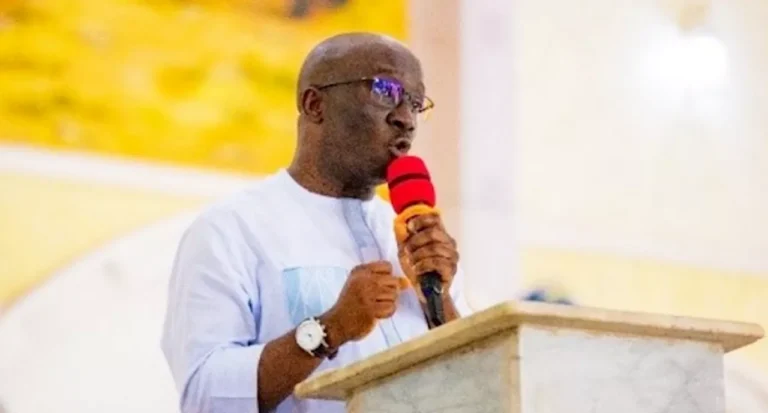
Somewhere inside Abuja’s Federal Secretariat, in an office that should never have existed, a council with no law behind it, no presidential instrument establishing it and, by the government’s own admission, no legal basis whatsoever, spent the better part of a year looking exactly like a real arm of government. It had office space. It had a budget line. It had begun the paperwork for a Central Bank of Nigeria (CBN) account. It had approval, on paper at least, to hire over 300 staff. It had a Director-General, one Prince Adeniyi Adeyemi Matthew, who insisted, even after the Presidency disowned him, that he was exactly who he said he was.
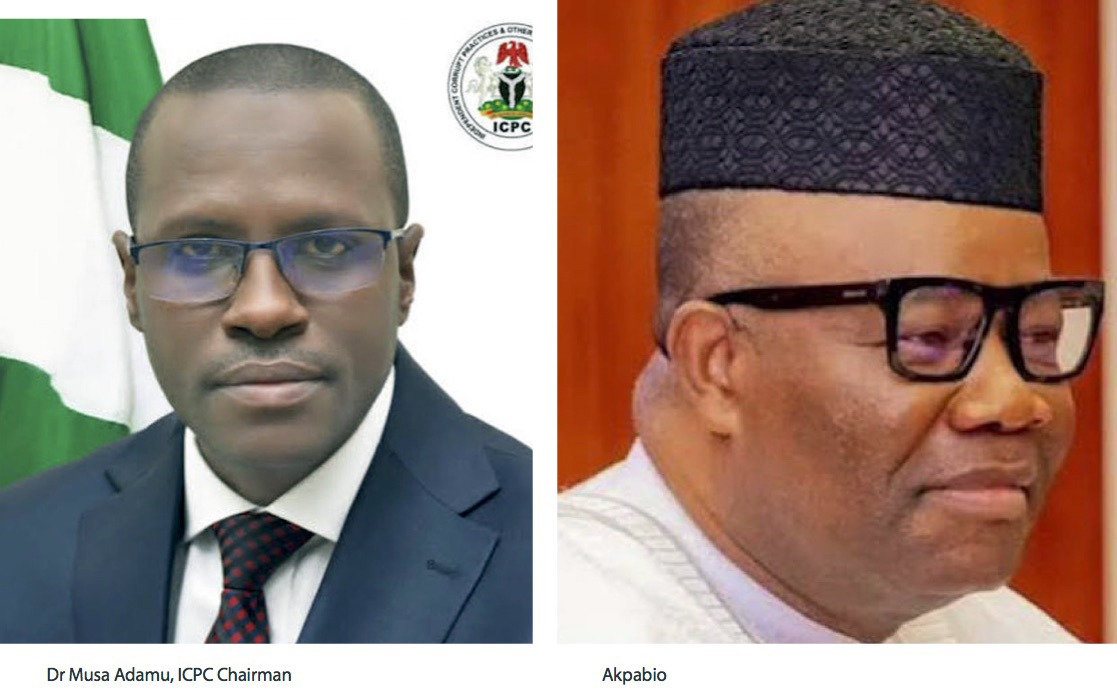
That is the story of the Presidential Foreign Intervention Promotion Council (PFIPC), a scandal that has done more in six weeks to expose the soft underbelly of Nigeria’s federal bureaucracy than any single event since the beginning of this administration. President Bola Ahmed Tinubu has now ordered the Independent Corrupt Practices and Other Related Offences Commission (ICPC) to investigate the matter and report back within 30 days.
However, the deeper this affair is examined, the clearer it becomes that the 30-day probe may be the least consequential part of the story. The real story is what the scandal has revealed about who is watching Nigeria’s money, and who, when the moment came, quietly looked away.
How a ghost got a budget line
Strip away the personalities for a moment and look only at the paper trail, because the paper trail is where this scandal actually lives. The 2026 Appropriation Act, signed into law by President Tinubu himself, carries Budget Code 0111062001, under which the sum of N1,302,978,784 was allocated to the PFIPC. Of that, N802.98 million was earmarked for personnel costs, N200 million for overheads, and N300 million for capital projects. This is not a leaked document or an opposition talking point. It is in the Appropriation Act, a public record that any Nigerian can request for.
The Office of the Accountant-General of the Federation has since insisted that the council never operated a live CBN account and never received a kobo of public funds. However, even that clarification carries a sting in its tail, because the same office admitted that an application to open a CBN account for the PFIPC had in fact been initiated, and was only abandoned when the required documentation failed to materialise. In other words, the machinery of government had already begun treating a non-existent agency as real enough to bank with.
Reports emerging from the National Assembly suggest that PFIPC officials never appeared before the Senate Committee on Establishment and Public Service Matters, the body ordinarily responsible for vetting agencies before their budgets are approved. If that holds up, it means the allocation slipped through the appropriation process without the basic defence hearing every other agency is required to sit through. Someone wrote a budget line for an agency that, by the government’s own telling, was never created. The question of who did that, and at what stage of the process, remains unanswered.
Chief of Staff in the crosshairs
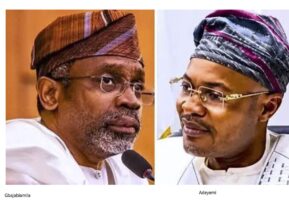
No name has been mentioned more often in this saga than that of Femi Gbajabiamila, Chief of Staff to President Tinubu. Adeyemi has publicly alleged that Gbajabiamila facilitated his appointment letter and later demanded a 48 per cent cut of the council’s takeoff grant. It was an explosive allegation, made at a press conference in June, and it has not gone away simply because the Presidency dismissed it.
Gbajabiamila’s lawyers, Pinheiro LP, responded within days, giving Adeyemi 72 hours to retract the claims, remove all related material from social media and issue a public apology, or face a N10 billion defamation suit alongside criminal charges. The Presidency, on its part, said police forensic analysis had confirmed the signature attributed to Gbajabiamila on the disputed appointment letter was forged and that the case had already been filed at the Federal High Court.
There is a detail in the Presidency’s own account, however, that deserves more scrutiny than it has received. According to an interim report by the Inspector-General’s Monitoring Unit, filed as part of the ongoing court process, the investigation into Adeyemi was triggered by a petition from the Office of the Chief of Staff, dated October 2025. Nine months passed between that petition and Adeyemi’s eventual arrest. In that time, the council he headed reportedly secured office accommodation, pursued a CBN account and made its way into a national budget. If the Chief of Staff’s office genuinely flagged the fraud as early as last October, the obvious question is why it took the system nine more months to act, and how a flagged fraud kept acquiring the trappings of legitimacy the whole time.
Thirty days, and a question nobody in government wants to answer
Special Adviser on Information and Strategy, Bayo Onanuga, announced that President Tinubu had directed the ICPC to investigate the forged documents, the attempted diplomatic recognition, the banking arrangements and, in his words, the wider circumstances that allowed a fictitious body to acquire the appearance of official legitimacy. A comprehensive report is due within 30 days. Every federal ministry, department and agency has been ordered to cooperate.
It reads, on paper, like a serious response. In practice, it has satisfied almost nobody, and the objection raised against it is one that has echoed from the opposition benches to the law courts to radio call-in shows across the country. Can the Presidency credibly investigate a scandal in which its own Chief of Staff stands accused?
Former Vice President Atiku Abubakar, candidate of the African Democratic Congress (ADC) in the forthcoming 2027 general election, put it bluntly. A government under suspicion, he argued, cannot simultaneously act as investigator, judge and final authority in its own case. He also caught the Presidency in what he called a contradiction. Officials had spent weeks insisting the matter was already thoroughly investigated, that Adeyemi had been arrested, that bank accounts had been traced, that charges had been filed. If all of that is true, Atiku asked, what exactly does the ICPC need another 30 days to discover? If it genuinely needs 30 more days, then the earlier claims of a completed investigation were not quite true either.
The ADC has gone a step further, formally rejecting the ICPC assignment and demanding an independent judicial panel made up of respected Nigerians outside government altogether. Party spokesman Bolaji Abdullahi did not mince words, warning that handing the probe to an agency of the Executive leaves the impression the President intends to keep the whole affair in-house. Several civil society figures who spoke to reporters went further still, suggesting Gbajabiamila should step aside from his duties for the duration of the investigation, precisely so the ICPC can work without the shadow of Aso Rock hanging over it.
Other News
A lawyer, asked directly whether the ICPC could be trusted to act without fear or favour under the current arrangement, answered with a line that has since been repeated across newsrooms and radio panels alike, that the Presidency cannot be a judge, a jury and an executioner in its own matter. To be fair, not everyone agrees the vehicle is the problem. Some legal voices argue that the President’s directive is a legitimate exercise of institutional authority, and that what matters is whether the ICPC is left alone to do its job and whether the final report is published in full. That is a reasonable position in theory.
In practice, an anti-graft commission whose leadership answers to the President, investigating a Chief of Staff who answers to the same President, against a 30-day clock set by that same President was always going to struggle to look independent, whatever the individual integrity of the officers assigned to the case.
The Senate that looked the other way
If the ICPC’s independence has dominated the legal debate, the National Assembly’s own conduct has become the more damning story, and it is one that has received far less attention than it deserves. The House of Representatives, to its credit, moved. On a motion sponsored by Yusuf Gagdi, representing Plateau, the lower chamber summoned the Minister of Budget and Economic Planning and the Director-General of the Budget Office to explain how a non-existent agency ended up with a nine figure allocation. The House also resolved to set up an ad hoc committee to trace the allocation from its origin to final approval.
The Senate chose a different path entirely. When Senator Kawu Sumaila of Kano South rose under Order 9 and Rule 9 of the Senate Standing Orders to demand a full investigation into the budgetary allocation, warning that the affair threatened the credibility of the chamber itself, Deputy Senate President Barau Jibrin cut the debate short. The matter, Jibrin said, should await the outcome of the ICPC’s inquiry rather than duplicate it. The motion was defeated on a voice vote.
Days earlier, Senate spokesman Yemi Adaramodu had already pre-empted the criticism, insisting that lawmakers neither recommended nor inserted the allocation, and that vetting the credentials of agency heads is not constitutionally the Senate’s job. That defence may be technically accurate. It is also beside the point. Nobody is asking the Senate to vet Adeyemi’s personal credentials.
Nigerians are asking how an agency that the Presidency itself calls fictitious passed through a budget process that supposedly involves committee defence, line item scrutiny and legislative approval, without anyone in that chain raising an alarm. By declining even to investigate its own role in that failure, the Senate has invited the very conclusion its members insist is unfair, that when the moment came to exercise the oversight function the Constitution gives it, the chamber chose deference over duty.
This is not, unfortunately, a new complaint. Nigerians have heard versions of it for years, every budget season, whenever padding, phantom projects or duplicated allocations surface in the appropriation process, only for an outrage to fade once the news cycle moves on. What makes the PFIPC affair different is the sheer scale of the exposure, an entire agency, budget line and all, that by the government’s own account should never have existed in the first place.
If the National Assembly cannot summon the will to investigate that, it is difficult to imagine what would meet the threshold.
None of this is happening in a vacuum, and it would be naive to pretend the timing, a few months from a general election, has no bearing on how loudly the opposition has spoken. Atiku has called for a Special Independent Commission of Inquiry made up of 10 eminent Nigerians, nominated jointly by the federal government, the ADC, the newly formed Nigeria Democratic Congress (NDC), the Peoples Democratic Party (PDP), civil society groups, the Nigerian Bar Association and retired judges, a structure deliberately designed so that no single institution controls the outcome.
The NDC has taken the hardest line of all, demanding Gbajabiamila’s immediate removal and separate, parallel probes by the EFCC, the ICPC and the police. A coalition of civil society organisations has added its own demand, that whatever the ICPC finds, the full report be published without redaction, not summarised into a paragraph of conclusions that leaves the underlying evidence hidden from public view.
Even allowing for the political theatre that inevitably surrounds a scandal of this size in the run up to an election, the underlying demand from almost every quarter, government critics and cautiously neutral lawyers alike, is strikingly consistent. Nigerians do not want another commission of inquiry whose report disappears into a drawer. They want to see the paper trail, all of it, and they want to know that whoever authorised it faces consequences regardless of where they sit in government.
What the 30 days will actually test
Set aside the individuals for a moment, Adeyemi, Gbajabiamila, Sumaila, Jibrin, Atiku, all of them, and what remains is a far simpler and more uncomfortable question. A body that should not have existed moved through Nigeria’s federal bureaucracy for the better part of a year, acquiring office space, banking arrangements, staffing approval and a place in a national budget signed by the President, before anyone in a position of authority stopped it.
That failure does not belong to one office. It runs through the ministry that processed the early paperwork, the Accountant-General’s office that began the banking arrangements, the Head of Service that approved recruitment, the Budget Office that assigned a code, the Senate committee that never held a defence hearing, and finally the President’s own signature on the finished Act.
Whether the ICPC’s 30 day report becomes a genuine reckoning or another document that disappears from public conversations will depend on very little that has been said so far, and a great deal that has not yet happened. It will depend on whether the report, when it comes, names names rather than processes.
It will depend on whether the Senate, having already declined to look at its own role, is prepared to revisit that decision once the ICPC’s findings are in. And it will depend, most of all, on whether a government that has insisted for weeks that this was the handiwork of one lone impostor is prepared to accept a verdict that says otherwise, if that is where the evidence leads.
Nigerians have sat through enough commissions of inquiry to know how this usually ends.
Whether the PFIPC affair breaks that pattern is, for now, the only question in Abuja that actually matters.