Follow Us on Google
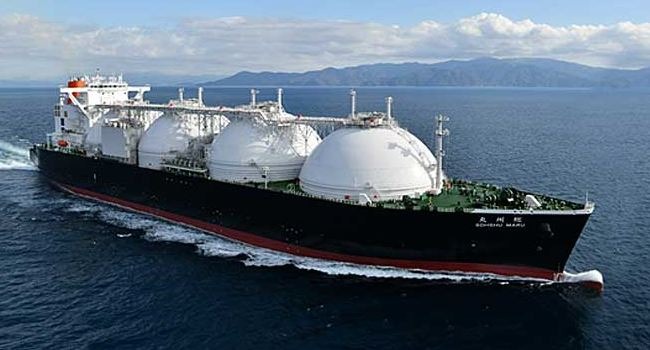
Nigeria’s petrol imports rose sharply in May 2026, increasing by 59.5 per cent month-on-month despite stronger production from domestic refineries and growing contributions from private refining facilities led by the Dangote Refinery.
Latest data released by the Nigerian Midstream and Downstream Petroleum Regulatory Authority (NMDPRA) showed that average daily imports of Premium Motor Spirit (PMS), popularly known as petrol, climbed to 5.9 million litres per day in May from 3.7 million litres per day recorded in April.
The increase indicates that oil marketers continued to rely on imported products to complement local supplies, even as domestic refineries accounted for the overwhelming share of fuel distributed across the country.
According to the NMDPRA’s Midstream and Downstream Petroleum Statistics, Nigeria’s total petrol supply increased to 47.4 million litres per day in May, compared with 44.4 million litres per day in April, representing a 6.8 per cent rise.
Domestic refineries supplied 41.5 million litres per day during the month, while imported products accounted for 5.9 million litres per day. This means that locally refined products contributed nearly 88 per cent of total petrol supply nationwide, underscoring the growing importance of domestic refining in meeting the country’s energy needs.
The latest figures highlight the continuing transition of Nigeria’s downstream petroleum sector from heavy dependence on imported fuel to increased reliance on local refining capacity.
However, despite the rise in petrol availability, crude oil deliveries to local refineries declined during the review period. Refiners received an average of 578,000 barrels of crude oil per day in May, down from 612,000 barrels per day in April, representing a decrease of 5.6 per cent.
Industry observers say the development suggests that while local refining capacity continues to expand, refiners may still be facing operational and feedstock challenges that require supplementary imports to bridge supply gaps and maintain market stability.
Private refineries remained the major drivers of domestic fuel production during the month.
The Dangote Refinery retained its dominant position in the market, supplying 41.5 million litres of petrol daily in May, up from 40.7 million litres per day in April. The refinery recorded an average capacity utilisation rate of 101.25 per cent and reportedly operated at full capacity on most production days during the month.
Other private refineries also posted varying levels of operational performance.
Other News
WalterSmith Refinery achieved a capacity utilisation rate of 65.31 per cent, while Edo Refinery and Petrochemicals recorded 91.66 per cent utilisation. Aradel Refinery operated at 62.94 per cent capacity utilisation during the period.
In contrast, the Nigerian National Petroleum Company (NNPC) Limited-owned Warri and Kaduna refineries remained inactive, recording no production despite ongoing rehabilitation and revamp efforts.
The continued inactivity of the state-owned refineries further highlights the growing role of private-sector investment in Nigeria’s refining industry and the increasing contribution of privately owned facilities to national fuel security.
A review of NMDPRA supply data for the first five months of 2026 shows a broad decline in petrol imports as local refining capacity strengthened, although monthly fluctuations persisted.
In January, petrol imports averaged 24.8 million litres per day, while domestic refineries supplied 40.1 million litres daily. Imports fell dramatically to 3 million litres per day in February, although local refinery output also declined to 29.4 million litres per day during the same period.
By March, imports rebounded to 5.9 million litres per day, while domestic production improved significantly to 34.2 million litres per day. The upward trend continued in April when local refinery output rose to 40.7 million litres per day and imports eased to 3.7 million litres per day.
In May, domestic supply increased further to 41.5 million litres per day, while imports returned to 5.9 million litres per day.
Despite the latest jump, petrol imports remain substantially below January levels, pointing to a structural shift in Nigeria’s fuel supply chain following the expansion of local refining operations.
The data comes as Nigeria’s crude oil production also showed signs of improvement. Recent industry figures indicate that average daily crude oil output rose to 1.53 million barrels per day in May from 1.489 million barrels per day in April, an increase of 41,000 barrels per day.
The increase marked Nigeria’s first return above its production quota under the Organisation of Petroleum Exporting Countries (OPEC) since mid-2025, providing additional support for the country’s efforts to strengthen domestic refining and reduce dependence on imported petroleum products.