Follow Us on Google

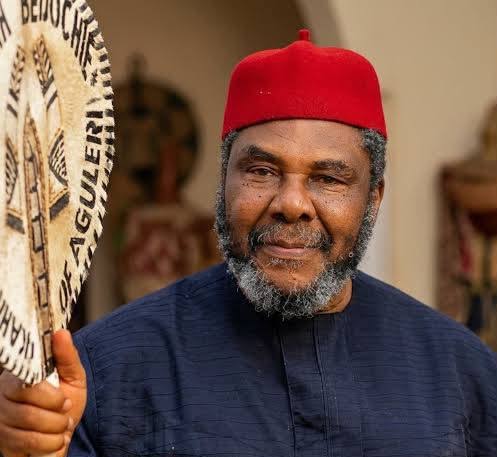
Some actors become famous for the characters they play while others have a presence so commanding that they gradually become characters in the collective imagination of a nation. Pete Edochie belonged to the rare latter category.
For decades, the veteran actor occupied a special place in Nigerian entertainment, embodying kings, chiefs, fathers, community leaders and men of authority with an uncommon gravitas. His deep, resonant voice, deliberate delivery, stern facial expressions, imposing carriage and mastery of traditional proverbs made him one of the most recognisable figures in Nollywood and African cinema.
Whether delivering a warning, settling a dispute, addressing his household, or defending the honour of a community, Edochie had a way of making audiences sit up.
His words often sounded less like dialogue and more like pronouncements from an leader whose authority cannot be questioned, and one whose pronouncement are not open to negotiation.
Fondly called Ebubedike, Ononenyi and the Great Iroko, the actor was much more than a screen patriarch. He was a broadcaster, storyteller, cultural ambassador and one of the faces that helped give Nigerian filmmaking a distinct identity.
His death on Wednesday, November 25, 2026, at the age of 79, after a prolonged battle with prostate cancer, has left the entertainment industry mourning a man whose career stretched across generations. With his passing, Nollywood has lost one of its most enduring pillars; a man whose influence was felt not only through the films he made but through the standard of presence, discipline and artistry he brought to the profession.
The boy from the North with Igbo roots
Born Peter Uwadiegwu Ogugua Edochie on March 7, 1947, in Zaria, Kaduna State, to an Igbo family from Akamnato, Ifite Nteje, Anambra State, Edochie’s formative years were shaped by the cultural diversity of northern Nigeria.
His father worked with the Nigerian Railway Corporation, a job that exposed the family to different communities and places. Growing up in the North, Pete attended St. Patrick’s and St. James Primary Schools in Zaria before proceeding to St. John’s College, Kaduna.
Although he spent much of his childhood in the North, his Igbo identity remained an important part of his life. The cultural exposure he gained growing up among people of different backgrounds would later contribute to the richness and depth with which he interpreted characters, particularly those rooted in traditional African societies.
Edochie was not born into Nollywood, neither did acting initially seem like the obvious path to fame. His early interests included literature, broadcasting and performance. As a teenager, he developed an appreciation for drama and staged scenes from William Shakespeare’s The Merchant of Venice while still in school. It was a glimpse of a talent that would eventually find a much bigger stage.
Broadcasting: The career before the fame
Long before audiences began addressing him as Chief, Ebubedike or the Great Iroko, Edochie was a young man making his way in the world of radio.
He joined the Eastern Nigeria Broadcasting Corporation in February 1967 as a junior programmes assistant, beginning a broadcasting career that would span more than three decades. His entry into the profession came after he discovered that the invitation for his employment interview had arrived after the scheduled date. Rather than surrender to the disappointment, he went to the station to plead for another opportunity.
That persistence opened the door to a career that would take him through several levels of responsibility and eventually into senior management.
At the station, Edochie developed the discipline, communication skills and understanding of storytelling that later become invaluable to his acting career. He rose through the ranks, working in broadcasting during a period when radio remained one of the most influential channels of information, entertainment and public engagement in Nigeria.
He later became Director of Programmes at the Anambra Broadcasting Service and also served as Deputy Managing Director, occasionally acting as Managing Director.
His broadcasting years were not merely a prelude to acting; they were an important part of the foundation of his craft. They taught him the power of voice, timing, articulation, and audience engagement—qualities that later become defining elements of his performances. During the Nigerian Civil War, he also worked with the Voice of Biafra. This experience formed part of his history as a broadcaster during one of the country’s most turbulent periods.
For Edochie, the microphone came before the camera, and the professional discipline he learned in broadcasting followed him throughout his life.
Okonkwo: The role that changed everything
Every legendary actor has that one role that permanently alters the course of their career. For Pete Edochie, it was Okonkwo in the television adaptation of Chinua Achebe’s literary masterpiece, Things Fall Apart.
In 1987, his portrayal of the proud, uncompromising and tragic Igbo warrior catapulted him into national prominence and introduced his talent to a much wider audience. The production, based on Achebe’s celebrated novel, required an actor capable of carrying the emotional weight, cultural complexity and contradictions of one of African literature’s most iconic characters.
Edochie delivered.
He embodied Okonkwo’s ambition, temper, pride, fear of weakness and desperate attachment to the traditions of his society with remarkable conviction. His performance captured the character’s strength while exposing the vulnerabilities beneath it, the insecurities, the anger, the fear of failure and the tragedy of a man who was unable to adapt to a changing world.
The role became so closely associated with him that, for many viewers, Pete Edochie and Okonkwo seemed inseparable.
Interestingly, accounts of how he secured the role reveal that his casting was not simply a matter of fame or connections. His physical carriage, manner of walking and ability to interpret the character impressed the production team during auditions. Edochie, surprisingly, said he had not read Achebe’s novel before encountering the script, making his eventual performance all the more remarkable.
The impact of Things Fall Apart went beyond Nigeria. His performance drew international attention, with the BBC sending a team to interview him following the success of the production. At a time when Nigerian television productions were still fighting for wider international recognition, Edochie’s portrayal of Okonkwo became one of the performances that demonstrated the power and possibilities of African storytelling. It was a defining moment. The broadcaster had become a star.
From television icon to Nollywood royalty
Following the successful adaptation of Things Fall Apart, Edochie gradually established himself as one of the most sought-after actors in Nigeria’s emerging film industry.
As Nollywood expanded from its early productions into a powerful continental entertainment force, he became one of the actors audiences could readily identify with quality, gravitas and commanding screen presence.
His filmography includes notable titles such as Igodo, Rituals, Billionaire’s Club, Egg of Life, Oduduwa, Last Ofalla, Sins of the Father, Across the Niger, The Staff of Odo, Sacred Tradition, Idemili, and Lionheart, among others.
In Igodo, he brought his familiar authority to a story deeply rooted in traditional belief, communal sacrifice and the spiritual complexities of African society. In other films, he played men whose decisions carried consequences for their families, kingdoms or communities.
His casting became almost a genre of its own. Producers knew what Edochie brought to a film: a face audiences trusted to carry authority, a voice capable of commanding a room and a performer who could give weight to dialogue that might otherwise have felt ordinary.
Other News
But his artistry was not limited to playing men with titles. Behind the imposing persona was an actor capable of conveying emotional tension, pride, pain, betrayal and the quiet struggles of family life. His characters were often powerful, but also flawed, stubborn, vulnerable, and sometimes tragically human. His ability to command attention without resorting to excessive theatrics helped distinguish him from many of his contemporaries.
The man who made proverbs a cinematic trademark
Perhaps one of Pete Edochie’s most enduring contributions to Nigerian pop culture was his mastery of proverbs and traditional expressions.
In countless films, he delivered words of wisdom, warnings and philosophical reflections that audiences repeated long after watching the movies. His lines often carried the rhythm and weight of traditional storytelling, drawing on the wisdom of elders, community values, and the lessons of everyday life. For younger viewers who may never have sat through a village meeting or listened to an elder settle a family dispute, his films offered an introduction to the language, customs and moral framework of traditional African society.
He became particularly associated with Igbo proverbs and expressions, delivering them with the confidence and precision of a man who understood not only their meaning but also, their cultural significance. His famous screen mannerisms – the slow turn of the head, the deliberate pause, the raised eyebrow, the stern look before a pronouncement – became part of his signature.
Over time, his acting style inspired imitation, parody, skits and countless social media memes. Younger comedians and content creators borrowed his mannerisms to create humour. At the same time, his voice and expressions became instantly recognisable even to people who could not recall the titles of his films. That ability to cross generations, moving from serious cinema to internet culture, was a testament to his extraordinary reach.
A patriarch on screen, a family man at home
Away from the cameras, Edochie was a husband and father whose family life was a significant part of his identity. He married Josephine Edochie on March 19, 1969, at St. Finbarr’s Catholic Church in Umuahia, Abia State. Their marriage lasted more than five decades, a remarkable journey through the changing fortunes of the entertainment industry, family life and the demands of public recognition.
Together, they raised six children: five sons and a daughter, and built a family that has remained connected to the creative industry.
Two of his sons, Linc Edochie and Yul Edochie, followed his footsteps into acting, while his name and influence continued to attract public interest through the next generation.
For many Nigerians, the image of Pete Edochie as a father was reinforced by the roles he played on screen. He often portrayed the uncompromising family head whose decisions could shape the destiny of his children, the man whose word was law and whose approval was fiercely sought.
Yet, like every family, the Edochies had their own private experiences, triumphs, disagreements and challenges beyond the public gaze.
In recent years, the veteran actor occasionally found himself in the headlines over family issues, particularly controversies surrounding his son Yul’s marital life. Even then, his public comments attracted attention because Nigerians were accustomed to seeing him as a voice of authority and restraint.
His family remained an important part of his life, and his legacy as a father would continue through his children and grandchildren.
Award and recognition
Edochie’s contributions to Nigerian entertainment did not go unnoticed. In 2003, he was conferred with the national honour of Member of the Order of the Niger (MON) by the Federal Government, in recognition of his contribution to the nation’s cultural and creative landscape.
He also received the Industry Merit Award at the Africa Magic Viewers’ Choice Awards, alongside other recognitions celebrating his longevity, artistry and impact on African cinema.
His honours included lifetime achievement recognition and awards celebrating his status as one of the continent’s most influential film figures.
But perhaps the most significant recognition he received was not a trophy, plaque or national honour. It was the respect he commanded across the industry—from actors who grew up watching him to directors, producers, filmmakers, and audiences who regarded him as one of Nollywood’s enduring institutions.
He belonged to a generation that built the industry through long hours, imperfect productions, limited resources and an unshakeable belief in the power of Nigerian stories.
A legend who never stopped being relevant
One of the remarkable things about Pete Edochie’s career was his ability to remain relevant in an industry constantly reinventing itself.
As Nollywood moved from VHS tapes to DVDs, cinema releases, streaming platforms and digital productions, he continued to attract roles and audience interest. His appearance in Genevieve Nnaji’s 2018 film Lionheart introduced him to yet another generation of viewers and reminded audiences that his appeal was not confined to the old Nollywood era. In Lionheart, he played Chief Ernest Obiagu, bringing the familiar dignity and authority that audiences associated with him into a contemporary story about business, family and women navigating a male-dominated corporate world.
He also appeared in newer productions, including films that explored modern relationships, family conflicts and the changing dynamics of Nigerian society. Beyond films, his persona remained a steady presence in interviews, online conversations, skits and popular culture. He could trend simply because of a remark, a proverb, an old scene resurfacing or a younger actor paying tribute to his influence.
He did not need to chase every new trend to remain relevant. His legacy had already become a trend of its own.
The final chapter
In the days preceding his death, Edochie remained a subject of public conversation, with renewed attention on a scheduled interview touching on his son Yul’s personal life and the controversies that had followed.
But the news of his death on Wednesday, November 25, 2026, came as a painful reminder that even the most towering figures are mortal.
His family announced that he died in Enugu at 12:30 a.m., following a prolonged battle with prostate cancer. The announcement described him as a beloved husband, father, brother and kinsman, and asked for prayers as they mourned the loss.
For fans, colleagues and admirers, the news was difficult to reconcile with the image of the imposing man who had spent decades playing characters seemingly untouched by fear, weakness or mortality.
The Iroko had fallen.
And with him went a chapter of Nigerian film history that cannot be replicated.
Pete Edochie may be gone, but the Iroko he planted in the forest of Nigerian cinema is not falling with him. And generations yet unborn will encounter its shade.