Follow Us on Google
Nigeria’s indigenous oil and gas companies have been urged to consolidate their technical and financial capacities through mergers and strategic partnerships to compete for billion-dollar projects and capitalise on opportunities from asset divestments.
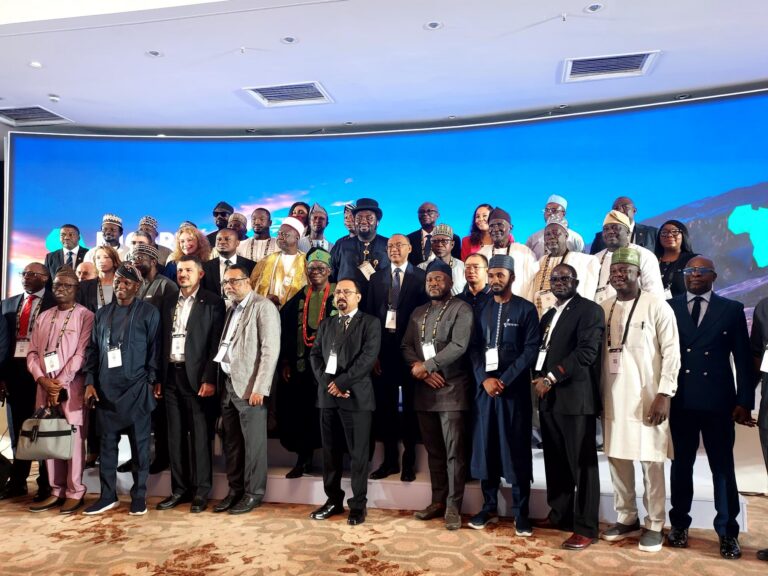
Chairman of the Petroleum Technology Association of Nigeria (PETAN), Mr. Wole Ogunsanya, stated this during a strategic panel session at the 2026 Energy Conference of the Association of Energy Correspondents of Nigeria (NAEC) in Lagos, themed “Access to Assets: Empowering Players and Driving Growth.”
Ogunsanya warned that the growing number of indigenous players in the industry would not automatically translate into greater participation in major projects unless local companies developed the scale, financial strength and technical capabilities required to execute bigger contracts.
He said consolidation would enable Nigerian firms to move beyond fragmented operations, build stronger businesses and compete for contracts worth millions and billions of dollars that might otherwise go to larger international companies.
According to him, the expansion of local content has increased the number of Nigerian companies participating in the oil and gas industry.
He stressed that the next phase of development must focus on building indigenous businesses capable of undertaking larger projects.
Ogunsanya added that companies should pool their resources and expertise where individual firms lacked the capacity to execute major contracts, citing PETAN’s Technical Interest Groups (TIGs) initiative as a mechanism for achieving that objective.
“What we are starting, and have started, is what we call Technical Interest Groups, or TIGs. What this means is that members providing similar services are grouped together,” he said.
Ogunsanya explained that the arrangement would allow companies with complementary capabilities to combine their resources and deliver contracts that would be beyond the reach of individual members.
“We say, look, if there is a $10 million job and you can only do $2 million, all other members within your Technical Interest Group should come together and ensure that you deliver that job at cost and on time,” he said.
He said the model had already been applied in the fabrication sector, where indigenous companies pooled their capabilities to develop local fabrication capacity and compete for jobs previously executed outside Nigeria.
According to him, the experience demonstrated that Nigerian companies could undertake larger projects by combining their strengths instead of operating as isolated businesses with limited capacity.
Beyond collaboration, Ogunsanya said the industry should also prepare for mergers as investment opportunities expand and the need for stronger indigenous operators increases.
“We have many players in the industry. At a point, we have to consolidate,” he said.
Drawing a parallel with the consolidation of Nigeria’s banking sector, he said mergers could help oil and gas companies combine their financial and technical resources, build stronger brands and position themselves to execute larger contracts.
“I see that happening within the industry as these opportunities emerge and mergers take place,” he said.
However, he stressed that consolidation should strengthen existing players without shutting the door on new entrants.
“The intention is not to prevent other people from coming in. The consolidation is what will help us make sure we are prepared for these big projects that we are looking forward to,” he said.
Ogunsanya also called for indigenous companies to receive priority consideration when oil and gas assets are put up for sale, arguing that greater Nigerian participation in asset ownership and oilfield services would help retain more value within the domestic economy.
“When assets are going to be divested, the indigenous companies should be considered first,” he said.
He said the transfer of assets has created opportunities for indigenous operators while raising the need for adequate funding, technical expertise and operational capacity.
Ogunsanya said the objective should go beyond increasing the number of Nigerian companies in the sector to developing stronger indigenous businesses capable of competing for major opportunities.