Follow Us on Google
• Faults NBS new inflation report
From Adanna Nnamani, Abuja
The Petroleum and Natural Gas Senior Staff Association of Nigeria (PENGASSAN) is set to begin talks with the Federal Government to clarify grey areas in Executive Order 9 (EO9) and safeguard the interests of oil and gas workers, warning that any misstep could threaten stability in the sector and have wider economic consequences.
President Bola Tinubu recently signed EO9, halting the Nigerian National Petroleum Company Limited (NNPC Ltd) from collecting management and frontier exploration fees and directing that all oil and gas revenues flow directly into the Federation Account. The government said the move is aimed at improving transparency, reducing leakages, and ensuring oil revenue follows constitutional provisions, particularly as inflows into the Federation Account have lagged despite rising production and favourable market conditions.
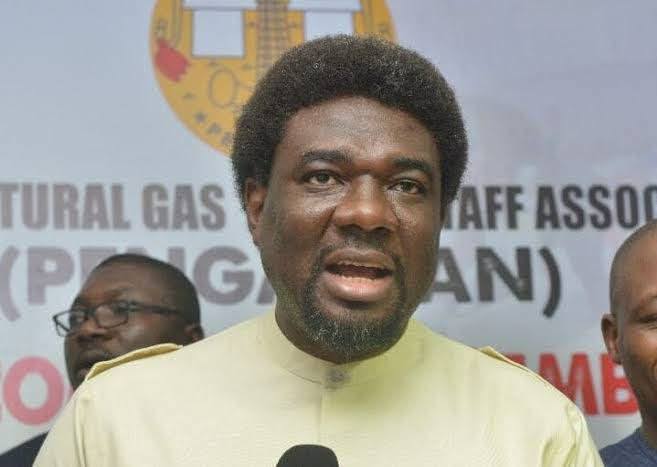
Speaking at the union’s National Executive Council (NEC) meeting in Abuja yesterday, PENGASSAN president, Festus Osifo expressed concern over the implications of the order on oil revenue management and workers’ welfare. He noted that the approach raises legal and operational questions, particularly where it appears to be in conflict with the existing petroleum laws.
According to him, uncertainty in the sector could discourage investment, disrupt revenue flows, and ultimately weaken the Naira, noting the link between oil industry stability, foreign exchange inflows, and inflation.
“These are professionals reconciling accounts and ensuring Nigeria is not short-changed. Their salaries are tied to the management fee structure. If that structure is altered without a clear plan, how will they be paid?.
“If there are perceived loopholes in any law, the proper thing to do is to send amendments to the National Assembly. Allow stakeholders to debate it. Let there be public hearings. That is how laws are corrected in a democracy.
“When oil industry’s stability is threatened, foreign exchange inflows are affected. When forex inflows drop, it impacts the value of the Naira. And when the Naira is weakened, inflation worsens. These things are connected,” he said.
He disclosed that the union has begun engagements with the government officials and members of the Presidential Implementation Committee on the executive order to clarify grey areas and protect workers’ interests.
Other News
“We are a responsible association. We do not politicise issues. Our priority is first our members, secondly the industry and lastly Nigerians. Engagement has been ongoing, and we believe dialogue will help close the gaps,” Osifo stated.
Turning to the economy, Osifo faulted the latest inflation figures released by the National Bureau of Statistics (NBS), arguing that headline numbers do not reflect the depth of hardship faced by Nigerians.
He said while authorities may celebrate a drop in inflation rate, the reality is that prices had already risen sharply over the past two years.
According to him, improvements in exchange rate stability and rising foreign reserves have yet to translate into better living conditions for the average worker.
“You may say inflation is around 15 percent and celebrate it. But, if prices move from N5,000 to N10,000 within a short period, and then move slightly to N10,200, the pain remains. Nigerians are still paying far more than they used to.
“What matters to Nigerians is the food on the table and their disposable incomes. Workers are still feeling the heat in their pockets,” he stated.
He maintained that economic reforms must deliver tangible improvements in purchasing power, stressing that statistical moderation in inflation means little if the cost of living remains unbearable for citizens.
Beyond the oil sector, the union reiterated its call on the government to intensify efforts in tackling insecurity, revamping infrastructure and stabilising electricity supply, noting that economic growth cannot thrive without safety and reliable power.
He maintained that while some gains have been recorded in pipeline security and crude oil production, the government must sustain momentum to ensure steady revenue flow and job security in the sector.