Follow Us on Google
By Doris Obinna
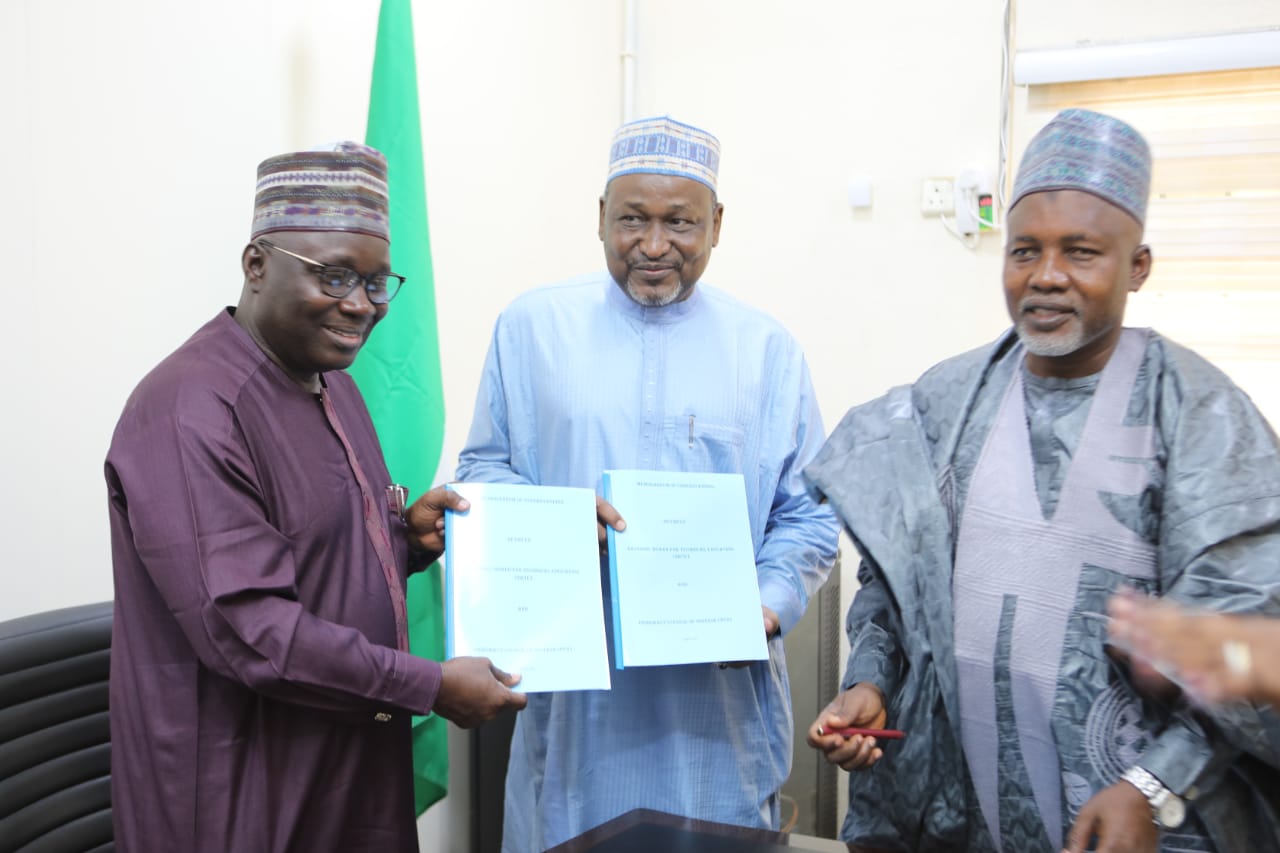
Pharmacy Council of Nigeria (PCN) and National Board for Technical Education (NBTE) have signed a Memorandum of Understanding (MoU), which is in accomplishment of a significant educational reform.
The 22-year-old struggle to abolish the training of pharmaceutical technologists by Nigerian polytechnics and other institutions ended with a pact signed by both parties.
The signing ceremony, held April 17, 2024, at the Federal Ministry of Education (FMoE) Headquarters, Abuja, was chaired by Minister of State for Education, Hon. Tanko Sununu, and witnessed by the permanent secretary and other directors in the ministry.
A release signed by Registrar/Chief Executive Officer (CEO), PCN, Pharm. Ibrahim Ahmed, said the exercise underscored the commitment of all parties involved to accredit and train only the National Diploma in pharmacy technicians, thereby resolving the 22-year-old issue.
“PCN has over two decades struggled to stop the training of pharmaceutical technologists by Nigerian polytechnics and other institutions outside the control and supervision of schools or colleges of health education, whose programmes and training is not duly regulated by the national pharmaceutical administrative body.
“Indeed, the pact has resolved long-standing issues related to the training of pharmaceutical technologists in polytechnics and other educational institutions within Nigeria.”
According to the content of the MoU, PCN and NBTE agreed to accredit and train qualified candidates only for the National Diploma in pharmacy technicians in approved institutions in the country.
The council reiterated that based on the development, pharmaceutical technology, a two-year program offered by some polytechnics and other institutions not supervised or regulated by the PCN has been scrapped.
“Before the signing of the MoU by the parties, pharmacy technicians undergo a three-year program accredited by PCN in recognised colleges and schools of health education. And upon completion, candidates sit for the National Pre-Certification Examination (NPCE) examination and if successful, are granted a license by the PCN.
“On the contrary, pharmaceutical technology is a two-year program offered by polytechnics and other institutions whose courses and training are not regulated by the PCN.”
Ahmed, who described the development as a significant milestone, said, it signified “a collaborative effort towards resolving the issues pertaining to the training of pharmaceutical technologists in polytechnics and other institutions in Nigeria.”
Explaining further, the PCN said the unified educational standards is a move aimed to standardise and elevate the quality of education and training for pharmacy technicians nationwide.
Both the parties applauded the FMoE’s leadership for their pivotal role in facilitating and resolving a 22-year-old issue that had been a significant hurdle in Nigeria’s pharmaceutical education reform. “This achievement is highlighted as a key component of the ‘renewed hope agenda’ of the current administration, reflecting the proactive and focused leadership in the Federal Ministries of Health and Education.”
The parties agreed that the competent authorities responsible for the implementation of this MoU shall be the National Board for Technical Education through its accredited/authorised representatives/officials and the Pharmacy Council of Nigeria through its accredited/authorised representatives/officials.