Follow Us on Google
By Adewale Sanyaolu
Despite being blessed with an array of valuable petroleum and other natural resources, Nigerians are battling the worst level of squalor with little succour on the horizon. This paradox of resource wealth and widespread poverty is a complex issue rooted in several factors.
According to social scientists, the Nigerian economy has a foundational problem of being designed to be overwhelmingly dependent on crude oil, a development that has scathing repercussions on economic stability, governance, and overall development.
At the heart of the crisis is corruption and from it springs other challenges like rising oil theft, endless pipeline vandalism, plummeting oil revenue, underinvestment, a toxic operating space for local and offshore players and other setbacks that are almost grinding the economy to a halt.
Local gangs in oil producing communities who are protesting economic degradation have teamed up with unscrupulous government officials to create a wrecking cabal that smuggles crude oil to offshore markets and funnel proceeds into private coffers.
At the 2024 Nigeria Oil and Gas Energy Week held earlier in July, the Group Chief Executive Officer of the Nigerian National Petroleum Company Limited (NNPC Ltd), Mr Mele Kyari, declared a state of emergency on crude oil theft that has consistently stalled efforts of the government to meet its Organisation of Petroleum Exporting Countries (OPEC) production quota.
He said: “We have decided to stop the debate. We have declared war on the challenges affecting our crude oil production. War means war. We have the right tools. We know what to fight. We know what we have to do at the level of assets. We have engaged our partners. And we will work together to improve the situation.”
At the moment, the Nigerian government is worried and has expressed concerns that its ability to achieve the 2024 budgeted revenue step-up of 77.4 per cent from 2023 is at risk should oil production remain 27 per cent below budgetary provisions.
The government disclosed this in a draft copy report of the Accelerated Stabilisation and Advancement Plan (ASAP) presented to President Bola Tinubu by the Minister of Finance and Coordinating Minister of the Economy, Wale Edun, recently.
“Our ability to achieve the 2024 Budgeted revenue step-up of 77.4 per cent from 2023 actually is at risk should oil production remain 27 per cent below budget. 50 per cent of the annualised YTD variance suggests a lower-than-budgeted revenue of N15.7 trillion at the current run rate,” it warned.
The report said the federal government retained revenue for January and February 2024 was approximately 60 per cent of budget, largely driven by lower crude oil production volumes (at 74.5 per cent of budget projection).
“If current revenue shortfalls persist, the revenue for 2024 is unlikely to exceed N15.8 trillion,” it said.
It added that the current oil production is at 1.4 million bpd compared to the 1.78 million barrels per day (bpd) budget assumption and the OPEC quota of 1.5 million bpd, resulting in worrisome revenue shortfalls for the federal government.
Overall, it explained that the oil sector, as the fiscal anchor for the Nigerian economy, has underperformed due to years of underinvestment, inefficiency and opacity, leading to lost revenues and jobs and a grossly underserved local energy market.
According to the report, Nigeria’s comparatively high cost of oil and gas operations (mainly due to oil theft, vandalism and unattractive fiscal policies) has negatively impacted investment levels.
It noted that an uncompetitive investment climate resulting in low growth of oil production caused depressed fiscal income to the federation account, illiquidity in foreign exchange markets and domestic energy insufficiency.
“Continued reliance on fuel imports despite significant amounts spent on government-owned refineries over the years constituting significant foreign exchange drain on the economy and difficulties in reducing fuel subsidies to zero given the current inflationary and consequent social pressures,” it said.
According to the National Security Adviser (NSA), Mallam Nuhu Ribadu, Nigeria currently loses 400,000 barrels of crude oil daily to criminals and economic saboteurs.
“Nigeria can produce two million barrels of crude daily, but we are currently producing less than 1.6 million barrels due to theft and vandalism of pipelines. “So, we are talking about 400,000 barrels of crude oil going to waste.
NNPC Ltd also said it recorded a total of 400 incidents of crude oil theft in June.
This is according to the company’s weekly programme tagged, “Energy and You” which states that these incidents include; illegal refineries, illegal connections, vandalism, oil spills, illegal storage locations and others.
According to the company, there were 165 cases of illegal refineries in the week between the 15th and 21st of June 2024. Also, cases of illegal connection amounted to 69, there were 15 cases of vandalism, 8 incidences of oil spill, 19 cases of illegal storage location, 74 cases of vessel AIS infraction etc.
The NNPC noted that these incidents were reported by different companies and security agencies across the Niger Delta including Tantitta Security Ltd, Pipeline Infrastructure Nigeria Limited (PINL), SPDC, NNPC Command and Control Centre, Maton Engineering, government security agencies and others.
Furthermore, the NNPC reported that the bulk of the 400 incidences recorded during the period occurred in the Western region of Rivers and Bayelsa states with 265 incidences.
This was followed by the deep blue waters off the coast of the Niger Delta which recorded 74 incidences while the Eastern region saw around 65 incidences and the Western Niger Delta saw around 26 cases which mainly occurred in Delta state.
According to OPEC’s monthly oil market report, Nigeria has consistently failed to meet its OPEC+ oil production quota of 1.5 million barrels daily. In May this year, crude oil production fell to 1.25 million bpd according to OPEC.
It is also on record that throughout 2023, Nigeria struggled to meet its assigned OPEC production quota of 1.78 million barrels per day.
Speaking on the attendant effect of oil theft to the economy, Executive Secretary, Nigerian Extractive Industry Transparency Initiative (NEITI), Mr. Ogbonnaya Orji, , reiterated that the country lost a whopping 619.7 million barrels of oil valued at N16.25 trillion to theft between 2009 and 2020.
The agency added that between 2009 and 2018, the country also lost 4.2 billion litres of petroleum products from refineries valued at $1.84 billion.
Also in April, the Petroleum Technology Association of Nigeria (PETAN) raised the alarm that the country was losing about $15 million daily due to oil underproduction of 500,000 barrels per day.
Stakeholders have asked the federal government, especially the NNPC Ltd, to go beyond a verbal declaration of a state of emergency, to walk the talk.
They insisted it was time to close all gaps, deepen inter-agency and stakeholder synergy, avoid policy flip-flops and ultimately demolishing bottlenecks that obstruct the wheel of producers.
Pushing for solutions, the Chairman, Independent Petroleum Producers Group (IPPG), Mr. Abdulrazaq Isa, called for urgent multi-stakeholder strategy in ramping up crude production levels and addressing issues around under-investment.
He maintained that the urgent measures must be amplified and treated as a matter of national importance.
“Nigeria must act fast and hasten the pace of recovery across the entire industry,” he stated.
Outlining the priority areas, Isa called for the swift approval of pending IOC divestment transactions.
“IPPG strongly advocates that our member companies – Seplat, the Renaissance Consortium and Oando – have the proven track record to successfully take over and manage these onshore and shallow water assets to realise incremental production in the region of 100,000 – 200,000 barrels of oil and over 1.5bcf of gas per day within 24 months and well over 500,000 barrels of oil per day in the long term”, he explained.
The second priority area is the Deepwater Development.
According to IPPG, addressing issues around deepwater development and competitive fiscal regimes with major oil companies could unlock 700,000 barrels of oil per day, significantly boosting production and economic benefits.
The final priority area listed by the Group is the acceleration of Nigeria’s Gas Resource Development with the NPC Ltd leading the charge.
Isa noted these priority areas provided the most realistic and sustainable pathway towards meeting national, long-term production aspiration of 4 million barrels of crude oil per day and 13 billion cubic feet of gas per day.
To tame the $15 million daily revenue loss, Chairman of PETAN, Mr. Wole Ogunsanya, stated that such losses would have been mitigated if there was full in-country retention of values and beneficiation across all the chains of the industry.
In order to retain those values in-country at every stage of the oil and gas process, Ogunsanya said a lot of gaps needed to be filled through government policy initiatives and collaboration with industry stakeholders
He pointed out that the presidency had given the directives and had formulated a lot of gazettes, stating that PETAN aligned with those initiatives.
Senior Partner, Olisa Agbakoba Legal (OAL), Mr.Olisa Agbakoba, called for a repeal of the Petroleum Industry Act(PIA) and a complete overhaul of Nigeria’s oil and gas sector, stating that the current system has ‘completely failed’, and is responsible for poverty, hunger across the country, which he feared may lead to a ‘food riot.’
Attributing the failure to a lack of clarity in the hydrocarbon process, which has led to the exclusion of Nigerian players and the dominance of International Oil Companies (IOCs), Agbakoba argued that the president’s role as minister of petroleum resources is a historical mistake that has led to confusion and inefficiency.
In a policy paper titled, ‘The Paradox of Nigeria’s Oil and Gas Industry’, Agbakoba suggested that Nigeria should adopt a model similar to Saudi Arabia’s, where the state controls the oil and gas sector, and the minister of energy oversees everything, including electricity, hydrocarbons, and solid minerals.
According to him, “the PIA itself is unconstitutional. Section 62 states that NNPC can deduct money. Get the importance of this. We have more revenue than we are getting, whether it’s from oil and gas or shipping or whatever. But the only way that we can get it right is to have proper policies.
“Those who designed the PIA made a big error. What is the difference between upstream regulatory commission and downstream? What sense does it make? Why don’t we follow the model of Saudi Arabia that is simple? They only have a Minister of Energy; he controls everything that has to do with energy.
The value of our oil wells is something like $600 trillion over the next 40 years. If I were the president, I would forward-borrow loans. I would tell China, I need $10 trillion. And they would forward-borrow the money to you.
“I would deploy the money into public works such as providing infrastructures that would enable productivity. That’s what President Roosevelt did. He had the largest project in the world called the TVA, the Tennessee Valley Authority that employed 4 million Americans.
If Nigeria does this, you can imagine the number of people that will be engaged. Because the problem on the streets is people are hungry. Unless you say they’re not. People are hungry.
I’m afraid of what is coming. I see more hunger now, and I foresee a food riot. Something is fundamentally wrong. Abuja people are not seeing it.”
Agbakoba expressed concern over the country’s reliance on IOCs, which he believes does not add value to the sector. He cited the example of Saudi Arabia, which has trained its citizens to occupy key positions in the oil and gas sector. He also praised India’s Prime Minister Modi for prioritising India’s interests and achieving the fastest-growing economy in the world.
The legal expert criticised the Nigerian government for its lazy approach to funding oil wells, which has led to the country’s reliance on IOCs. He suggested that Nigeria should seek loans based on securitisation, using its assets as collateral, rather than relying on IOCs.
The Chairman and Group Chief Executive of Oilserv Group, Engr Emeka Okwuosa, naintained that the deployment of modern technology which included drones would go a long way in addressing the challenges of oil theft and pipeline vandalism.
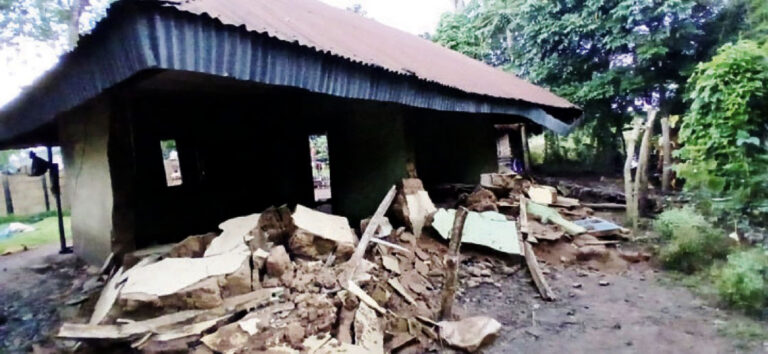
He blamed obsolete pipeline systems that lack latest monitoring technology for the constant attacks on the crude oil pipelines across the Niger Delta region.
He added that and robust technology which includes; drones, telecoms, radar/satellite, and cyber tools allow for quick response to threats within a safe distance and minimal disruptions to service.
He lamented that the absence of a fibre optic detection system in most of these lines necessitates a heavy reliance on physical security (human interventions) measures which can best be avoided due to risks of fatigue, panic, judgment errors, limited vision, collusion, and negligence.
“Pipelines and their associated infrastructure are vital assets within the industry, serving as a critical means for transporting hydrocarbons from production facilities to various destinations, including storage, distribution, and export. They play a pivotal role in supplying energy to residential, commercial, and industrial sectors, while also contributing significantly to foreign exchange earnings in producing economies.
Pipeline assets require substantial capital investment due to the high costs associated with engineering, construction, maintenance, and surveillance. These assets are strategically situated, often in challenging terrains, making them susceptible to vandalism and destruction.
To ensure their long-term functionality, operators must carefully manage pipeline networks, considering cost, technological advancements, geographical challenges, and the specific needs of local communities. A strategic approach is necessary to justify investments and uphold the integrity of these vital resources.”
Okwuosa maintained that pipeline security extends beyond the protection of physical assets to encompass safeguarding of technology systems that monitor product flow pressure, asset integrity, billing metrics, and operating procedures.
He explained that some of these technology systems are exposed to risks such as cyber attacks, malware, and acts of vandalism and as such, require a robust security system and a well-thought-out response plan for safeguarding pipeline assets.
Chief Economist, SPM Professionals, Mr. Paul Alaje, while proposing solutions, further called on the government to end hostilities in the Niger Delta region accentuated by crude oil theft.
He emphasised the need for greater collaboration with the private sector and with foreign organisations to promote production and innovation, particularly by introducing electric vehicles into the country.
“There are a number of things that should have been done that have not been done, number one is to end oil theft in the Niger Delta region. That will boost our foreign reserves,’’.
Nonetheless, the Commission Chief Executive Officer, NUPRC, Mr. Gbenga Komolafe, maintained that about 40 per cent of what is adjudged crude oil theft actually are attributable to metering inaccuracies which, he said, the agency was working to fix in order to save the country billions of dollars.
To ensure accurate accounting of the country’s crude oil production using digital platforms, the Federal Executive Council (FEC), recently approved a $21 million project to install metres at all 187 crude oil flow stations in the Niger Delta.
Minister of Petroleum Resources, Heineken Lokpobiri, said that the initiative aims to ensure accurate accounting of the country’s crude oil production using digital platforms.
Lokpobiri also mentioned that part of this digital strategy includes implementing a system to track all crude oil vessels from their point of origin in the Niger Delta to their final destinations worldwide.
“One of the key approvals of the Federal Executive Council that held on Wednesday has to do with awarding a contract of metering of about 187 flow stations across the Niger Delta region of Nigeria for the Nigerian Upstream Regulatory Commission (NUPRC).
“NUPRC is the apex regulatory agency for the Nigerian oil and gas upstream sector. And as part of our steps to ensure that we have proper accountability, the Federal Executive Council approved the metering of all our production and we have a hundred and eighty seven flow stations in the country littered across the Niger Delta area.
There was a contract awarded for us to metre all flow stations that will give us a proper account of what we produce and what we export. It is a major development that has never happened in this country.”