Follow Us on Google

Isaac Anumihe
Federal Government has ruled out the possibility of reversing the palletisation policy despite the fears that it would add to cost of imports.
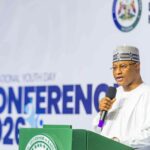
Speaking at the stakeholders engagement to commence the operations at the Kaduna Inland Dryport, the Executive Secretary of Nigerian Shippers Council (NSC), Hassan Bello, said that although the concerns of the stakeholders have been noted, the policy is irreversible.
“There is no going back on the palletisatiuon. However, the concerns of the stakeholders are noted,” he said.
He said that in making palletisation to be more effective, all stakeholders would be carried along while calling for the co-operation of the private sector. Bello said the Federal Government is desirous of making the Kaduna dryport a success, hence the need for stakeholders to synergise to optimise the benefits of the inland dryport.
He admonished operators of the facility to learn from the challenges of the seaports to avoid similar pitfalls in their operations, noting that having functional rail lines is critical to the success of the dryport.
“The idea is not just to establish an inland port but a model dryport that is automated, free of hassles and with less traffic management. The operators must learn from the challenges of the seaport from the onset to avoid such challenges. One of them is traffic management. We have seen how we have been in the traffic management issue because of one mode of transportation linking the port.
“The Federal Government is very anxious about the success of this project. The reason why we are here is to seek for your suggestions and cooperation on how best we can go about it.
Things that are new, there are always teething problems inside but I am sure if we work together, we will provide that synergy needed. We are also discussing with Customs about their procedures.
“We need the capacity of the rail to be frequent, predictable and certain. It is good that the Managing Director of NRC is a very strong partner of this project and he is also aware of this issue,” he said.
On the Kaduna Inland Port, which was inaugurated by President Muhammadu Buhari on January 4, the Port Manager of the project, Mr. Rotimi Raheem, disclosed that agents operating at the Lagos seaports have started dumping the Lagos seaports for the newly commissioned Kaduna Inland Dryport, Kaduna State.
The dryport is to receive import and also export raw ¡materials such as ginger, maize and other agricultural produce out of the North.
According to him, the clearing agents are running from the high charges of shipping companies and some other government agencies at the Lagos seaport.
“The problem clearing agents are facing in Lagos in terms of access to the seaports, demurrage charges by shipping companies and other port charges are eliminated at the dryport.
“Also, since the cargoes from the port of loading is destined to Kaduna as port of destination, it is the responsibility of the shipping companies to take the container to Kaduna. Apapa and Tincan is a mother port and they are known to be a transit port,” he said.