Follow Us on Google
By Oluseye Ojo
The All Progressives Congress (APC) in Oyo State, by any political measure, has entered a new phase, which is defined not by nostalgia for lost power in 2019, but by calculated reconstruction, strategic unity, and an early, disciplined march toward 2027 general elections.

Analysts have said political parties, like living organisms, are tested most severely in moments of loss. For the APC in Oyo State, that test arrived in the aftermath of the death of former Governor Abiola Ajimobi, who was the party’s most dominant figure, political compass, and rallying symbol for nearly a decade, which was 2011 to 2020.
Ajimobi’s passing did not merely leave an emotional vacuum; it exposed structural fragilities, leadership rivalries, and ideological fractures that cost the party dearly in subsequent elections, including the 2023 governorship poll.
It was gathered that for a period, the APC in Oyo State appeared rudderless. It is as fragmented by ambition, weakened by distrust, and overshadowed by a resurgent opposition.
These days however, the saying that politics abhors a vacuum has come to the fore. What has unfolded over the last year, and intensified in recent months, is a methodical effort to rebuild the party from the grassroots upward, anchored on reconciliation, discipline, and a unifying national objective, which is the re-election of President Bola Tinubu in 2027.
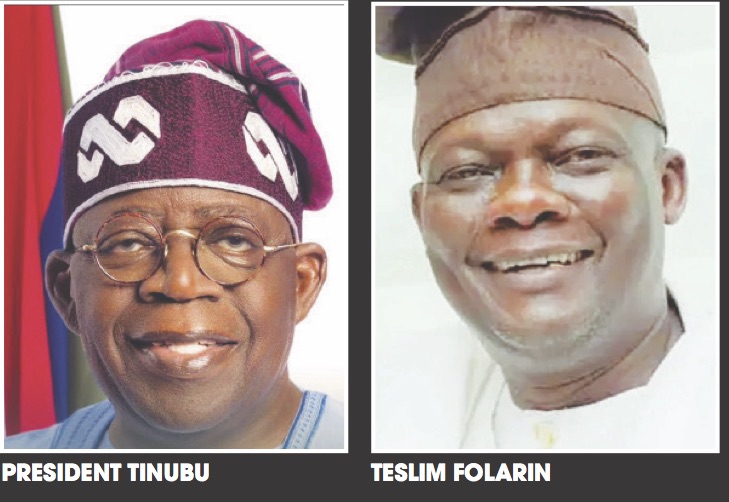
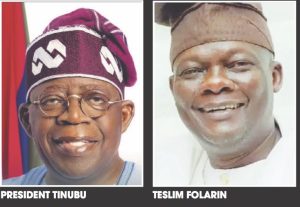
At the heart of this reawakening stands Senator Teslim Kolawole Folarin, former Senate Leader and Oyo State Ambassador for the Renewed Hope Agenda. His role has been less about personal ambition and more about political engineering, focusing on aligning factions, restoring confidence, and converting goodwill into organisational strength.
Folarin and the politics of reconciliation
Folarin, who was the APC governorship candidate in the state in 2023, was not on the same page with the Minister of Power, Chief Adebayo Adelabu, who dumped APC in 2022 after losing the governorship ticket of the party to Folarin.
In 2023, Adelabu was the governorship candidate of the Accord. But he returned to the APC after the governorship poll, won by Governor Seyi Makinde of the Peoples Democratic Party (PDP), who was re-elected or a second term in office. Folarin kept a low profile in the party since he lost the 2023 gubernatorial poll. Fillers showed that he said he would not leave the party and he would work against those against him, especially Adelabu.
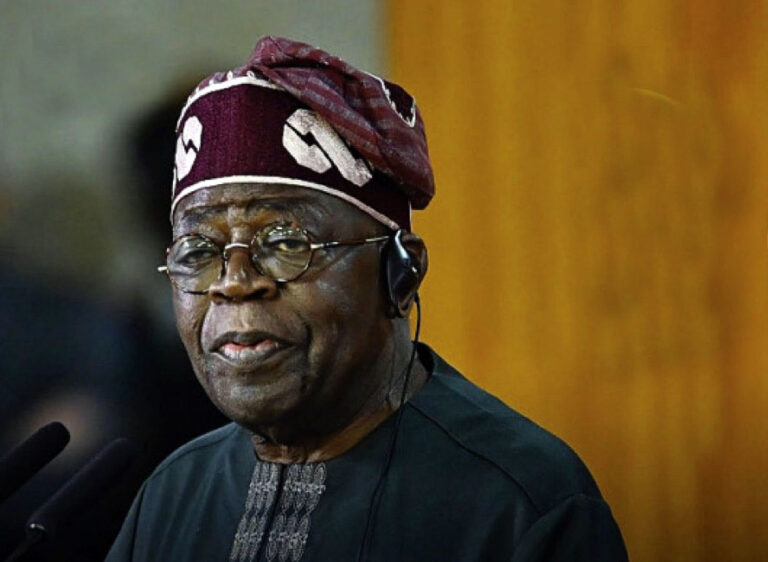
But things suddenly changed after President Tinubu hosted Folarin in Abuja in the last quarter of 2025, and made him the Coordinator for the Renewed Hope Ambassadors in Oyo State.
Folarin’s emergence as the central mobilising figure in Oyo APC, as gathered, might have reflected a strategic calculation by the Tinubu presidency. The reasons could be that rebuilding of the party must begin early, locally, and inclusively.
Then, Folarin’s message has been consistent and unambiguous.
It was after Folarin’s meeting with Tinubu that the chieftains of the party that had fallen apart came together.
For the first time since 2023, Folarin, Adelabu, and others were seen together at functions, speaking with one voice. The first major step taken by the Renewed Hope Ambassadors with APC in the state was the launch of the 14–Federal Constituency Tour in the state. The tour had been concluded.
According to Folarin, the first step to unity is for the gladiators to shelve ambitions for now, be united, and form a common front.
“Unity before ambition – everyone with 2027 aspirations has set them aside. Our goal is to outperform 2023 and deliver a landslide victory for President Tinubu,” Folarin declared during the launch of the 14–Federal Constituency Tour.
He repeated the statement across the 14 federal constituencies and stakeholder meetings, which could have captured the philosophical shift within the party.
Unlike previous cycles, marked by premature jostling, the current APC strategy in Oyo has been seen to be prioritising internal peace as a prerequisite for electoral success. Also, Folarin has repeatedly stressed that no political strategy, however sophisticated, that could succeed in an atmosphere of division.
At the enlarged stakeholders’ meeting at the APC secretariat in Oke-Ado, he framed unity as both moral obligation and political necessity.
“One APC, One Tinubu Project must be our guiding principle. No political strategy, regardless of its brilliance, can succeed in an atmosphere of division,” he said.
Strategy meets structure
The APC’s 14–Federal Constituency Tour represents one of the most ambitious early mobilisation efforts undertaken by any political party in the Fourth Republic, far ahead of a general elections. Party faithful have seen the tour as more than a symbolic show of force. They believe that the tour has functioned as a political audit, testing party structures, identifying weak links, and re-establishing contact with grassroots supporters.
The tour, which began in Oyo Federal Constituency and extended across Ibadan, Oke-Ogun, Ogbomoso, and Ibarapa zones, drew massive attendance and unprecedented cross-factional participation.
Other News
Minister of Power, Chief Adebayo Adelabu; and the three serving senators from the state – Senators Abdulfatai Buhari (Oyo North), Sharafadeen Alli(Oyo South), and Yunus Akintunde (Oyo Central) appeared side-by-side for the first time since 2023 elections. Also in attendance are former senators in the state – Olufemi Lanlehin (Oyo South), Ayo Adeseun(Oyo Central), and Hosea Agboola (Oyo North). The APC State Chairman, Olayide Abas, and dozens of former lawmakers, party elders, and grassroots mobilisers also appeared side-by-side during the tour. They all created an image that would have seemed improbable just a few years ago. Adelabu, in his address, underscored the political logic of the unity when he said: “The welfare of members must remain a priority, while welcoming returnees into the fold.” According to him, reconciliation cannot be cosmetic; it must be felt at ward and polling-unit levels.
Florence Ajimobi and moral voice of peace
Perhaps one of the most symbolically significant figures in the APC’s reconciliation drive is Dr. (Mrs.) Florence Ajimobi, former First Lady of Oyo State and ambassador-designate. Her presence carries emotional resonance, recalling the Ajimobi era while reinforcing the message that the party must move forward together.
“There must be no more war within the party. Leaders must close ranks and prioritise peace,” she stated. Her intervention has been widely interpreted as both a moral appeal and a political endorsement of the new unity framework.
Senator Folarin himself described her ambassadorial nomination as “a well-deserved national recognition” and lauded President Tinubu for what he called a “thoughtful, fitting, and highly appropriate choice.
“Her Excellency, Florence Ajimobi, is well-travelled, well-exposed, and richly equipped with the intellectual depth and diplomatic capacity needed for ambassadorial service,” Folarin, who expressed confidence that she would represent Nigeria with honour, said.
Grassroots mobilisation as electoral currency
Central to the APC’s renewed strategy is an unapologetic emphasis on grassroots mobilisation. Unlike past approaches that relied heavily on elite negotiations and election-season rallies, the current blueprint focuses on ward-level functionality and continuous voter engagement.
“Our grassroots structures must be vibrant, functional, and connected to the people. Every ward, every unit, and every community must feel the presence and impact of the APC,” Folarin insisted. In the 2023 presidential election, President Tinubu secured 449,884 votes in Oyo State, which is one of the strongest margins nationwide. Building on that performance, the APC has set a clear and measurable target.
“Our mission now is to increase that figure by at least 35 per cent, through intensified grassroots mobilisation across all 33 local government areas,” Folarin noted.
Defections and the politics of momentum
No indicator of political momentum is more visible than defections, and the APC in Oyo State has experienced a wave that party leaders describe as historic. More than 50,000 members from the PDP, SDP (Social Democratic Party), ADC (African Democratic Congress), and LP (Labour Party) have crossed over, including high-profile figures such as former Senate Chief Whip, Senator Hosea Agboola, who defected from PDP to APC.
Receiving the defectors, Folarin described the development as a strong endorsement of the leadership of President Bola Ahmed Tinubu and the Renewed Hope Agenda.
Minister of Power, Adelabu called the defections “timely and courageous,” while Senator Abdulfatai Buhari said they underscored the APC’s “growing organisational strength and acceptance among the people.” The APC State Chairman, Olayide Abas, reassured new members, stating: “The APC leadership in Oyo State remains committed to fairness, discipline, and internal democracy.”
Policy communication and the Renewed Hope Narrative
Beyond party organisation, APC leaders have also taken on the task of defending and explaining the Tinubu administration’s reforms, particularly the contentious tax reforms. During engagements in Oke-Ogun, Senator Folarin addressed public concerns directly.
“The tax reforms are not designed to impose additional hardship on ordinary Nigerians. They are focused on improving efficiency, blocking revenue leakages, and reducing our overdependence on oil revenue,” he said.
According to him, low-income earners remain protected, while the emphasis is on broadening the tax base rather than increasing tax rates.
Ibadan and the battle for political centrality
Ibadan, described by Folarin as “the political nerve centre of the South-West,” remains central to the APC’s calculations.
Addressing supporters during the Ibadan leg of the tour, he declared: “Oyo State proved its strength in 2023 by giving Asiwaju Bola Ahmed Tinubu the highest differential votes nationwide. In 2027, we are ready to raise the bar and deliver record votes for Mr President.” Minister of Power, Adelabu also echoed the confidence. He insisted that the Tinubu administration has recorded enough achievements to merit another four-year mandate.
A long road, carefully mapped
The Publicity Secretary of APC in the state, Olawale Sadare noted that the story of the APC in Oyo State today is not merely one of recovery; it is one of reinvention.
He added that from the ashes of internal discord, emerged a party consciously rebuilding its structures, managing ambition, and investing early in mobilisation. The critical question is whether the unity will endure? The opinion poll within APC and analysts stated that Nigerian politics is rarely linear, and sustaining cohesion across multiple election cycles demands discipline, patience, and constant negotiation. Yet, for now, the APC in Oyo State appears to have learned from its past.
As Senator Folarin put it succinctly, “Oyo State will not only align with the Renewed Hope agenda; it will set the standard.”
It was further gathered that if the current momentum in APC is sustained, Oyo State may once again become not just a battleground, but a bellwether that will shape the narrative of 2027 general elections, long before ballots are cast.