Follow Us on Google
Moves to end telecom vandalism
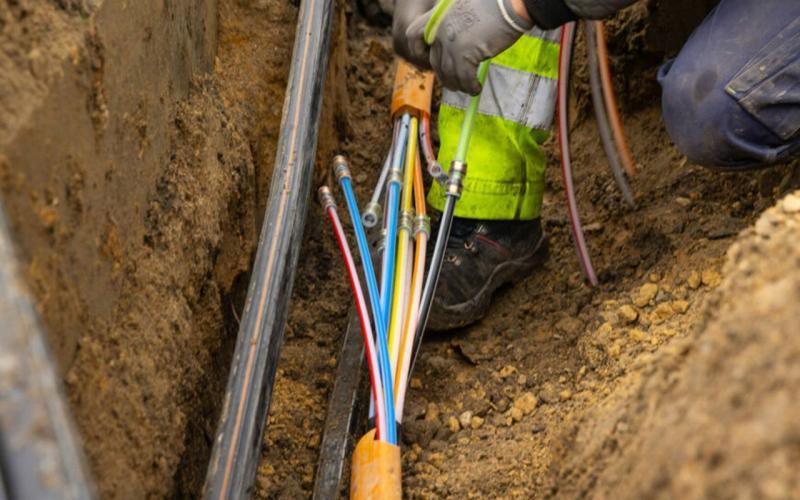
The Nigerian Communications Commission (NCC) has disclosed that more than 5,000 fibre-optic cable cut incidents were recorded across the country in the first six months of 2026, with road construction, excavation and related civil works identified among the major causes.
The Executive Vice-Chairman of the NCC, Dr Aminu Maida, disclosed this on Tuesday at a stakeholders’ workshop on the protection of fibre-optic cables during road construction, excavation and other activities in Nigeria.
Maida said the high number of incidents required stronger collaboration between telecommunications operators, road contractors, government agencies, regulators and security institutions to prevent further damage to critical telecommunications infrastructure.
According to him, many of the incidents occurred because of inadequate coordination among stakeholders involved in road and other construction activities. He said the consequences of fibre cuts extended beyond the immediate physical damage to cables, stressing that they could disrupt essential services and affect millions of Nigerians.
The NCC boss recalled the nationwide telecommunications disruption in February 2024, when fibre cuts, including those caused by road construction, affected one of the major telecommunications operators. He said millions of subscribers were unable to make calls, send messages or access the internet for several hours, while subscribers who moved to alternative networks caused congestion on those networks.
According to him, the incident demonstrated how damage to one network could quickly have wider national consequences.
“In the first six months of this year alone, more than 5,000 fibre cut incidents were reported from road excavation, construction, and related civil work. A damaged fibre cable is therefore not simply a cost to an operator, it is a cost to Nigerians and to the wider economy.
“Those affected were not numbers in an incident report. They were parents, businesses, workers, and citizens cut off from people and services on which they depended on,” Maida said.
He stressed that preventing fibre cuts should be prioritised rather than waiting to repair damaged infrastructure after incidents had occurred.
Maida said telecommunications operators must provide accurate information on the location of their infrastructure and respond promptly when contacted before construction begins. He added that contractors must check for underground infrastructure before excavation and make adequate plans for its protection.
The NCC chief also urged regulators and security agencies to provide guidance and ensure accountability, stressing that coordination should form part of the design and execution of every relevant infrastructure project.
Other News
He said the commission remained committed to working with public and private stakeholders to make coordination a standard practice in road construction and other civil works.
Earlier, the Director of Critical National Assets and Infrastructure Protection in the Office of the National Security Adviser, AVM Effiong Ewa, said the protection of fibre-optic infrastructure was a shared national responsibility.
Ewa noted that telecommunications infrastructure had been designated as Critical National Information Infrastructure, warning that negligence or interference that exposed the assets to damage could constitute an offence under Nigeria’s legal framework.
He called for strict adherence to established protocols, guidelines and procedures during construction and maintenance activities.
Also speaking, the Permanent Secretary, Federal Ministry of Works, Mr Rafiu Adeladan, said the ministry recognised that road and telecommunications infrastructure often operated within the same physical space.
He said excavation, grading, reconstruction, utility relocation and other road activities could inadvertently damage vital fibre-optic infrastructure where adequate coordination and precautions were not in place.
Adeladan called for stronger mechanisms for coordination and information sharing before and during road construction activities. He said road contractors, consultants and relevant agencies should have access to accurate information on the location of telecommunications infrastructure before excavation begins.
On his part, the Permanent Secretary, Federal Ministry of Communications, Innovation and Digital Economy, Engr Nadungu Gagare, said protecting telecommunications infrastructure was not the responsibility of one institution, but required collaboration among government ministries, regulators, security agencies, construction companies, utility providers and other stakeholders.
Gagare said the Federal Government had established a tripartite standing committee on the protection of fibre-optic infrastructure to strengthen collaboration and promote a coordinated approach to infrastructure protection.
He said the committee would also promote compliance with established standards and right-of-way regulations, improve information sharing and support measures to prevent avoidable damage.
The workshop, organised by the Federal Ministry of Communications, Innovation and Digital Economy in collaboration with the Federal Ministry of Works, NCC, Office of the National Security Adviser and Nigeria Security and Civil Defence Corps, is aimed at developing practical measures to protect fibre-optic cables during road construction and other civil works.