Follow Us on Google
• Abducted persons kept in same forest camp reunite, recount stories of torture, horror, blood, death in captivity
From Sola Ojo, Abuja
Survivors of kidnapping attacks who were abducted from different communities but held in the same forest camp experienced an emotional reunion in Kaduna recently, turning a security-focused conference into an unexpected moment of shared relief, recognition, and trauma recovery.

Many of the survivors, who had never been reunited since their release, discovered they had been detained together by the same armed group and, in some cases, shared months of captivity under harsh conditions including torture, forced labour, ransom negotiations and inhumane treatment.
The emotional moment unfolded during the Christian Awareness Initiative of Nigeria (CHAIN) in partnership with Palace Alliance, “The Rod and the Staff Conference 2026,” held at the Evangelical Church Winning All (ECWA) Kaduna South DCC, Angwan Yelwa, Television, Kaduna.
When they arrived, they started seeing each other and saying, ‘when we were in the camp we met,’ they even called themselves schoolmates. But they were in the same camp and started telling stories and agreeing on how everything happened.
For Mrs. Love Markus, the memory of her husband’s murder before her very eyes remains a wound that refuses to heal months after.
The young mother from Gidan Waya in Lere Local Government Area of Kaduna State was heavily pregnant when armed kidnappers invaded their community in November 2025.
Before her eyes, her husband was shot dead. Moments later, she was dragged into the forest alongside 12 others, two of whom were murdered by the kidnappers a few days after.
According to Rev. Fr. Yakubu Jerry of the Catholic Diocese of Kafanchan who interpreted for Love, the abductors showed no mercy despite her condition.
“They kept pushing and pulling her even when she could barely walk because of the pregnancy.
“Whenever she fell, they beat her and forced her to continue the journey into the forest,” Rev Fr interpreted.
For months, Love endured hunger, exhaustion and fear in the kidnappers’ camp while her captors demanded huge ransom payments from relatives and sympathisers.
As the days passed, the physical strain and emotional trauma pushed her into labour.
Far from any hospital or medical care, she delivered her baby girl inside the kidnappers’ den on December 22, 2025.
“By the grace of God, both the mother and the baby survived,” Rev. Fr. Jerry said.
But freedom came at a devastating cost. According to the cleric, the kidnappers initially received N40 million yet refused to release the victims.
Another N30 million was later paid before Love and others regained freedom after spending five months in captivity.
The abductors also collected motorcycles and other valuables estimated at about N7 million, bringing the total ransom and related losses to roughly N77 million.
Today, although Love and her infant are alive, the scars of the ordeal remain fresh.
“She faces serious psychological trauma. Whenever she looks at the baby, she remembers that the child was born without a father because her husband was killed before her eyes.
“Again, returning home was painful because she was going back to an empty house.”
Since their release, the church, relatives and well-wishers have continued to support the widow and her child through medical treatment and emotional rehabilitation.
The baby is now about five months old – a symbol of survival born out of one of the darkest moments of her mother’s life.
Another survivor was Ms Sim Paul, an indigene of Kaduna, who said she was abducted in Zamfara State in 2023 and was held by her abductors for some time.
“I stayed there for one month. They even forced me to convert to their religion, but I refused,” she said.
She said she was released after N8 million ransom was paid out of an initial N10 million demanded by the bandits.
“We cannot sleep in our houses, our children cannot go to school, and we cannot go to our farms,” she lamented, calling for increased security deployment to troubled regions.
She urged the government to act decisively to address nationwide insecurity.
Other News
“If the government can provide security personnel, we will be able to sleep peacefully,” she said.
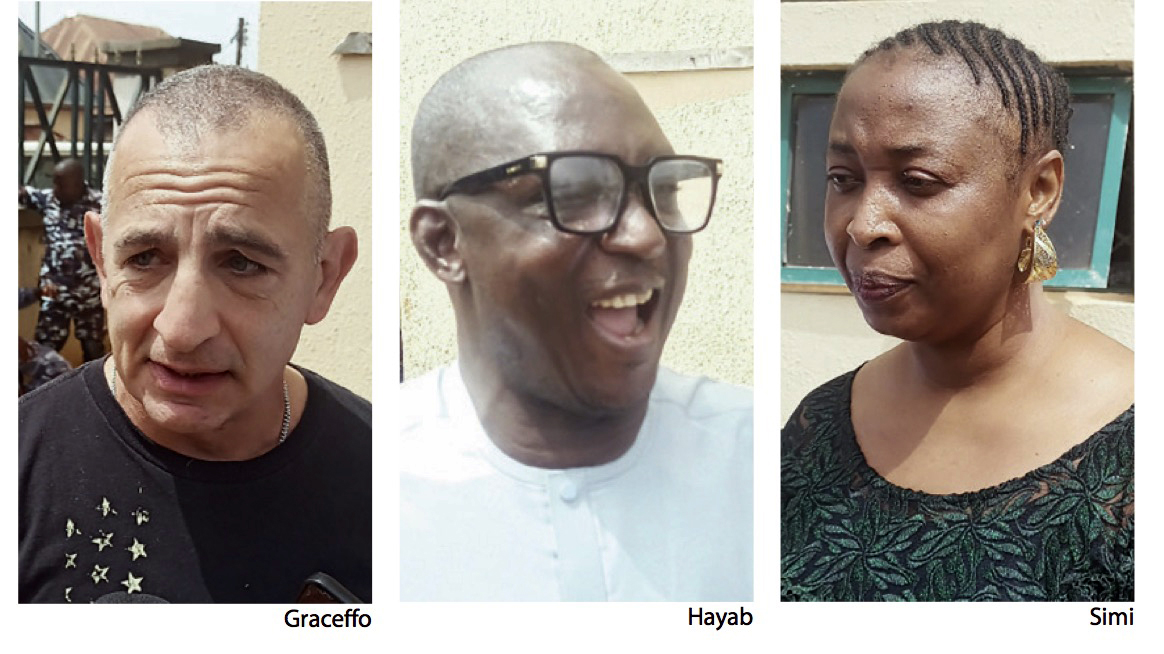
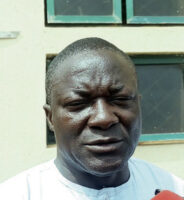
The Executive Director of CHAIN, Joseph John Hayab, who organised the conference solely for banditry survivors, said the encounter revealed the depth of trauma many victims still carry and the urgent need for coordinated psychological and community support.
He said the moment exposed how widespread and interconnected kidnapping experiences have become in the region.
“Things that if you hear, you will know we have a lot to do to bring an end to this evil because people have gone through hell,” he added.
Hayab explained that some of the survivors included a woman who gave birth while in captivity and a priest who was shot in the leg and kept in detention until his condition worsened.
“One priest here whose leg was shot by the bandits was kept there until the leg started getting bad before they released him.
“He is here, but I wanted him to speak, though his health is weak,” he said.
He also revealed that among the participants were multiple victims who only discovered at the conference that they had shared captivity experiences without knowing each other’s identities.
“There were cases where a woman who gave birth in the camp was mentioned, and others who were there when she was struggling to deliver,” he said.
Hayab said the conference was designed to help victims recover emotionally and spiritually while also encouraging unity among communities affected by insecurity.
“We actually invited 150 participants five from each of the 23 local governments, making 135, and 15 others who are selected victims who can also share experiences.
“The Bible says iron sharpeneth iron. So, we want to see how we can collectively share and show love of Christ at such a time as this,” he noted.
He further stressed that trauma support was essential, noting that many survivors have lost livelihoods and hope due to repeated attacks.
“Farmers are not going to farm anymore. People are not living good lives. Many have completely given up thinking nothing good will happen,” he said emotionally.
Hayab called for stronger collaboration between communities, churches, and security agencies to end the cycle of violence.
“We must be strong. We must be strong for others. We must collectively work with ourselves, churches, security agencies, and government to bring an end to this evil,” he said.
He also made a strong appeal to government authorities, saying insecurity has become normalised despite its devastating impact.
“Today, killing and kidnapping have become as if they are not a serious issue anymore. It is serious. The pains people are going through are real,” he said.
He disclosed that some of the survivors’ testimonies revealed the depth of coordination among victims and the shared suffering experienced in captivity.
Also speaking, Chairman of the Christian Association of Nigeria (CAN) in the State, Reverend Magaji Caleb described the experiences of the survivors of kidnapping for ransom as deeply traumatic and emotionally damaging.
“What our members have gone through is horrific. It is not good, not palatable, and not something anyone would wish even for an enemy,” he said.
Caleb said survivors often return with severe psychological scars that require sustained counselling and community support.
“We must continue to empathise with our people. The situation is condemnable and pitiful,” he decried.
While acknowledging government efforts, he said insecurity remains a major national concern.
“We are not yet out of the woods, but because of the government’s commitment and sacrifice, there is some level of reprieve,” he said.
A former United States military officer and missionary journalist, Antonio Graceffo, also addressed the conference, warning that Nigerians risk becoming desensitised to violence.
“The problem here is that these attacks are happening every single day and people are becoming numb to it. It is horrible that 10 people can get killed and it begins to look normal because it also happened yesterday or the day before.”
He urged Nigerians to maintain empathy and resist hatred despite the insecurity challenges.
“We need to find ways to secure our villages and keep people safe, but at the same time, we must not allow hate to grow in our hearts,” he said.
Graceffo said Nigeria has the capacity to address insecurity but needs stronger coordination among communities and institutions.
“I think Nigeria definitely has the capacity to do this. You have intelligent people, dedicated people, and existing structures like tribal systems, community structures, and churches that can work together,” he said.
He also called for increased international support to complement local efforts.
“It will still be Nigeria’s solution, but I want to see more international support here,” he added.